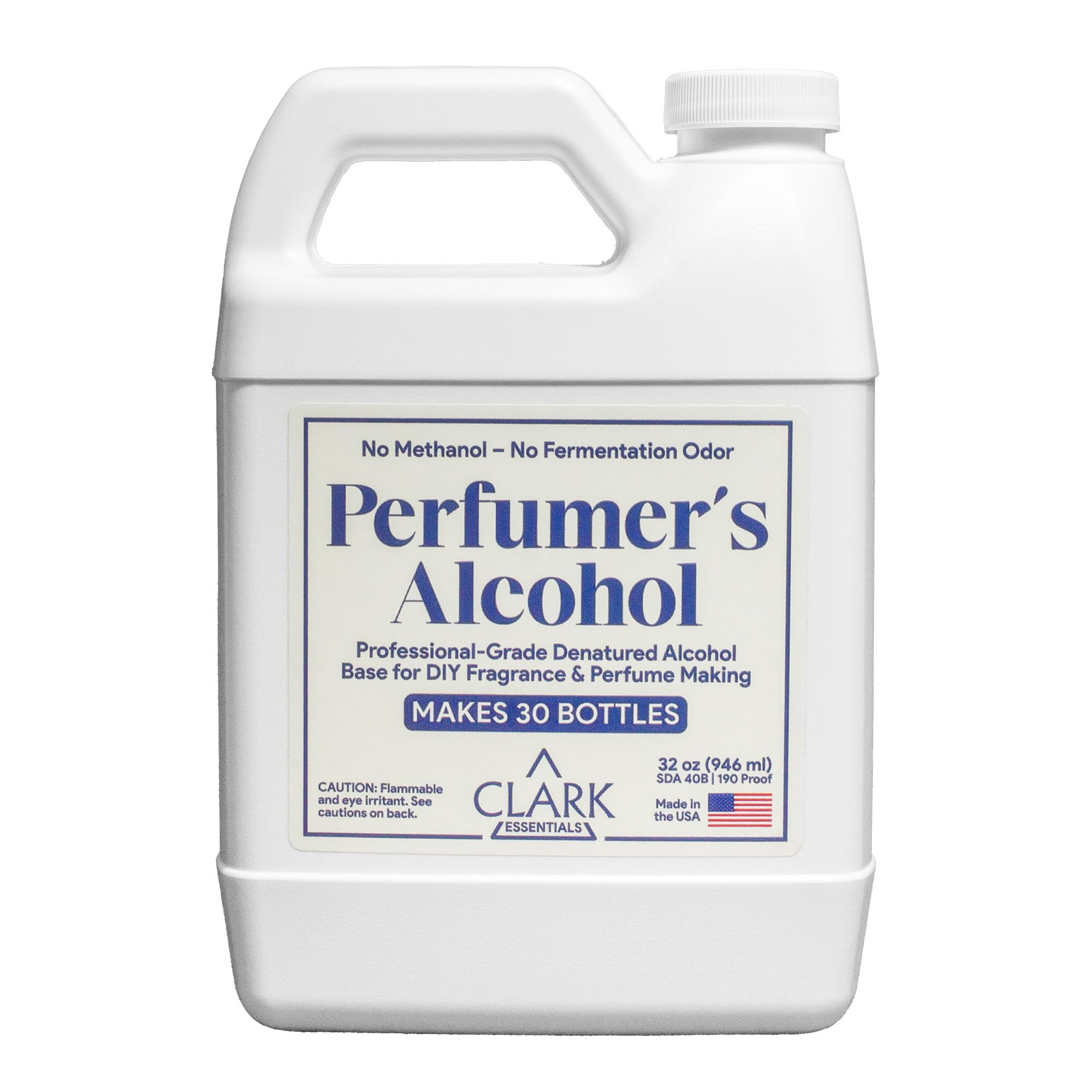
For anyone mixing their own perfumes or experimenting with fragrance accords, the choice of solvent matters as much as the scent materials themselves. Clark Essentials Perfumer’s Alcohol is a 32-ounce bottle of ethanol-based solvent marketed specifically for DIY fragrance work. Unlike generic rubbing alcohol or high-proof vodka, perfumer’s alcohol is formulated to be low-odor and fast-evaporating, so it carries scent without imposing its own character. In this review, we look at how it performs in real-world use, where it fits in a perfumer’s toolkit, and what trade-offs come with its convenience.
In practice, this alcohol is used as the base for sprayable fragrances, room sprays, and linen mists. The typical process involves blending essential oils or fragrance oils with the alcohol, sometimes with a small amount of water or a solubilizer, then letting the mixture rest for a few days to a few weeks to macerate. The 32-ounce size is generous for hobbyists—enough to make multiple 50–100 ml bottles of perfume, depending on concentration. It’s also handy for cleaning glassware and tools between blends, since it evaporates cleanly and doesn’t leave residue.
Functionally, Clark Essentials Perfumer’s Alcohol is denatured ethanol, which means it contains additives that make it undrinkable and exempt from alcohol taxes. The exact denaturant isn’t disclosed on the label, but most perfumer’s alcohols use a bittering agent or a small amount of isopropyl alcohol. This is a key point: while it’s low-odor compared to hardware-store denatured alcohol, it’s not completely odorless. Some users with sensitive noses might detect a faint chemical note, especially in the first few minutes after spraying. That said, for most applications, the scent dissipates quickly and doesn’t interfere with the fragrance.
One of the strengths of this product is its consistency. It’s filtered and appears clear, with no visible particles or sediment. The bottle is sturdy plastic with a simple screw cap, which is fine for storage but not ideal for precise pouring—a funnel or pipette is recommended. The alcohol has a typical evaporation rate for ethanol, so sprays dry down quickly, which is expected. It’s also worth noting that the 32-ounce size is a commitment; if you’re just starting out, you might prefer a smaller bottle to test compatibility with your fragrance materials.
A significant limitation is the lack of transparency about the denaturant. For perfumers who are particular about ingredients—especially those selling products—this ambiguity can be a dealbreaker. Some denaturants can cause skin irritation in sensitive individuals, and without knowing exactly what’s in it, you can’t fully assess the risk. Additionally, while it’s marketed as low-odor, it’s not odorless. Compared to perfumer’s alcohol from specialty suppliers like Perfumer’s Apprentice or Creating Perfume, which often specify the denaturant and have a very neutral scent, Clark Essentials falls slightly short in purity. However, it’s also more accessible and often more affordable, so there’s a trade-off between cost and specificity.
In terms of performance, this alcohol does what it’s supposed to: it dissolves fragrance oils and essential oils effectively, though some heavier resins or absolutes may require a bit of gentle warming or a co-solvent like dipropylene glycol. It’s not a magic solvent; if you’re working with materials that are difficult to dissolve, you’ll still need to employ standard perfumery techniques. The evaporation rate is standard for ethanol, so expect top notes to flash off quickly and heart and base notes to unfold over hours. As with any alcohol-based perfume, the final scent will evolve differently than in an oil-based roll-on, so it’s best suited for spray formulations.
Compared to using high-proof vodka (which is a common DIY alternative), Clark Essentials Perfumer’s Alcohol is more consistent and has less of its own odor. Vodka can vary in taste and smell, and its water content can affect solubility. On the other hand, specialty perfumer’s alcohol from niche suppliers often provides a higher level of purity and documentation, which matters for serious crafters. Clark Essentials sits in the middle: it’s more refined than liquor-store substitutes but less transparent than professional-grade solvents. For hobbyists making gifts or personal-use fragrances, it’s a reasonable compromise. For those planning to sell or who have sensitive skin, a more specified product might be worth the extra cost.
Who is this for? It’s well-suited to beginners and intermediate DIYers who want a ready-to-use solvent without hunting down specialty suppliers. The 32-ounce bottle offers good value for those who make batches regularly. It’s also convenient for makers who prefer to buy from a single source for their supplies. However, it’s not ideal for professional perfumers who need full ingredient disclosure, nor for those with known sensitivities to denatured alcohol. If you’re unsure about the denaturant, a patch test is advisable before using it on skin. Also, if you’re looking for a completely odorless base, this may not meet your expectations—though few affordable options are truly odorless.
In summary, Clark Essentials Perfumer’s Alcohol is a practical choice for DIY fragrance enthusiasts. It performs reliably, is reasonably priced for the volume, and is easy to find. The main drawbacks are the undisclosed denaturant and a faint residual odor that might bother some. It’s not a premium product, but it doesn’t claim to be. For most home perfumers, it will get the job done without fuss. Just keep your expectations in check: it’s a workhorse solvent, not a luxury ingredient.