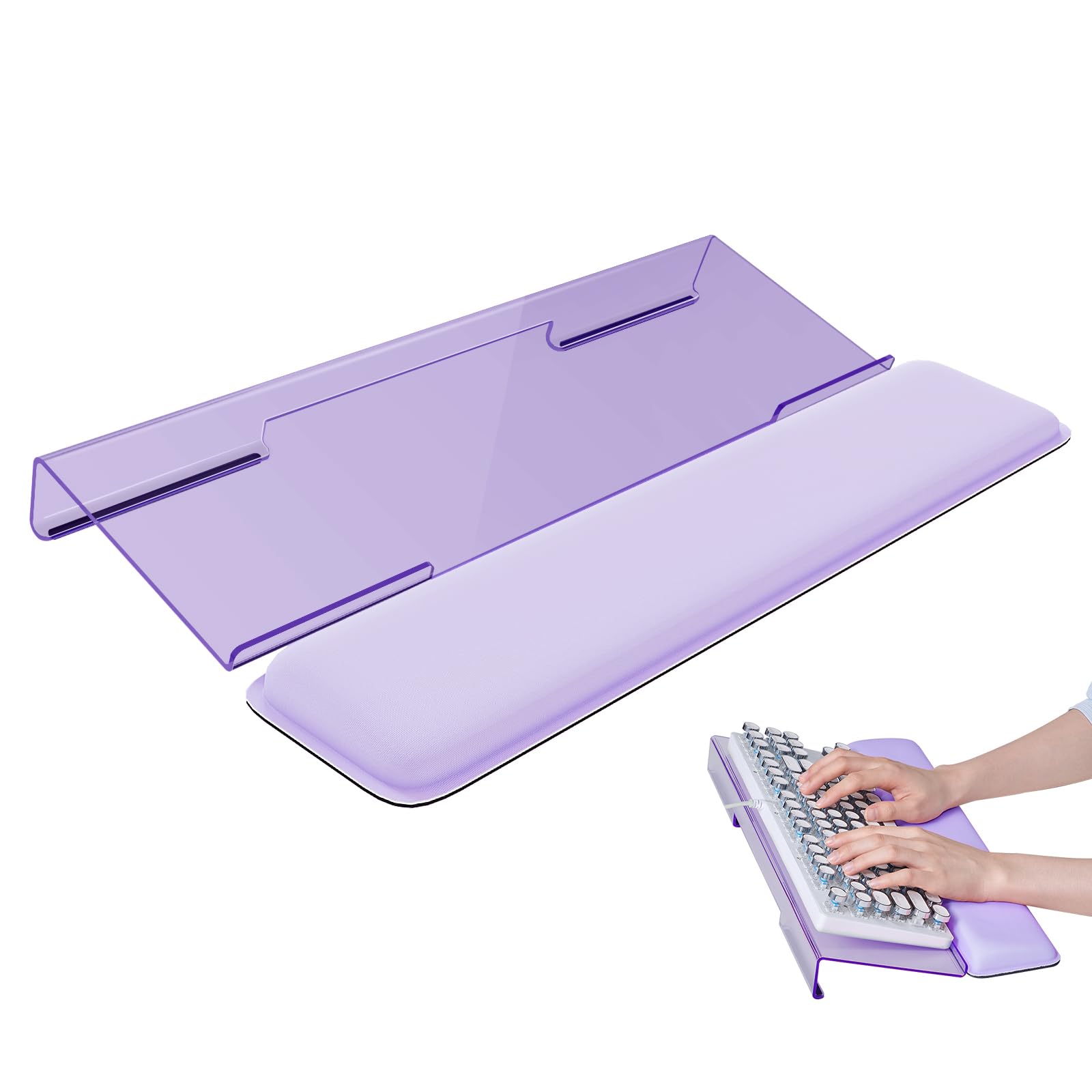
If you spend hours at a desktop computer, you’ve probably noticed that most keyboards sit flat on the desk, forcing your wrists into an awkward angle. The Laborio Keyboard Wrist Rest and Riser Stand aims to address that by combining two functions: a wrist rest and a stand that elevates the back of the keyboard. It’s a simple idea, but execution matters. After spending time with the product, here’s a realistic look at what it does well and where it falls short.
What it is and how it works
The Laborio is a two-piece set: a wrist rest that sits in front of the keyboard and a riser stand that lifts the back edge. The wrist rest is made of a soft, foam-like material covered in fabric, while the riser is a rigid plastic frame with rubber feet to prevent sliding. Together, they create a slight negative tilt—meaning the keyboard slopes away from you—which some ergonomics guidelines recommend to keep wrists in a neutral position. Setup is straightforward: place the riser under the back of your keyboard, align the wrist rest in front, and you’re done. No tools or adhesives required.
Real-world performance
In daily use, the combination does what it promises. The wrist rest provides a comfortable cushion for typing breaks, and the riser lifts the keyboard to a more natural angle. The rubber feet keep everything in place, even during vigorous typing sessions. However, the foam in the wrist rest is on the firmer side—supportive but not plush. If you’re used to gel-filled rests, this may feel a bit stiff at first. Also, the riser adds about an inch of height at the back, which may not suit everyone; taller users might find their wrists angled upward instead of neutral. It’s a trade-off: the riser helps some, but it’s not a one-size-fits-all solution.
Where it fits in the market
Compared to dedicated ergonomic keyboards, which often have built-in negative tilt and split layouts, the Laborio is a budget-friendly add-on. It won’t replace a fully ergonomic setup, but it’s a cheaper way to experiment with a more neutral wrist position. Against simple wrist rests alone, the added riser is a clear differentiator—though if you already have an adjustable keyboard tray or a keyboard with flip-out feet, the riser might be redundant. The build quality is decent for the price, but the plastic riser feels a bit lightweight; it’s not flimsy, but it won’t win any durability awards either.
Who should consider it
This set is best for office workers or home users who have a standard, flat keyboard and want to try a negative tilt without buying a new keyboard. It’s also a good option for those who experience mild wrist discomfort and want a low-cost adjustment. On the other hand, if you already have a keyboard with adjustable feet or a dedicated wrist rest you love, the Laborio may not add much. It’s also not ideal for gamers who need a stable, low-profile setup—the riser can make the keyboard feel slightly wobbly if not positioned carefully. And if you have very large hands or a wide keyboard, the wrist rest may be too short; measure first.
Limitations to keep in mind
The biggest drawback is the lack of adjustability. The riser height is fixed, and the wrist rest doesn’t have a strap or adhesive to keep it from shifting if you move your keyboard around. Also, the fabric cover on the wrist rest isn’t removable, so cleaning is limited to spot treatment. Over time, it may show wear. These are minor issues, but they matter for long-term use.
Final thoughts
The Laborio Keyboard Wrist Rest and Riser Stand is a practical, no-frills accessory that can make typing more comfortable for some users. It’s not a miracle fix, and it won’t suit everyone, but at its price point, it’s a reasonable experiment. If you’re curious about negative tilt but not ready to invest in an ergonomic keyboard, this is a low-risk way to try it. Just manage your expectations: it’s a simple tool, not a comprehensive ergonomic solution.