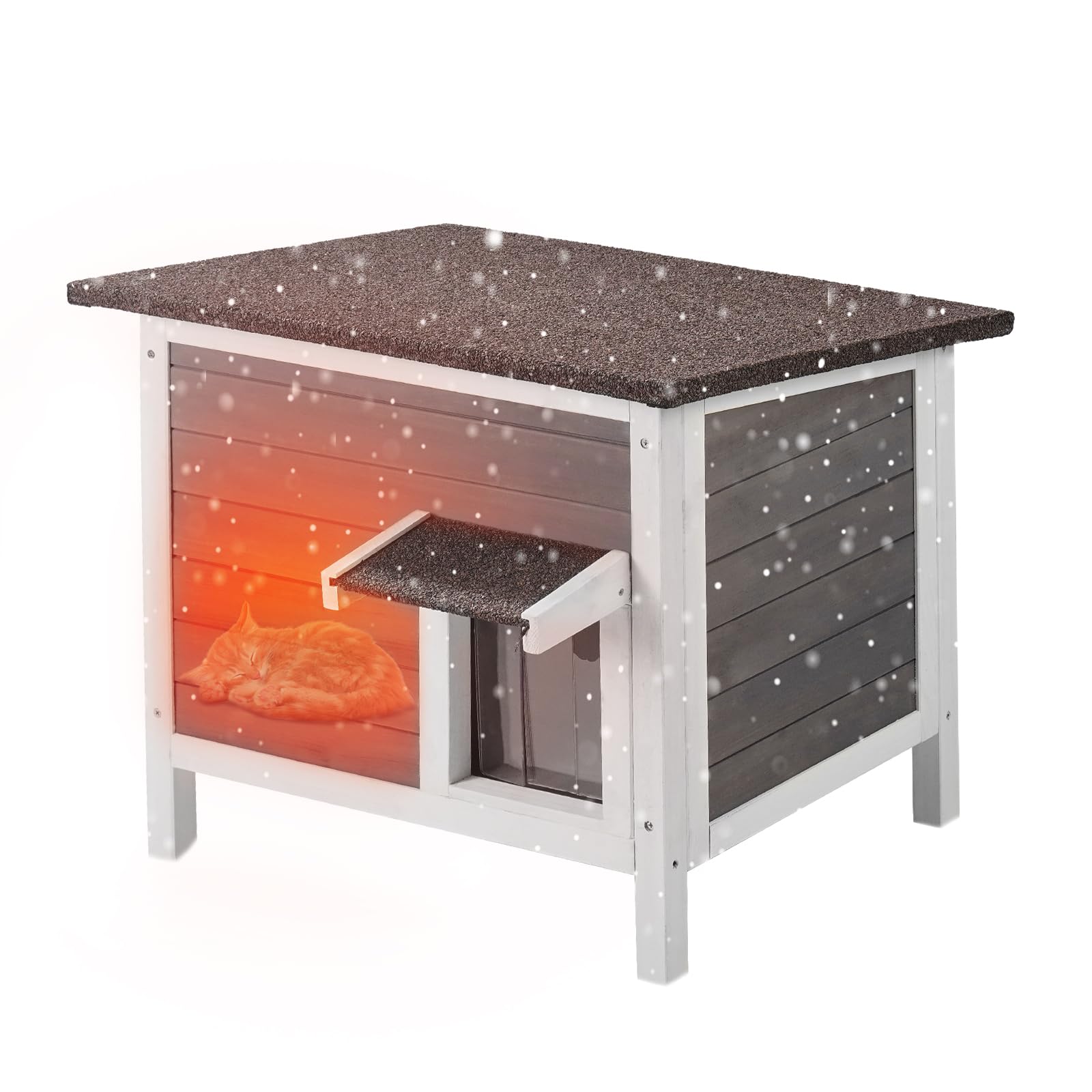
The VEVOR Outdoor Cat House is a wooden shelter aimed at people who feed or care for cats that live outside—feral colony caretakers, barn owners, or households with a cat that refuses to come in. At 24 by 20 by 21 inches, it is small enough to tuck against a wall or under an eave but large enough that the listing claims it can hold more than one cat. Whether that claim holds up depends heavily on the cats involved, which is worth unpacking before purchase.
The most consequential feature is the insulation. VEVOR describes the walls as foam-insulated all around, which matters more than almost anything else in an outdoor shelter. A wooden box without insulation does little more than block wind; foam-lined walls slow heat loss and, just as importantly, reduce condensation inside, which is a common failure point in uninsulated shelters during cold, damp weather. The open roof design is a practical choice for cleaning and inspection, though it also means the roof is not a load-bearing surface and should not be treated as one.
The PVC door flaps are the other detail that separates this from a plain wooden crate. Clear or semi-clear flaps let cats push in and out while cutting drafts, and they are the standard approach in feral shelter designs for good reason. They wear out over time, especially with heavy traffic from multiple cats, so expect to replace or reinforce them eventually. That is a normal consumable, not a defect.
Assembly is required, and buyers should plan for it. Flat-pack wooden shelters in this price range typically arrive as panels with pre-drilled holes and basic hardware. The process is manageable for one person with a screwdriver, but the fit of panels and the quality of the included fasteners vary across units, so checking alignment before fully tightening screws is wise. Sealing exposed edges and joints with an exterior-grade sealant is a reasonable step for anyone placing the house in a rainy climate, since factory finishes on budget wooden pet houses are rarely generous.
On capacity, the listing’s “multiple cats” framing deserves a caveat. Two cats can share this footprint if they are bonded and inclined to huddle, which is actually beneficial for warmth. Unrelated cats, however, often will not tolerate a shared space this size, and a single cat occupying the house is the more realistic expectation for most buyers. If you are managing a colony of several cats, one house per pair—or per cat—is the more sensible approach.
Compared with molded plastic shelters, the VEVOR has clear advantages in insulation and repairability. Plastic houses are lighter and easier to hose out, but they offer little thermal protection and can crack in hard freezes. Compared with insulated plastic options such as those built around foam-core panels, the wooden VEVOR is heavier and needs more maintenance but tends to be cheaper and easier to modify—adding a second exit, a raised floor platform, or straw bedding is straightforward with wood. Compared with a DIY plywood shelter, the VEVOR saves time and arrives with insulation and flaps already accounted for, though a careful DIY build can be customized more precisely.
Placement matters as much as the product. The house should sit on a raised surface—bricks, a pallet, or a low platform—so the floor stays off cold, wet ground. Straw is the preferred bedding; blankets and towels absorb moisture and can freeze, which is a genuine hazard in winter. Orienting the door away from prevailing wind and adding a windbreak helps the flaps do their job. None of this is unique to VEVOR, but it is the difference between a shelter that gets used and one that sits empty.
Who it suits:
- Feral colony caretakers who need an affordable, insulatable shelter with a manageable footprint
- Owners of a single outdoor or barn cat in a mild-to-cold climate
- People willing to do light assembly and occasional sealing and flap replacement
Who it does not suit:
- Households expecting to comfortably house three or more cats in one unit
- Buyers who want a zero-maintenance, hose-and-go plastic shelter
- Anyone unwilling to assemble, seal, and periodically inspect a wooden structure
Overall, the VEVOR Outdoor Cat House is a sensible, budget-conscious option that gets the fundamentals right: insulation, draft-blocking flaps, and a repairable wooden build. It is not a set-and-forget product, and its multi-cat claim is optimistic, but for a caretaker prepared to place it properly and maintain it, it covers the basics without overselling what a small wooden box can do.