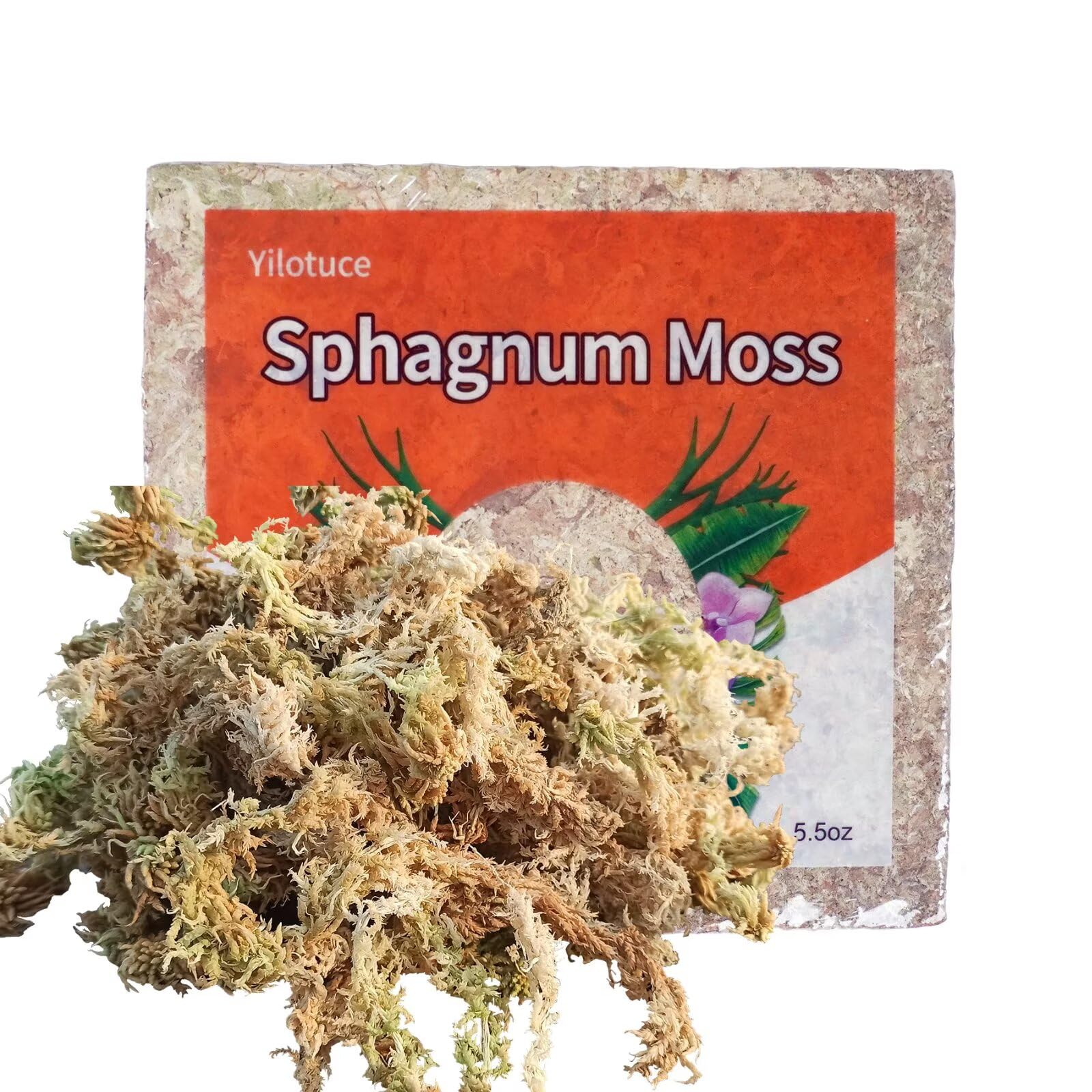
When it comes to potting orchids, the choice of growing medium can be as important as the plant itself. Many enthusiasts rely on bark mixes, but sphagnum moss offers a different set of properties—better moisture retention and a softer texture for roots. The Yilotuce 5.5oz compressed sphagnum moss is a product aimed at this niche, and after using it for a few months, I have some observations that might help you decide if it fits your setup.
The moss arrives as a dry, compressed brick weighing 5.5 ounces. You need to rehydrate it before use, which is straightforward: soak it in water for about 10 to 15 minutes, and it expands to roughly three times its compressed volume. The resulting material is light, fibrous, and has that earthy, slightly musty smell typical of sphagnum. It’s not sterile, but it’s clean enough for most potting tasks. I used it to repot a Phalaenopsis orchid that had outgrown its bark mix, and the roots seemed to take to the moss quickly—no signs of rot or stress after a few weeks.
One of the key functional features here is the compression. It makes shipping and storage efficient, and the brick format means you don’t have loose fibers flying around until you’re ready. The moss itself is long-fibered, which helps it hold together without disintegrating into dust. It absorbs water well and retains moisture longer than bark, which can be a double-edged sword. For orchids that like consistent dampness, like some Paphiopedilums or certain Oncidiums, this is a plus. But for plants that need dry periods between waterings—think Cattleyas or Dendrobiums—this moss might stay too wet, especially in cooler climates or non-porous pots.
A limitation worth noting is the variability in quality. Not all compressed sphagnum moss is created equal, and Yilotuce’s offering is decent but not exceptional. I found some small twigs and darker bits mixed in, which suggests the moss isn’t graded as strictly as higher-end brands. It’s still usable, but you might want to pick out the debris if you’re repotting a sensitive plant. Also, the moss can compact over time, reducing air pockets. After about two months in a pot, I noticed the texture getting denser, so you’ll likely need to repot sooner than you would with bark—maybe every 6 to 12 months depending on conditions.
Compared to a generic bark mix, this moss behaves very differently. Bark drains quickly and dries out fast, making it forgiving for overwaterers. Sphagnum moss, on the other hand, holds moisture like a sponge. If you’re transitioning from bark, you’ll need to adjust your watering habits—less frequent, but more thorough. The Yilotuce moss is also lighter than bark, which can be good for hanging baskets but less stable for top-heavy plants. For propagation, like rooting cuttings or growing seedlings, this moss works well because it maintains humidity around new roots without drowning them.
Who is this product suitable for? It’s a practical choice for orchid growers who want a moisture-retentive medium, especially for moisture-loving species or for use in enclosed setups like terrariums. It’s also fine for general houseplant propagation. However, it’s less ideal for beginners who tend to overwater, or for growers in humid environments where mold and rot become risks. If you prefer a mix of bark and perlite for better aeration, this moss might feel too dense. The Yilotuce 5.5oz brick is a solid, no-frills option, but it’s not a standout—it does the job without being remarkable. For the price, it’s reasonable, but don’t expect premium consistency. If you’re curious about sphagnum moss as a medium, this is a decent entry point, but experienced growers might want to look for higher-grade, hand-sorted options.