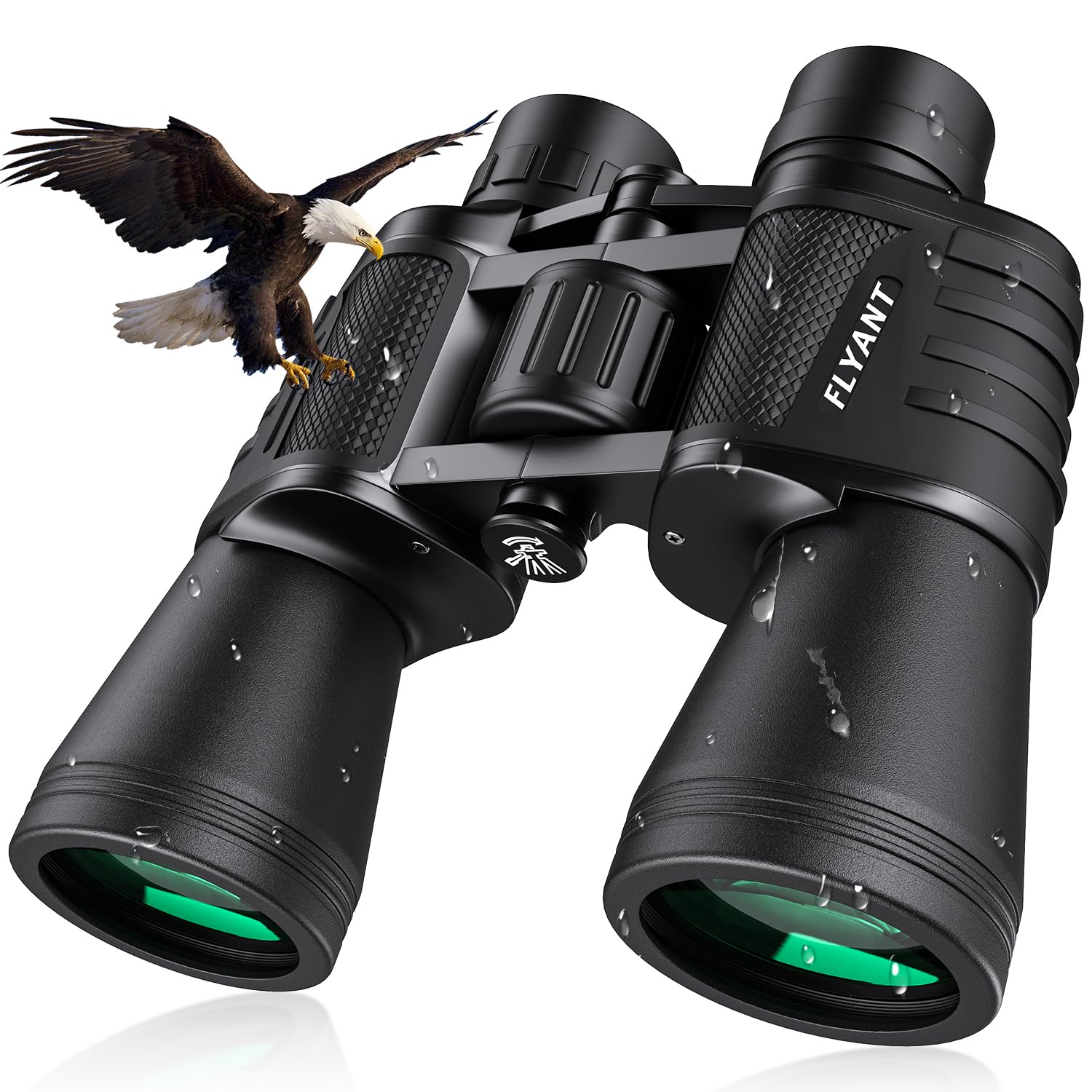
When you need to see clearly at a distance or in fading light, a pair of binoculars like the 20×50 model can be a practical tool. These are designed for adults who want a relatively compact option for activities such as bird watching, hunting, camping, cruise trips, hiking, sports events, and stargazing. The 20x magnification brings distant objects quite close, while the 50mm objective lens aims to gather enough light for use during dawn or dusk.
In real-world use, these binoculars feel reasonably solid for their size. The body is wrapped in a rubber armor that provides a decent grip, even with damp hands. The focus wheel is smooth and allows for fine adjustments, though it takes a few turns to go from near to far focus—this is typical for high-magnification models. The eyecups twist up and down, which is helpful if you wear glasses, as you can adjust them to get the full field of view without your lenses scratching the glass.
One of the key features here is the low-light performance. With the 50mm objective lenses, these binoculars let in more light than smaller 25mm or 32mm models. In practice, this means you can still see details in twilight conditions, like a deer at the edge of a field or birds settling for the night. However, don’t expect night-vision quality; they simply extend usable viewing time by about 15 to 20 minutes before full darkness sets in. The clarity in these conditions is decent, but you may notice some color fringing (chromatic aberration) around bright objects like a full moon or distant lights.
The 20x magnification is a double-edged sword. It’s great for spotting details on a distant mountain ridge or watching a sports game from the nosebleed seats. But it also amplifies every shake of your hands. Without a tripod or a steady rest, the image can be quite shaky, making it hard to keep a subject in view for long. This is a limitation worth noting: these are not ideal for handheld scanning over long periods. For bird watching or hunting where you might be standing for hours, a lower magnification like 8x or 10x is often more comfortable. A monopod or a window mount can help stabilize them, and many users find that leaning against a tree or car door makes a big difference.
Waterproofing is another feature that adds to their versatility. They are sealed with O-rings and purged with nitrogen to prevent fogging. This means you can use them in light rain or near waterfalls without worry. I wouldn’t recommend submerging them, but for camping and hiking in typical weather, they hold up well. The included carrying case is basic but functional, with a strap and belt loop.
Compared to a compact 8×25 or 10×42 binocular, this 20×50 model offers more reach but less portability and a narrower field of view. For example, a 10×42 binocular will give you a wider, brighter image that is easier to hold steady, making it better for general nature observation. The 20×50 is more specialized—it excels when you need to see fine details on a specific target, like the rings of Saturn or a distant bird’s markings, but it’s less forgiving for quick scanning.
Who is this for? It’s suitable for someone who already has a general-purpose binocular and wants a second, higher-magnification option for long-range viewing. It can work well for stargazing (especially for lunar observation), for hunters who set up in a blind and use a tripod, or for travelers who want to see landmarks from a distance. It is less suitable for hikers who prioritize weight and want to glass large areas quickly, or for anyone who insists on hand-holding for extended periods without support. The shake factor and narrower field of view can be frustrating in those scenarios.
Overall, the 20×50 binoculars deliver on their promise of high magnification and reasonable low-light capability in a compact package. They are not perfect—the image shake and color fringing are real trade-offs—but for the price, they offer a solid tool for specific use cases. If your primary need is to see far and you can accept the need for a steady support, these are worth considering. If you value a wide, stable view for all-around use, a lower magnification model might serve you better.