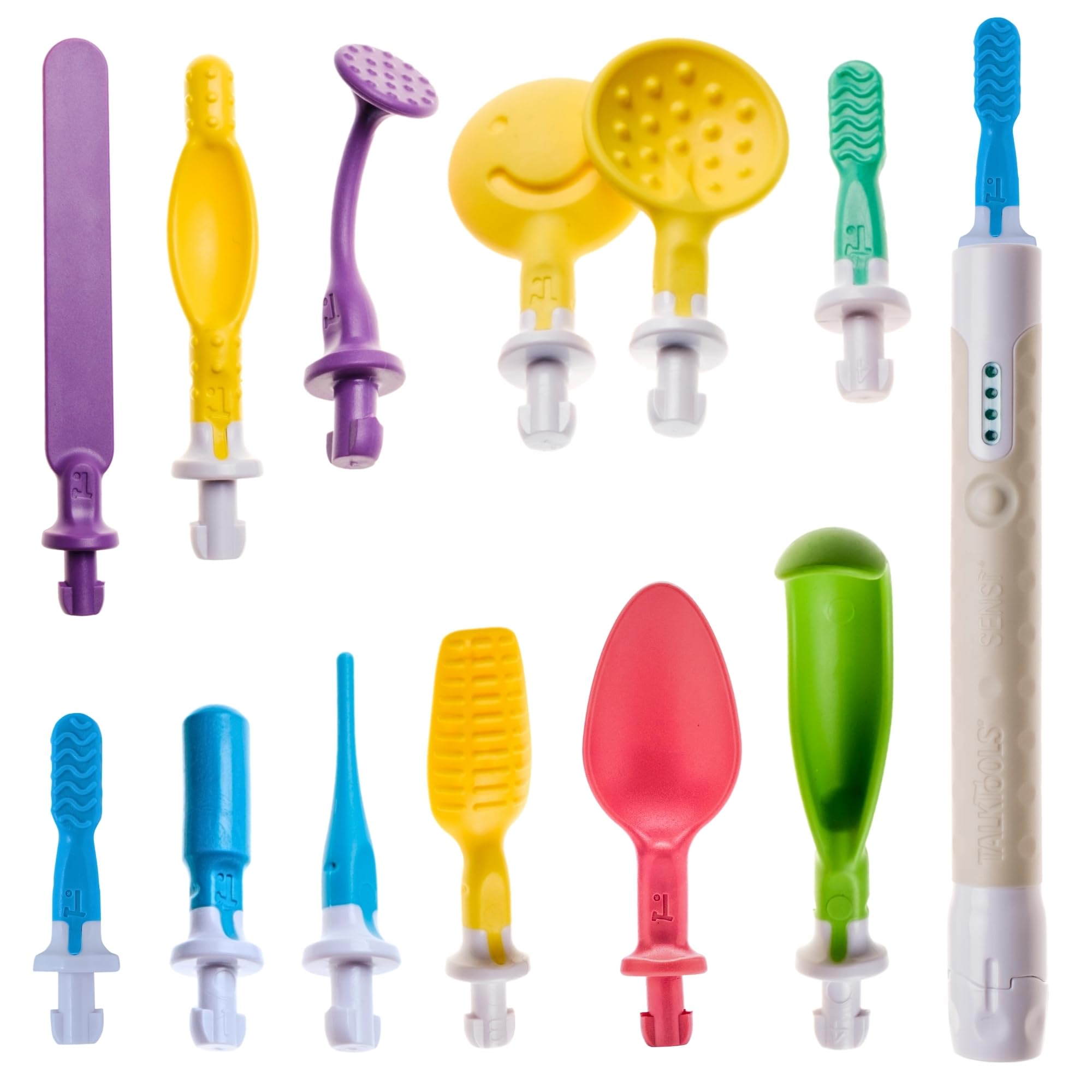
The TalkTools Sensi Grey 12 Tip Kit is one of those products that sits at the intersection of therapy and home practice, and how you feel about it will depend heavily on which side of that line you’re standing on. The kit consists of a grey handle and twelve interchangeable tips of varying textures and shapes, designed for oral motor exercises—work that speech-language pathologists, occupational therapists, and feeding specialists often assign to address chewing, tongue placement, lip closure, and oral awareness. It’s a niche tool, but within that niche it’s a recognizable name.
In practice, the Sensi kit is used in short, structured sessions rather than as a toy or a casual teething aid. A therapist might guide a child through a sequence of tapping, stroking, or resistance exercises with different tips, each selected for a specific texture or firmness. Parents or caregivers are often asked to replicate those exercises at home between appointments. The twelve tips are the point of the kit: rather than buying one tool, you get a graded set that lets a clinician move from gentle stimulation to more demanding work as tolerance improves. That progression is the main functional argument for the kit over a single-tip device.
The construction is straightforward. The tips are made of a soft, food-grade-feeling material—grey in this version, which is a deliberate choice since the color is less visually stimulating than bright primary colors and can be useful for children who are easily distracted by vivid objects. The handle is lightweight and sized for an adult hand doing the guiding, not for independent use by a child. Tips swap on and off with a push-fit connection that holds securely during use but doesn’t require tools to change. Nothing about the build feels fragile, though the tips are soft enough that they will show wear over time with heavy daily use, and replacement tips are sold separately—worth knowing before you commit.
Where the kit earns its keep is in the variety. A single textured tool tends to get stale quickly, both for the person doing the exercises and the person receiving them, and having twelve options allows for genuine variety within a session. The different tip profiles target different areas—some are suited to gum or cheek stimulation, others to tongue or palate work—and the tactile differences are distinct enough to matter. That said, the kit does not come with a detailed exercise protocol beyond basic guidance, and the real value depends on a clinician directing how and when each tip is used. Bought cold, without professional input, it’s a set of soft grey tools with no clear roadmap.
There are practical limitations worth flagging. First, hygiene: these tools go in the mouth, and they need to be cleaned after every use according to the manufacturer’s instructions, which adds a routine step that some families find tedious. Second, the push-fit tips can be a choking hazard if they come loose, so supervision is non-negotiable—this is not a product to leave with a child unattended. Third, the price per useful tip is higher than it looks, since most users will gravitate to three or four favorites and ignore the rest. If you already know which texture works, buying individual tips or a smaller starter set may be more economical.
Compared with alternatives, the Sensi kit sits somewhere between a basic single oral motor tool and a full clinical kit with dozens of pieces. Silicone chew tools and textured teethers are cheaper and more durable but offer far less precision—they’re for sensory input, not targeted exercise. Professional-grade kits with more tips cost considerably more and are usually purchased by clinics rather than households. The Sensi 12-tip set is a reasonable middle ground for a family working under a therapist’s direction, though it’s overkill for someone experimenting on their own.
As for suitability: this kit makes sense for speech and feeding therapists, and for caregivers who have been given a specific home program and need the range of textures to follow it. It’s also a sensible purchase for a clinic that wants a durable, replaceable-tip set for multiple clients. It is not a good fit for parents looking for a general-purpose chew toy, for anyone hoping the kit will substitute for professional assessment, or for households where the cleaning and supervision burden isn’t realistic. The grey color and clinical framing also mean it won’t read as a fun object to most children—which is arguably the point, but worth setting expectations around.
Overall, the Sensi Grey 12 Tip Kit is a well-made, purpose-specific tool whose usefulness is almost entirely dependent on the guidance that comes with it. Buy it as part of a therapy plan and the variety and build quality justify the cost; buy it as a standalone gadget and you’re paying for tips you won’t know how to use. That’s not a flaw in the product so much as a reality of what it is.