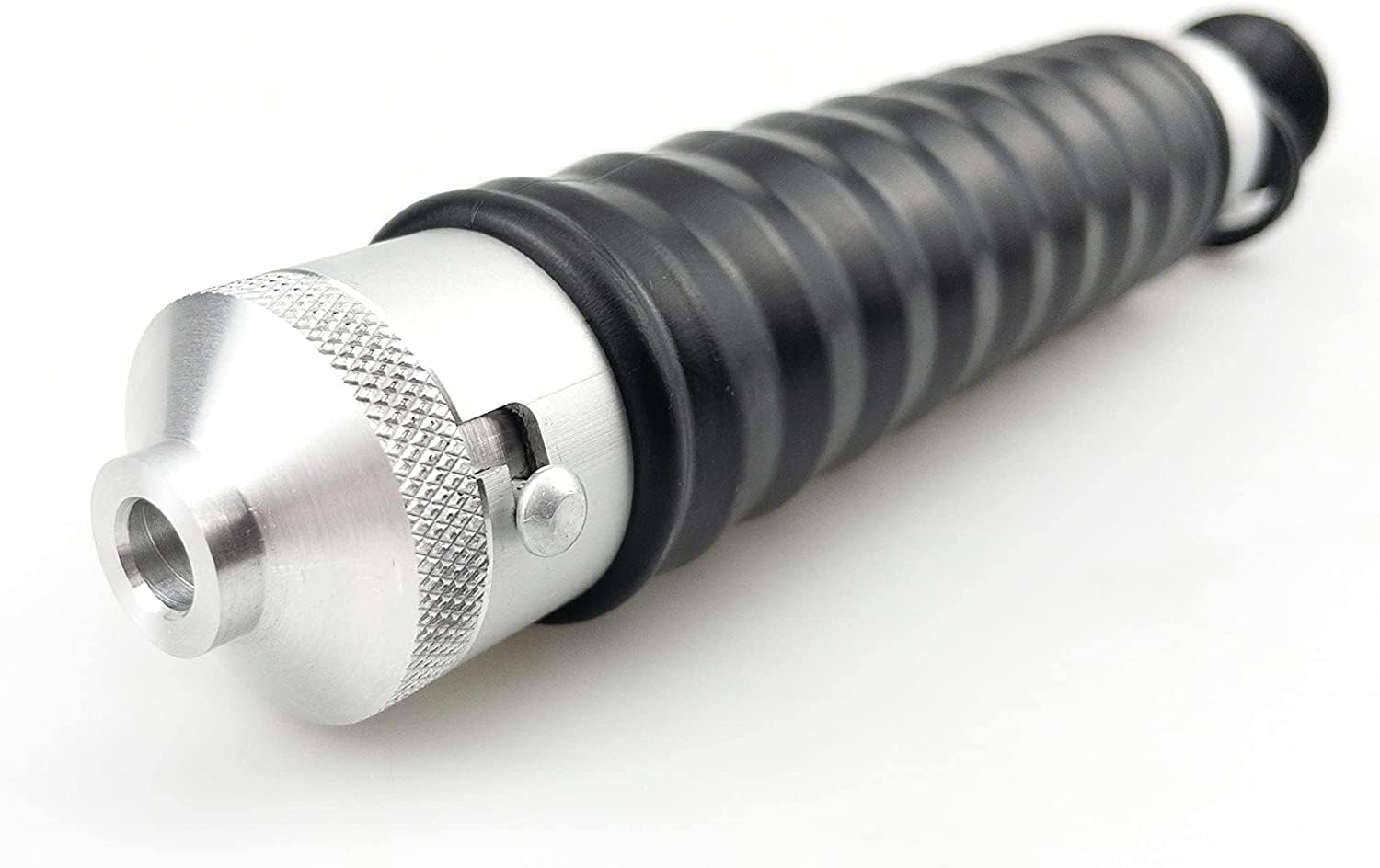
If you’re into making your own soft plastic fishing lures, you know the process goes beyond just melting plastisol and pouring it into molds. Getting the liquid plastic from the heating container into the mold cleanly and without air bubbles is half the battle. A dedicated injector like this 120 ml aluminum model is designed to do exactly that, and it largely succeeds, though it’s not without its quirks.
The first thing you notice is the weight and feel. This is a solid, all-metal tool, not a flimsy syringe. The 120 ml capacity is a practical middle ground—enough to fill several small to medium-sized molds before you need to refill, but not so large that it becomes unwieldy to handle. The plunger moves smoothly inside the barrel, which is crucial when you’re trying to control the flow of hot, viscous plastisol. The locking nozzle is a smart addition; it screws on securely and prevents the tip from popping off under pressure, which can be a real mess when you’re working with hot liquid.
In practice, the injector works best when your plastisol is heated to the correct temperature and has a consistent, syrup-like consistency. You fill the barrel by pouring the hot plastic in (a funnel helps), then quickly attach the nozzle and press the plunger. The narrow tip allows for decent control, letting you fill cavities from the bottom up, which pushes air out and reduces the risk of voids in your finished lures. For anyone making stick baits, creature baits, or even some crankbait bodies, this is a significant upgrade over using a ladle or a simple pour spout.
However, there are trade-offs. The most obvious one is that the metal barrel gets extremely hot when filled with molten plastisol. There’s no insulating sleeve included, so you’ll need to wear a heat-resistant glove or wrap the barrel in a cloth to avoid burning your hand. It’s a functional tool, but not a comfortable one to hold for extended periods. Also, cleaning it is a chore. The residual plastisol that cools and hardens inside the barrel and nozzle requires reheating to remove, and you have to be careful not to scratch the interior. Some users have found that soaking the disassembled parts in a hot oven (set to low) or using a heat gun is the easiest way to clear a clogged nozzle. It’s not a quick rinse-and-dry operation.
Compared to the cheaper plastic syringes that are often sold for this purpose, the aluminum injector is in a different league. The plastic ones are fine for very small batches, but they can crack or warp under the heat of repeated use, and the plungers often stick. The aluminum body here is clearly built to last, and the locking nozzle is a genuine improvement over the friction-fit tips on many plastic models. That said, if you’re only making a handful of lures occasionally, the extra cost and the cleaning hassle might not be worth it. A simple pour spout or a disposable syringe might be enough for your needs.
Who is this for? It’s ideal for the serious hobbyist or semi-pro lure maker who is producing baits regularly and wants a reliable, repeatable filling method. It’s also a good choice if you work with high-temperature plastisol that would deform a plastic injector. On the other hand, it’s probably overkill for a beginner who is just experimenting with a few molds. And if you have arthritis or limited hand strength, the force required to push the plunger through thick plastisol could be a drawback—this tool demands a firm, steady hand.
One more thing to note: the 120 ml capacity is the volume of the barrel, but the actual amount you can inject in one go is slightly less, as you don’t want to draw air into the nozzle. It’s a minor point, but it’s worth remembering when you’re planning a batch. Also, the nozzle is not replaceable (at least not easily), so if you damage it, you’re looking at a new injector.
In summary, this aluminum injector is a well-made, functional tool that fills a specific niche in the lure-making process. It does its job without fuss, provided you’re willing to manage the heat and the cleanup. It won’t magically make you a better lure maker, but it will make the physical act of filling molds more precise and less messy. If that sounds like a worthwhile upgrade, it’s a solid buy. If you’re on the fence, consider how often you’ll actually use it and whether the maintenance is something you can live with.