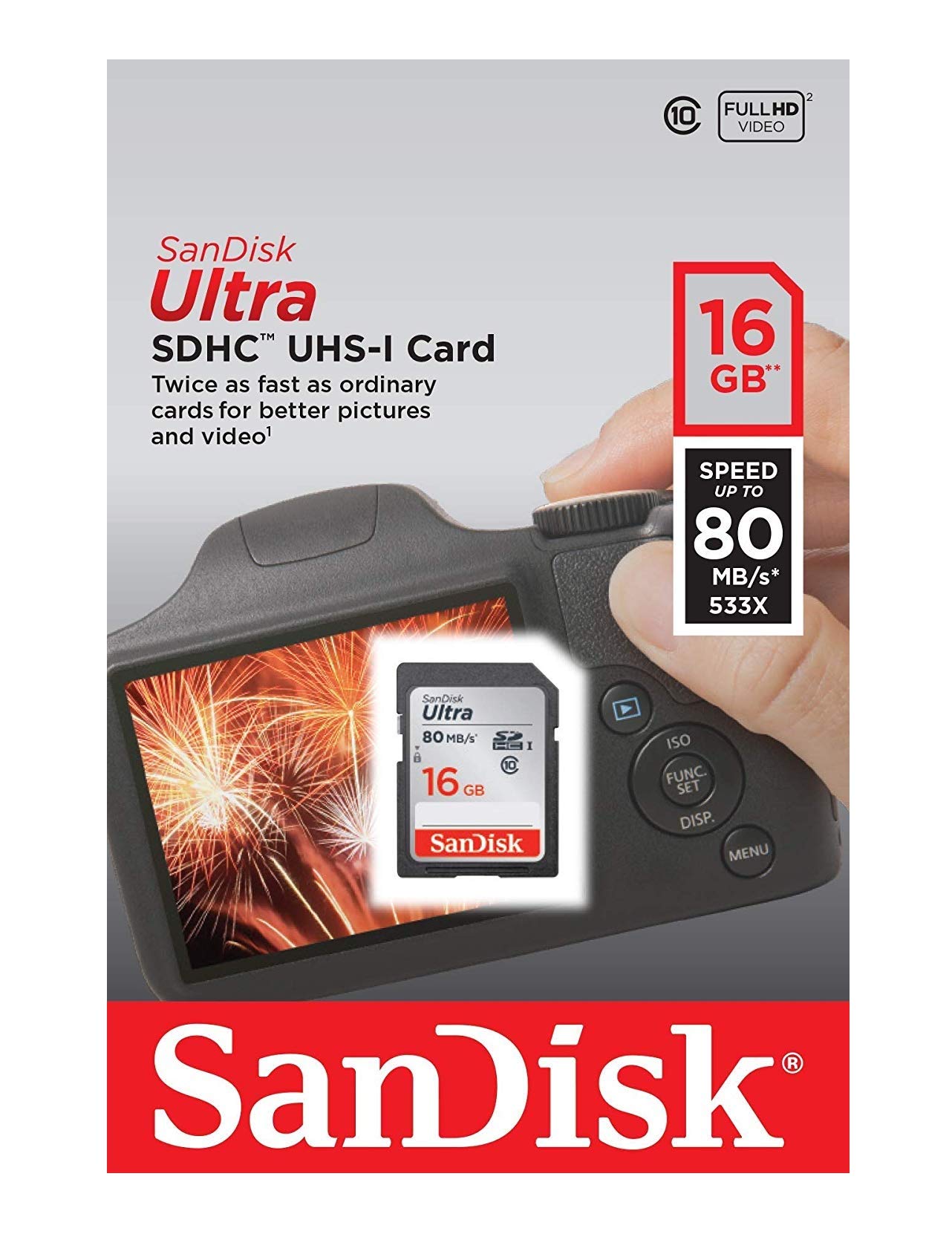
The SanDisk Ultra 16GB Class 10 SDHC card sits in an increasingly awkward spot in the memory card market. Capacity has moved on, prices for larger cards have fallen, and yet 16GB cards like this one remain on shelves because a certain kind of device still needs them. Whether it makes sense depends almost entirely on what you plan to put it in.
The headline specification is a read speed of up to 80MB/s, paired with a Class 10 rating. That rating guarantees a minimum sustained write speed of 10MB/s, which is the number that actually matters for recording video or shooting bursts of photos. The 80MB/s figure applies to reading data off the card, not writing to it, a distinction SanDisk’s packaging does not always make obvious. Buyers who assume the card writes at 80MB/s will be disappointed; those who understand the difference will find the performance broadly in line with what Class 10 promises.
In practical terms, this is a card for older compact cameras, basic DSLRs, and camcorders that predate the SDXC standard. Many cameras from the mid-2000s through the early 2010s cap out at SDHC capacities, meaning 32GB is the ceiling and 16GB is a comfortable middle ground. It is also a common choice for devices like the Nintendo 3DS, older e-readers, dash cams with modest storage needs, and budget action cameras. For these uses, the card’s speed is adequate and the capacity is workable.
Where the card shows its limits is in anything demanding. Shooting RAW files on a modern camera will fill 16GB quickly, and the write speed becomes noticeable when clearing a buffer of continuous shots. Recording 1080p video is fine, but higher-bitrate footage or 4K is out of scope, both because of the speed class and because the capacity disappears fast. Anyone editing video or shooting professionally should look elsewhere.
- Capacity: 16GB, formatted as SDHC rather than SDXC
- Speed class: Class 10, minimum 10MB/s sustained write
- Read speed: Up to 80MB/s under optimal conditions
- Form factor: Full-size SD, with the write-protect lock switch
- Compatibility: Works in SDHC-compatible devices; not readable by very old SD-only hardware
Build quality is unremarkable but appropriate. The plastic shell feels standard for the price bracket, and the write-protect switch moves with a positive click. There is no UHS speed class rating beyond Class 10, which is worth noting for anyone comparing against UHS-I cards that advertise U3 ratings. Those cards cost more but offer meaningfully faster writes, and for a device that supports them, the difference is real. The comparison here is straightforward: a UHS-I U3 card of similar capacity will outperform this one in continuous shooting and video recording, while costing somewhat more. For a device that cannot use the extra speed, that premium buys nothing.
Reliability is the usual story for SanDisk’s Ultra line. These are not the company’s premium cards, but they are not bargain-bin either, and the failure rate reported by users is low. The card ships without a case or adapter, which is a minor annoyance if you are used to cards that include them. There is also no bundled recovery software beyond what SanDisk offers as a download.
The question of who should buy this comes down to device compatibility and price. If you have an older camera, a handheld console, or a device with a documented SDHC limit, this card is a sensible, low-risk purchase. It is also reasonable as a spare or as a card for a child’s first camera. If you are buying for a modern mirrorless camera, a smartphone with a card slot, or anything that records 4K, this is the wrong card and the capacity will frustrate you within a week. Likewise, anyone who shoots a lot of photos in a single session should consider stepping up to 32GB, which remains within SDHC limits and costs only slightly more.
The 16GB Ultra is a competent, unexciting card that does exactly what its specifications say, provided you read them carefully. It is not a good value for general-purpose use in 2024 and beyond, but for the specific devices that need it, it remains a practical choice.