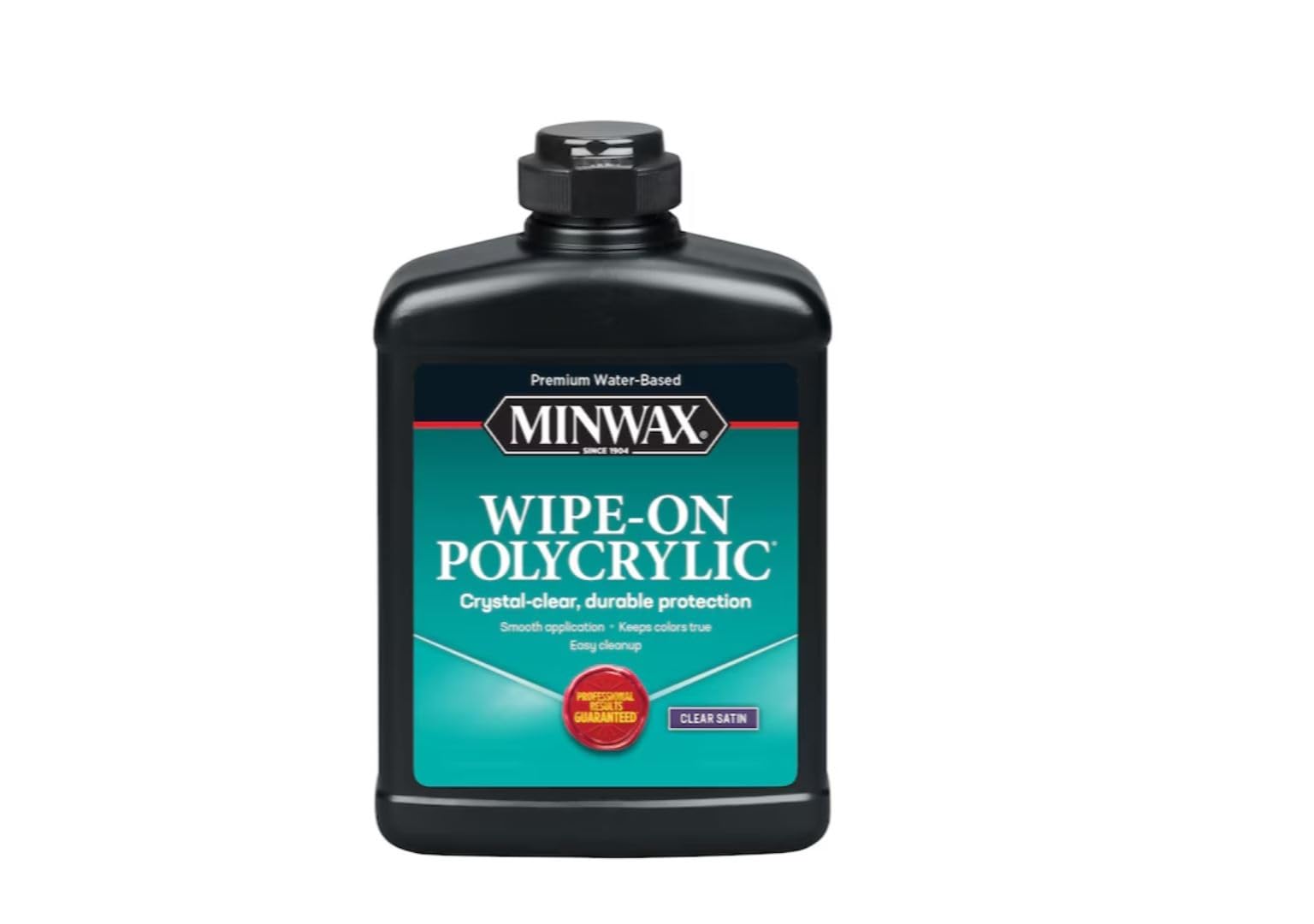
Minwax’s water-based wipe-on polyurethane sits in a useful but somewhat overlooked corner of the finish aisle. It is a satin, low-sheen clear coat sold in a one-pint can, and it is intended for people who want a wipe-on application rather than a brushed or sprayed finish. The appeal is straightforward: water-based formulas clean up with soap and water, dry relatively quickly, and produce less odor than oil-based alternatives. The wipe-on format adds another layer of convenience, particularly for anyone who has struggled with brush marks or drips on vertical surfaces.
In practice, this product is most often used on interior furniture, cabinetry, trim, and small woodworking projects. It is a reasonable choice for a refinishing job on a tabletop, a set of shelves, or a picture frame where a subtle protective layer is wanted without a high-gloss look. Because it is water-based, it can be applied over water-based stains and many other finishes, though compatibility should always be confirmed with a test patch. The one-pint size is enough for smaller projects or a couple of coats on a modest piece of furniture, but it will not go far on a large built-in or a full set of cabinets.
The functional features are modest but relevant. The formula is low-VOC compared to oil-based polyurethanes, which matters for indoor use and for people sensitive to solvent fumes. It dries to the touch in roughly an hour under good conditions, and recoat times are typically a few hours, which is faster than most oil-based products. The satin sheen is genuinely low-luster, giving wood a soft, natural appearance rather than a plastic-like gloss. The wipe-on consistency is thin, which helps it level out and reduces the risk of visible lap marks, but it also means each coat deposits very little film. Build is slow, and achieving meaningful protection usually requires three or more coats.
That thinness is the main trade-off. Wipe-on finishes are not designed for heavy-duty protection, and this product is no exception. It will resist light wear, dust, and occasional moisture, but it is not a good match for a kitchen table that sees daily abuse, a floor, or an exterior surface. Water-based polyurethanes in general are also less resistant to heat and solvents than their oil-based counterparts, so a hot mug or a spill of rubbing alcohol can leave a mark if left sitting. The satin sheen also tends to show smudges and fingerprints more readily than gloss, which is a minor but real consideration on frequently handled surfaces.
Application is where this product earns its place. A lint-free cloth or a dedicated applicator pad works better than a brush, and thin coats are essential. Flooding the surface leads to runs and a cloudy appearance, especially on vertical pieces. Sanding lightly between coats with a fine grit improves adhesion and smoothness, and the final coat should be left undisturbed for several days to cure fully, even though it feels dry much sooner. Ambient humidity and temperature affect drying time noticeably, so a cool, damp workshop will slow things down. The low odor is a genuine advantage indoors, but it is not odorless, and ventilation is still sensible.
Compared with a traditional brush-on oil-based polyurethane, this product is easier to apply cleanly and far more forgiving for beginners, but it offers less durability and a shorter working window for leveling. Compared with a wipe-on oil-based polyurethane, it dries faster and cleans up more easily, though it tends to raise wood grain slightly and may require a light sanding after the first coat. Compared with a hardwax oil or a simple Danish oil, it provides a more distinct film and better surface protection, but it also looks more like a coating and less like bare wood. None of these alternatives is universally better; the choice depends on the project and the desired look.
This product suits hobbyist woodworkers, furniture refinishers, and homeowners doing light interior touch-ups who want a low-sheen, easy-cleanup finish and are willing to apply multiple thin coats. It is a sensible option for someone working in a small shop or an apartment where solvent fumes would be a problem. It is not suitable for anyone needing a durable finish for high-traffic surfaces, exterior use, or projects where a single coat is expected to provide real protection. It is also a poor fit for someone wanting a deep, warm amber tone, since water-based finishes stay closer to clear and do not add the color that oil-based products do. Buyers should treat the pint as a small-project size and plan on using it up within a reasonable period rather than storing it indefinitely.