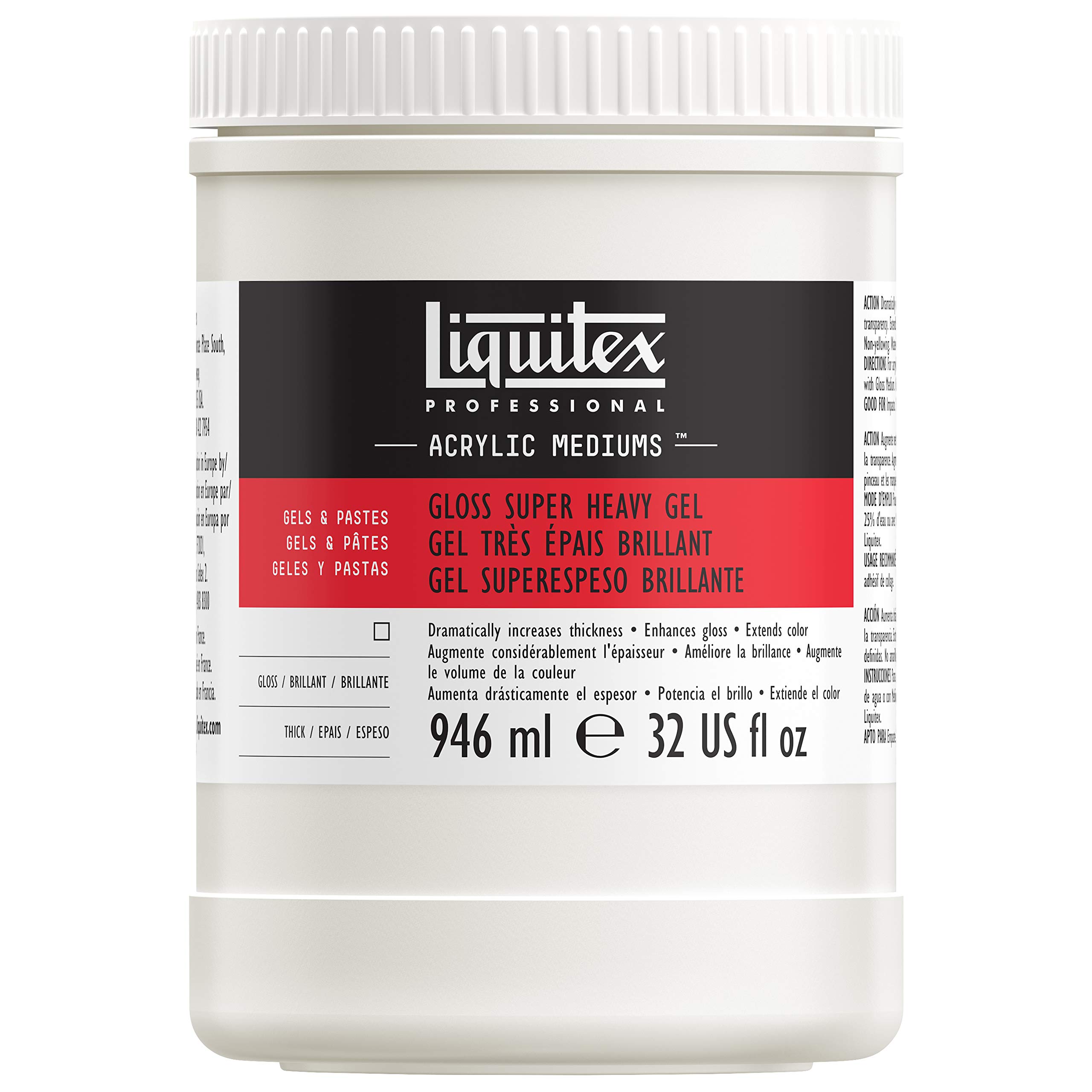
Liquitex’s Super Heavy Gel Medium sits near the top of the brand’s medium range in terms of body and hold, and the 946ml tub is the size that makes sense for anyone using the stuff regularly rather than experimenting. It is a glossy, opaque white gel that dries clear, and its main job is to thicken paint without thinning its color. The question for most buyers is less whether it works — it does — and more whether this particular consistency and this particular quantity are the right fit.
In practice, the medium gets used in a few recurring ways. Painters mix it into heavy-body acrylics to stretch the paint and build impasto without losing the buttery feel; the mixture holds peaks and tool marks instead of slumping. Others use it straight from the tub as a ground or as a glue for collage, since the tack is strong enough to bond paper and light mixed media. It also turns fluid acrylics into something closer to heavy body, which is useful if you have a set of soft-body colors and want more structure from them. The gloss finish is worth noting: it deepens colors and gives a wetter look, which suits some work and fights others.
Functionally, the product behaves the way a heavy gel should. It extends working time slightly compared with raw paint, keeps brush and palette knife texture crisp, and dries to a flexible film that resists cracking in normal studio conditions. It is opaque when wet, so mixing it into dark colors will lighten them until dry, and the dried film is glossy rather than satin. The 946ml tub is a substantial amount — roughly the size of a large yogurt container — and the wide lid makes it easy to scoop with a knife. That said, a tub this size exposes a lot of surface area every time it is opened, and gel mediums skin over if left sitting. Users who work slowly or infrequently may find the top layer thickening before the tub is half gone.
The most common trade-off is the gloss. Super Heavy Gel comes in matte and gloss versions, and the gloss one is genuinely shiny — useful for vivid, saturated passages, less so for work that needs a flat, non-reflective surface. Mixing gloss medium into matte paint produces a semi-gloss result that some painters find awkward to control. There is also a transparency issue: the medium dries clear, but thick applications can trap air and appear cloudy until fully cured, which takes longer than thin layers. Building up heavy texture means waiting, and rushing the next layer can cause surface wrinkling.
Compared with a standard heavy gel medium, the “super heavy” formula is stiffer and holds shape better, closer to a modeling paste in feel while remaining acrylic-compatible and flexible when dry. Against modeling paste specifically, it is less opaque and less sandable, but it adheres better to flexible supports and mixes more cleanly into color. Compared with simply buying heavy-body paint, the medium is a cost-effective way to extend expensive pigments, though it does dilute color intensity in proportion to how much is added. Painters who want maximum pigment load with no change in hue will do better with straight paint.
Who is this for? It suits painters working on canvas or board who build texture, mix their own mediums, and go through enough product that a large tub makes economic sense. It is also reasonable for mixed-media and collage work where a strong, clear-drying adhesive gel is handy. It is less suitable for beginners who want to try impasto once — a smaller tube would be more sensible, and the gloss finish may not match their expectations. It is also a poor choice for anyone needing a matte, non-reflective surface, or for very slow workers who cannot use a large tub before it skins. Those painting on paper should test first, since heavy wet applications can buckle lightweight stock.
Realistic expectations matter here. This is a workhorse medium, not a magic thickener: it will not make thin paint behave exactly like heavy body, and it will lighten and gloss whatever it touches. Used in sensible proportions — roughly equal parts or less with paint — it extends working time and texture without wrecking adhesion. The 946ml size is good value per milliliter for regular users, but the volume itself is the main commitment. Buy it if you know you will use it; otherwise start smaller and see whether the gloss and the stiffness suit your way of working.