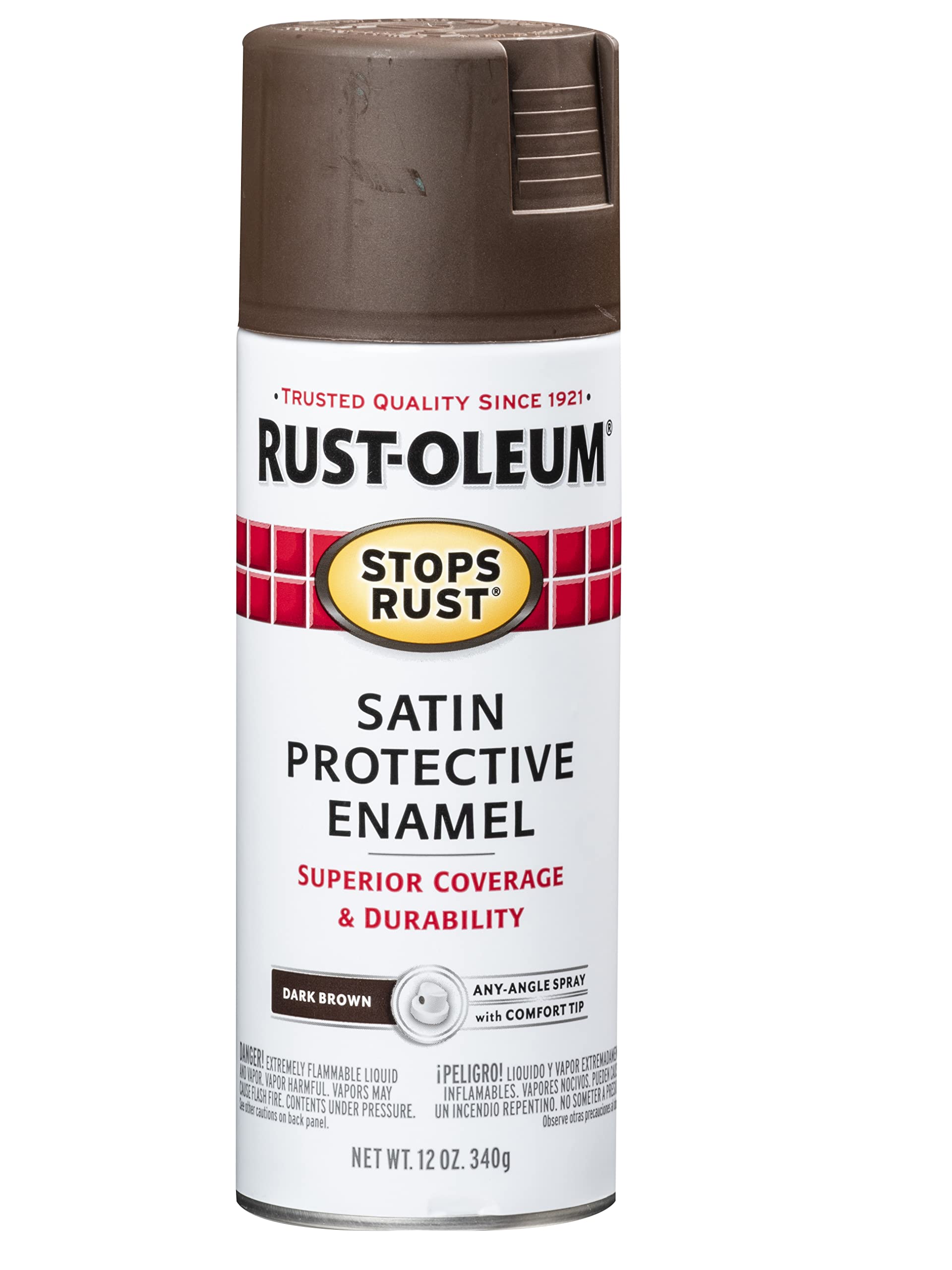
Rust-Oleum’s Stops Rust line has been a fixture in hardware stores and garages for decades, and the Satin Dark Brown variant sits somewhere in the middle of that range in terms of finish and intended use. It’s an oil-based enamel aerosol marketed primarily for metal, though it’s commonly used on wood and other surfaces as well. The appeal is straightforward: a protective coating that can be applied without brushes, rollers, or a compressor setup, and that dries to a finish with some sheen but not a high gloss.
The most common real-world context for this product is outdoor metalwork. Fence posts, patio furniture frames, mailboxes, wrought-iron railings, toolboxes, and garden carts are typical candidates. The satin dark brown reads as a restrained, earthy tone that works well on items meant to blend into a yard or sit on a porch without drawing attention. It’s also used on indoor metal fixtures and occasionally on wood trim or furniture where a sprayed finish is preferable to brushing. The can is designed for direct-to-surface application after minimal prep, which is part of why it gets picked up for quick weekend jobs rather than fine furniture work.
Functionally, the product is an alkyd enamel with rust-preventive pigments. It’s intended to bond to bare metal and to surfaces that have been previously painted, provided they’re clean and sound. The satin finish lands between flat and gloss, which means it hides minor surface imperfections better than a gloss would but doesn’t have the dead-flat look that can show scuffs. Coverage is roughly in line with typical aerosol enamels—about 10 to 12 square feet per can depending on coat thickness—so larger projects require multiple cans, which adds up quickly compared to a quart of brush-on paint.
Application is where expectations need calibrating. Spray cans of this type lay down a thinner coat than brush-on enamel, and the satin finish is less forgiving of uneven passes than a flat would be. Multiple light coats, with recoat windows observed carefully, produce a more consistent sheen than one heavy pass. The solvent smell is strong and lingers, so outdoor or well-ventilated use is essentially mandatory. Dry times are reasonable for an oil-based product, but full cure takes considerably longer, and the finish remains soft enough to mark for the first day or so. On metal, adhesion is generally good after a wipe-down with a degreaser; on bare wood, the paint can raise grain slightly and may need a sanding between coats.
One limitation worth stating plainly is durability under sustained abrasion or flexing. This is a protective coating, not a powder coat or a two-part epoxy. On a railing that gets grabbed daily or a surface that expands and contracts significantly, the finish can chip at edges and wear through over a season or two. It also doesn’t tolerate being applied over rust that hasn’t been removed—Stops Rust is a rust-preventive, not a rust converter, and painting over loose rust will lead to flaking. That distinction catches some buyers off guard.
Compared with a brush-on alkyd enamel, the spray version trades film thickness and cost efficiency for convenience and a more even finish on complex shapes. Compared with a lacquer-based spray, it’s slower to dry but more weather-resistant and better suited to outdoor metal. Compared with a rust-converter primer followed by a topcoat, it’s a simpler one-step approach that works fine on sound surfaces but offers less protection on already-corroded metal.
This product suits people doing small to medium outdoor metal touch-ups, repainting patio furniture, or coating hardware and brackets where a spray is the practical option. It’s less suitable for large flat surfaces where cost per square foot matters, for surfaces subject to heavy wear, or for anyone wanting a furniture-grade finish. It’s also a poor fit for indoor use in enclosed spaces given the solvent load. Buyers expecting a hard, glass-smooth coating should look at a different product category entirely.