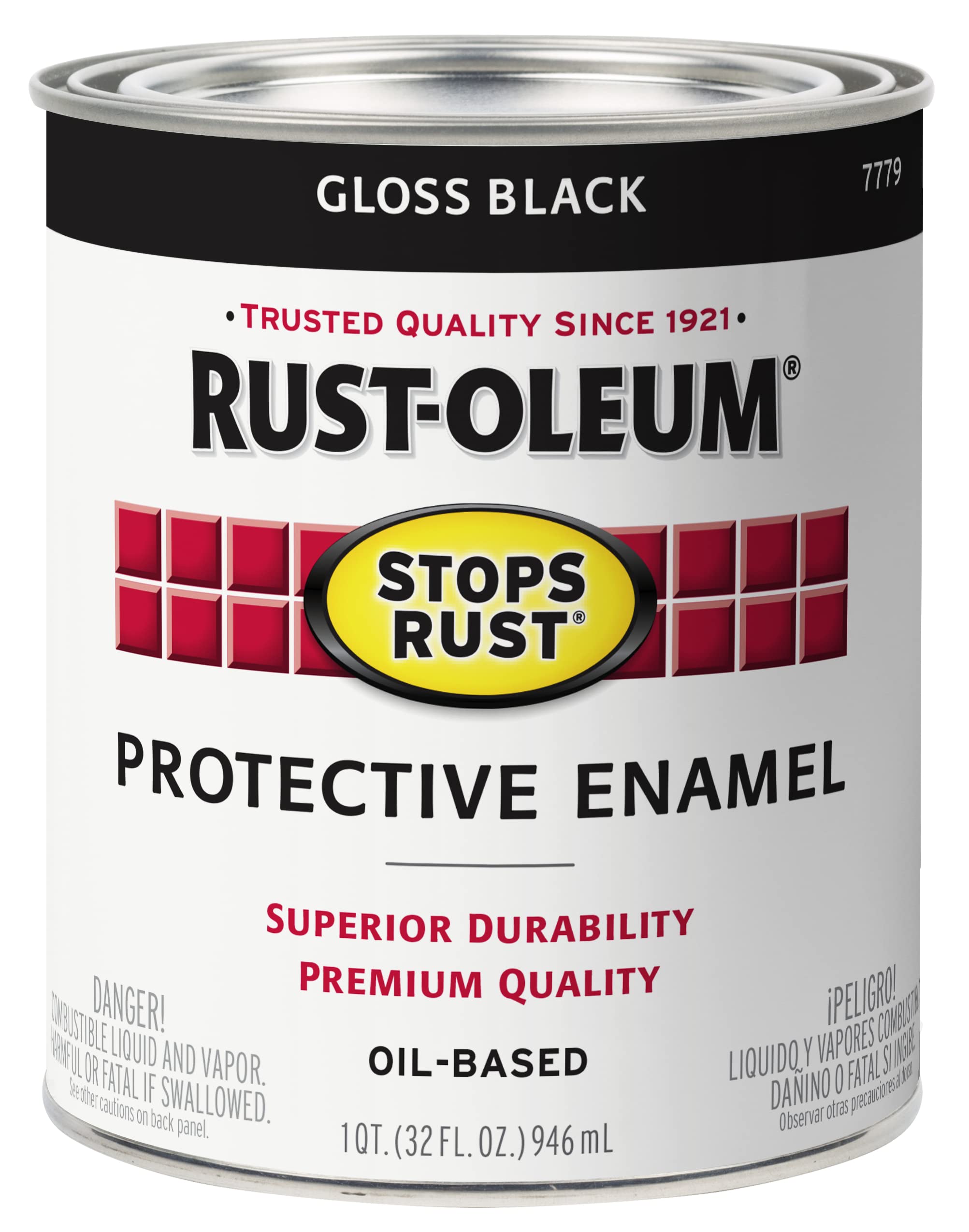
Rust-Oleum Stops Rust Brush On Protective Enamel is one of those products that shows up in a lot of garages and workshop shelves, often bought for a specific repair and then kept around for years. The gloss black version is the most common pick, largely because black hides imperfections reasonably well and suits everything from wrought iron railings to old toolboxes. It is a solvent-based alkyd enamel, not a waterborne paint, and that distinction matters for how it behaves, how it dries, and who should think twice before using it.
In practice, this paint is used for small-to-medium metal projects: touching up a rusty gate, repainting a patio chair frame, coating a trailer hitch, or refreshing the cast iron base of a woodworking machine. It also gets used on wood, though less often, typically for exterior trim or furniture that needs a hard, glossy shell. The brush-on format is the main draw here. Aerosol versions of the same line are convenient for quick coverage, but brushing gives more control on detailed shapes, lets you work the paint into pitted rust, and avoids the overspray cloud that makes rattle-can work unpleasant in a closed garage.
Functionally, the product is straightforward. It is a direct-to-metal enamel that can be applied over properly prepared bare metal, previously painted surfaces, and light rust after wire brushing or sanding. The label calls for a clean, dry surface and recommends a primer on bare steel for best adhesion, though many users skip the primer on small touch-ups and get acceptable results. Coverage is decent for a brush-on enamel—roughly 100 square feet per quart on a smooth surface, less on rough or porous metal. Drying time is where expectations need calibrating: it is touch-dry in a few hours but needs a full day or more before recoating, and full cure takes several days to a week. In cool or humid conditions, that window stretches further.
The gloss finish is genuinely glossy, which cuts both ways. On a clean, well-prepped surface it looks close to a factory finish and cleans up easily. On a surface with dents, weld seams, or old paint edges, the high gloss amplifies every flaw. Brush marks are also more visible in gloss than in satin or flat sheens, and the paint is thick enough that a heavy hand will leave ridges. Thin coats, a quality brush, and a little patience with the recoat window make a noticeable difference.
Where the product earns its reputation is durability once cured. The cured film is hard, reasonably chip-resistant, and holds up to weather and occasional abrasion better than most latex alternatives. It resists moisture and mild chemicals, which is why it turns up on outdoor furniture and equipment frames. That said, it is not a miracle coating for heavily rusted metal. Painting over active rust without removing it will eventually fail, and the paint does not chemically convert rust the way a dedicated rust converter does. It slows corrosion by sealing the surface, not by stopping it.
- Type: Solvent-based alkyd enamel, brush-on
- Finish: Gloss black (also available in other sheens and colors)
- Recommended substrates: Metal, wood, previously painted surfaces
- Coverage: Approximately 100 sq ft per quart on smooth surfaces
- Dry time: Touch-dry in 2–4 hours; recoat after 24 hours; full cure in about a week
- Cleanup: Mineral spirits or paint thinner
The most obvious trade-off is the solvent base. The fumes are strong, ventilation is non-negotiable, and cleanup requires solvents rather than soap and water. Brushes need to be cleaned promptly or they are effectively ruined. For anyone painting indoors or in a poorly ventilated space, a waterborne enamel or an acrylic direct-to-metal paint is a more sensible choice, even if it sacrifices some hardness. Compared with aerosol enamel from the same line, brushing is slower and leaves more texture, but it wastes less product and handles detailed or partially rusted surfaces better. Compared with a two-part epoxy coating, this enamel is far easier to apply and much more forgiving, but it will not match epoxy’s chemical resistance or hardness.
This paint suits people doing occasional repair and restoration work: homeowners touching up exterior metal, hobbyists repainting tools and fixtures, and anyone who wants a hard, glossy black finish without investing in spray equipment. It is a poor fit for large, flat surfaces where a smooth factory-like finish is the goal, for indoor use without ventilation, and for heavily corroded metal that really needs rust removal or conversion first. It is also not the right product for flexible surfaces or plastics, where a hard enamel will crack or flake.
Overall, the Rust-Oleum brush-on enamel is a workmanlike product that does what it claims when the surface prep is honest and the drying time is respected. It rewards patience and punishes shortcuts, which is a fair description of most oil-based paints. Buy it for small metal jobs and touch-ups, keep a can of mineral spirits nearby, and plan on leaving the piece alone for a few days before putting it back into service.