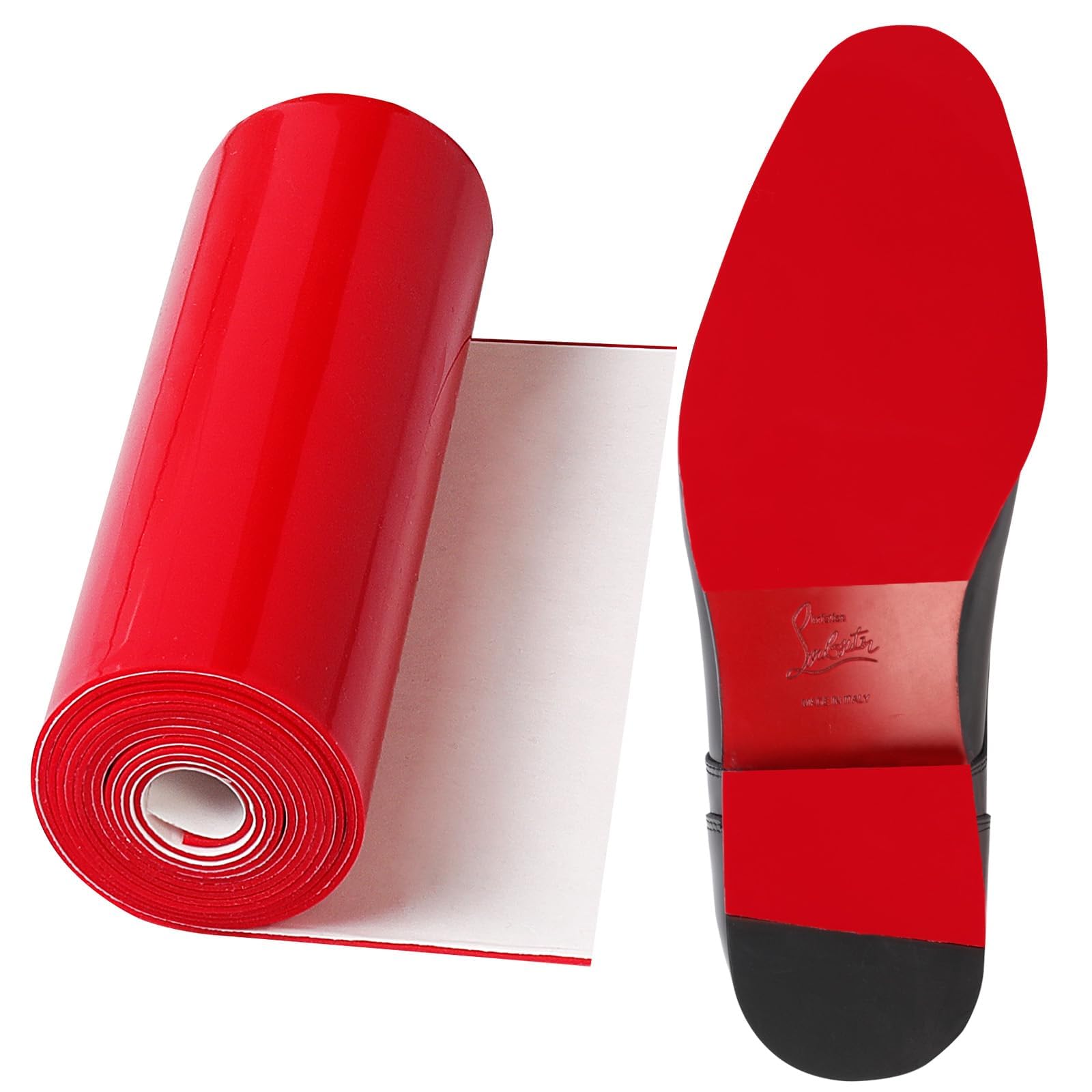
There is a particular kind of dread that comes with owning a pair of Christian Louboutins. It is not the price tag, nor the delicate silhouette, but the stark red lacquered sole that scuffs, chips, and peels with an almost alarming ease. The Eldosilk Red Bottom Shoe Protector (5×39in) is one of those aftermarket accessories designed to delay that inevitable wear. It is essentially a roll of transparent, adhesive-backed film that you apply to the leather sole, promising to keep that signature red intact while you walk.
The application process is where this product immediately separates itself from cheaper alternatives. The film comes on a roll, and you cut it to size with scissors, which is a bit more involved than the pre-cut kits from brands like SoleStick or Vibram. You need to peel off a backing, position it carefully, and then use a heat source—a hairdryer works—to get the edges to conform around the curve of the heel. It is not a five-minute job. Realistically, doing a single pair of pumps properly takes about twenty minutes of patient work. The adhesive is aggressive enough that if you misalign it, peeling it back off will likely stretch or ruin the piece. A spray bottle with soapy water, as some suggest, helps with repositioning, but the instructions are sparse, so it is a bit of trial and error.
Once applied, the protection is genuinely effective for its intended purpose. The film is thick enough to absorb the friction from pavement and gritty surfaces without immediately tearing. It is transparent, so the red lacquer shows through perfectly, which is the entire point. Unlike a rubber sole guard that adds a visible black or clear tread, this keeps the aesthetic of the shoe intact. For a night out where you are mostly walking from a car to a restaurant, the Eldosilk film will prevent the ugly gray scuff marks that usually appear after a single wear. It also handles the toe area reasonably well, though the film is a bit stiff and can struggle to wrap tightly around the sharp point of a stiletto without lifting.
However, there are trade-offs that need to be considered. The film is not a permanent solution. It is a consumable. Depending on how much you walk, you will see the edges begin to peel or the surface itself start to look scratched after four or five wears. When that happens, you have to peel it off, which can leave a sticky residue that requires a solvent to clean, and then apply a fresh strip. The cost of the roll is not insignificant, and buying replacements every few months adds up. Furthermore, this is not a solution for all-weather use. In the rain, the film can become slippery, and there is a risk of moisture seeping in at the edges, which does more damage than good. It is strictly a dry-weather, low-mileage accessory.
Compared to the alternative of taking the shoes to a cobbler to have a thin rubber sole tapped on, the Eldosilk offers a different value proposition. A cobbler-installed sole is a one-time cost, lasts for years, and provides better traction, but it permanently alters the look of the shoe, covering the red lacquer entirely. The film preserves the original appearance but demands ongoing maintenance. For someone who wears heels rarely and wants them to look pristine for events, the film is the better choice. For someone who wears their designer heels daily as part of a commute, the cobbler route is far more practical and economical in the long run.
It is also worth noting the learning curve. Applying this to a pair of very expensive shoes is a nerve-wracking experience. The film is not forgiving, and a botched application leaves bubbles or creases that are visible up close. It takes a steady hand and a bit of confidence. There is also the issue of the film’s edge being slightly visible if you do not trim it perfectly flush with the sole’s edge, which can catch on carpet and peel back prematurely.
In terms of suitability, this product is for the person who rotates their shoes and values the unblemished red sole. It is not for the heavy walker, nor for those who live in rainy climates. It is a niche solution for a niche problem, and as long as you understand that it is a temporary bandage rather than a permanent fix, it works as intended. Just do not expect a miracle; expect a well-designed piece of tape that does its job until it does not.