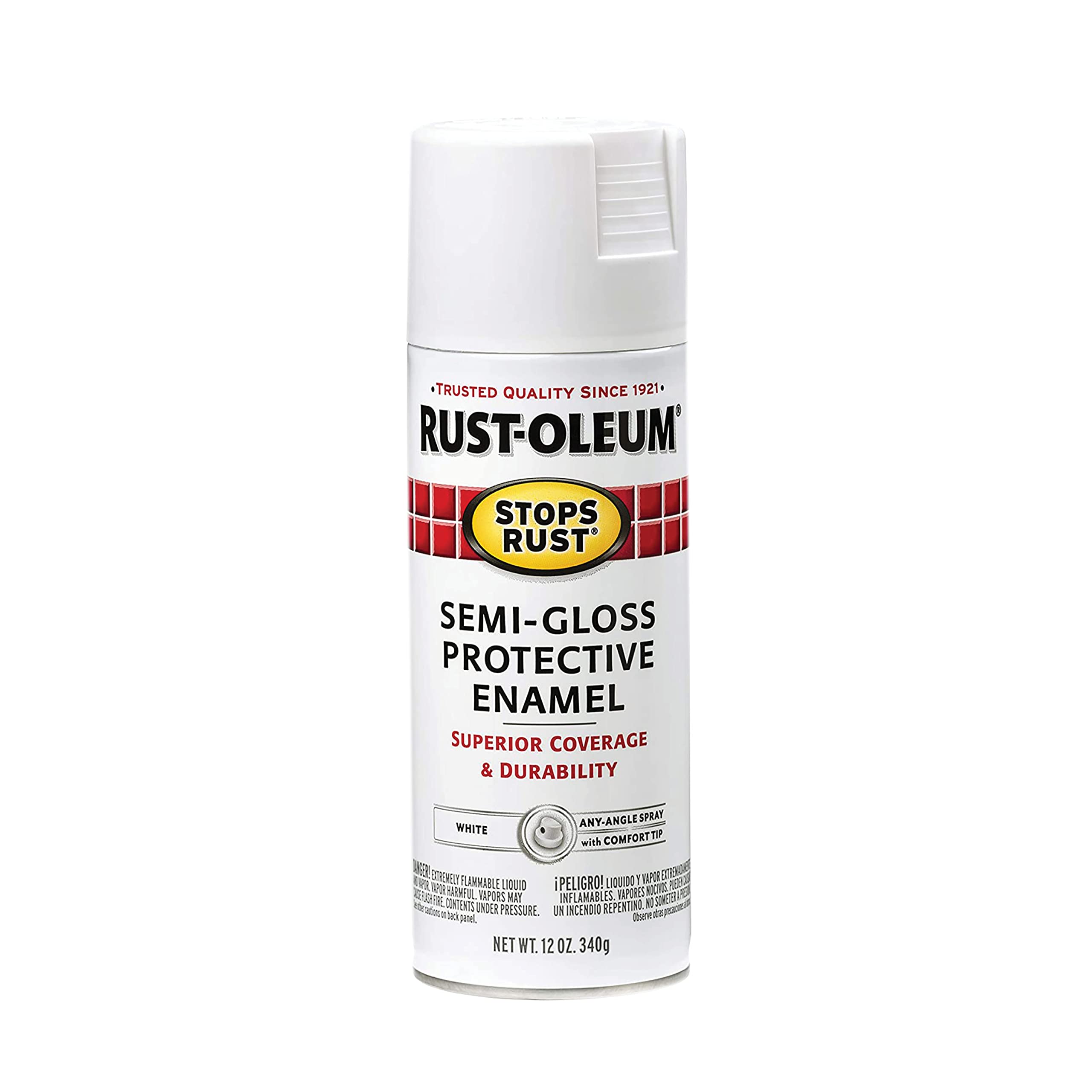
Rust-Oleum’s Stops Rust line has been a fixture on hardware store shelves for decades, and the semi-gloss white variant is one of the more commonly reached-for cans in the lineup. It sits in an awkward but useful middle ground: more protective than a basic decorative enamel, less involved than a two-part epoxy or a proper automotive refinish system. Understanding where it actually fits is the key to getting reasonable results from it.
The product is an oil-based alkyd enamel in an aerosol can, marketed primarily for metal surfaces exposed to weather. In practice, people use it on far more than that: wrought iron patio furniture, mailboxes, steel toolboxes, trailer frames, gate hinges, lawnmower decks, and the occasional piece of indoor furniture that needs a durable white finish. The semi-gloss sheen is a sensible default for these jobs because it hides surface imperfections better than gloss while still cleaning up more easily than flat.
Functional characteristics worth knowing before you buy:
- Oil-based alkyd enamel that cures to a harder film than typical lacquer-based general-purpose sprays
- Rust-preventive pigments in the formulation, though the can is not a substitute for removing existing rust
- Roughly 12 ounces of product, with coverage estimates around 10–12 square feet per can depending on coats
- Recoat window that is either within an hour or after 24 hours — miss the window and you risk wrinkling
- Long full-cure time, often several days to a week before the film reaches its final hardness
The recoat window is the single most common source of frustration with this product. Oil-based enamels are unforgiving about timing, and a second coat applied at, say, three hours can lift and wrinkle the first. That is a handling issue rather than a formulation defect, but it catches out people accustomed to lacquer sprays that can be recoated almost indefinitely. Plan the job around the window or wait a full day between coats.
Application behavior is typical of heavy-bodied enamel aerosols. The spray pattern is reasonably controllable, but the product is prone to runs if you lay it on thick, and the semi-gloss white shows drips and sags clearly because of the light color. Several thin passes beat one heavy coat every time. Adhesion to properly prepared bare steel or previously painted metal is good; adhesion to slick or poorly sanded surfaces is not, and the paint will not compensate for skipped prep. On rusty metal, the “stops rust” claim should be read as slowing corrosion on prepared surfaces, not converting existing rust. Loose rust needs to come off first.
Drying and curing are where expectations often diverge from reality. The can will suggest a dry-to-touch time that sounds quick, and it is, but the film remains soft for a good while afterward. A gate repainted on Saturday may still be markable by a fingernail on Tuesday. For furniture or anything that will be handled soon, budget a week of cure time in a warm, dry space. Humidity and cool temperatures stretch that out considerably, and white enamel applied in damp conditions can blush or dry with a slightly chalky look.
Compared with a water-based acrylic enamel spray, this product offers better hardness and solvent resistance once cured, and it handles exterior exposure more convincingly. The trade-off is the solvent smell, the longer cure, and the recoat rigidity. Compared with a brush-on rust-inhibiting primer plus topcoat system, the spray is faster and gives a more even finish on complex shapes, but it offers less film build per pass and less control over corners and edges. For small parts and intricate metalwork, the aerosol wins on convenience; for large flat panels, brushing or rolling a primer and enamel is usually more economical and more durable.
Who it suits: people refinishing small to medium metal items outdoors or in a ventilated garage, who can work with solvent-based products and are willing to plan around recoat and cure times. It is a practical choice for touch-up work on outdoor fixtures, restoring cast iron furniture, or giving a trailer or wheelbarrow a fresh white coat.
Who it does not suit: anyone needing a fast turnaround on a handled object, people working in poorly ventilated indoor spaces, and those expecting a spray can to arrest significant existing rust. It is also a poor fit for surfaces that flex, since cured alkyd enamel is fairly rigid and can crack under movement. Automotive body panels deserve a proper refinish product rather than this. Used within its limits and with realistic patience, it remains a dependable, if demanding, utility coating.