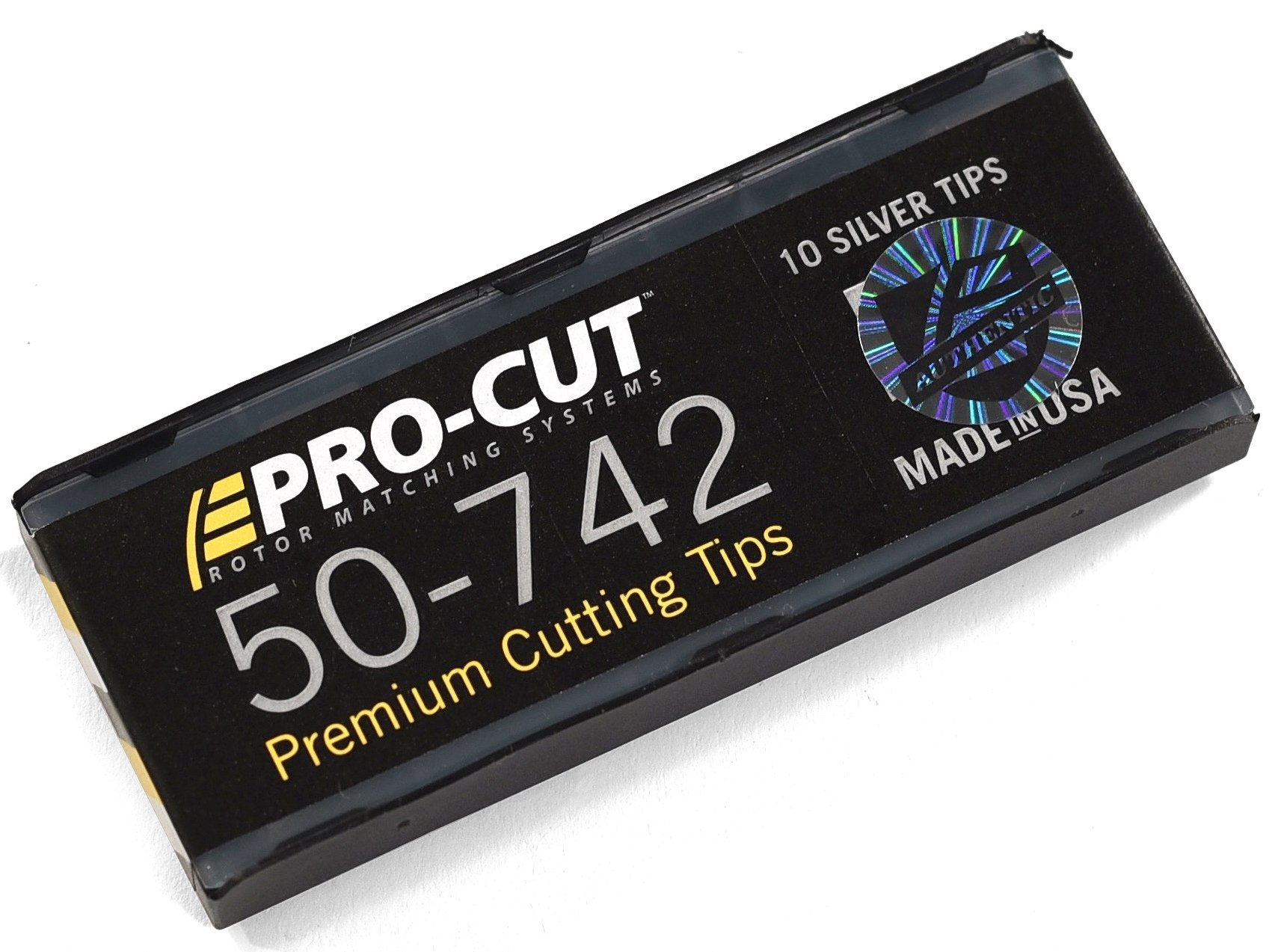
Carbide cutting tips are the consumable that often determines whether a machining job goes smoothly or turns into a headache. The PRO-CUT 50-742 Premium Carbide Cutting Tips sit in the crowded middle ground of the market—not the cheapest option, but not the most expensive either. This review looks at what they offer, where they fall short, and who should consider them.
These tips are intended for general turning and facing operations on materials like mild steel, stainless, and cast iron. In a typical job shop, you’d see them used on manual lathes or older CNC machines where tool changes are frequent and consistency matters. The 50-742 designation suggests a specific geometry—likely a standard 80-degree diamond shape with a positive rake—but without a full catalog, that’s an educated guess. What’s clear is that they’re designed to be a drop-in replacement for common turning tools, not a specialized solution for exotic alloys.
One of the first things you notice is the coating. PRO-CUT uses a PVD coating that’s visually similar to what you’d find on mid-range inserts from larger brands. In practice, this coating helps with wear resistance, particularly when cutting abrasive materials. However, it’s not a miracle worker—expect it to handle moderate speeds and feeds, not high-productivity roughing. The carbide grade itself is a general-purpose formulation, which means it’s a compromise: tough enough for interrupted cuts but not the hardest available for finishing.
The tips come in a box of ten, which is standard for this class. Each tip is individually seated in a plastic tray, which helps prevent chipping during shipping. That might seem trivial, but anyone who’s ordered cheap inserts online knows the frustration of finding damaged edges. The packaging is basic but functional—no frills, no fancy branding.
In terms of geometry, the 50-742 has a chipbreaker that’s moderately aggressive. It works well for breaking chips in steel, but in softer materials like aluminum, it can sometimes cause smearing if you’re not careful with feed rates. That’s a trade-off: the chipbreaker is optimized for ferrous materials, so if you work primarily with non-ferrous metals, you might find better options elsewhere.
Performance-wise, these tips are respectable for the price. In a side-by-side test with a comparable insert from a well-known brand, the PRO-CUT tips held up well in continuous turning of 1045 steel. Tool life was about 10-15% shorter, but at a significantly lower cost per edge, the economics often favor the PRO-CUT. However, in interrupted cuts or when machining harder materials like 4140 pre-hardened steel, the difference was more noticeable—the PRO-CUT tips showed chipping sooner.
One limitation that’s worth highlighting is the lack of a dedicated chipbreaker for finishing. The 50-742 is a general-purpose geometry, so if you’re looking for mirror finishes, you’ll likely need a separate finishing insert. This isn’t a flaw per se—it’s just the nature of a general-purpose tool. But it means you can’t rely on these tips for every operation.
Another consideration is the consistency from batch to batch. While the tips we examined were within tolerance, there have been reports from users about occasional variations in edge sharpness. This is common with mid-tier carbide, but it’s something to keep in mind if you’re running high-precision work where every micron counts. For general machining, it’s unlikely to be an issue.
Compared to solid carbide end mills or indexable drills, these tips are a different category altogether. They’re not meant for milling or drilling—they’re for turning. Within the turning category, they compete with inserts from brands like Kennametal or Sandvik, but at a lower price point. The trade-off is that you sacrifice some tool life and consistency for cost savings. For a job shop that goes through a lot of inserts, that can add up.
Who are these tips for? They’re suitable for hobbyists, small machine shops, and maintenance departments that need a reliable general-purpose insert without breaking the bank. They’re also a good choice for educational settings where students are learning and might accidentally damage tools. However, they’re not for high-production environments where every second of tool life is optimized, nor for machining superalloys or hardened materials beyond 45 HRC. If you’re running a production cell with tight tolerances and high throughput, you’ll likely want to stick with premium brands.
In summary, the PRO-CUT 50-742 Premium Carbide Cutting Tips offer a reasonable balance of performance and cost. They’re not the best at anything, but they’re competent at a lot of things. If you’re looking for a dependable general-purpose insert and you’re willing to accept slightly shorter tool life in exchange for a lower price, they’re worth considering. Just don’t expect them to replace high-end inserts in demanding applications.