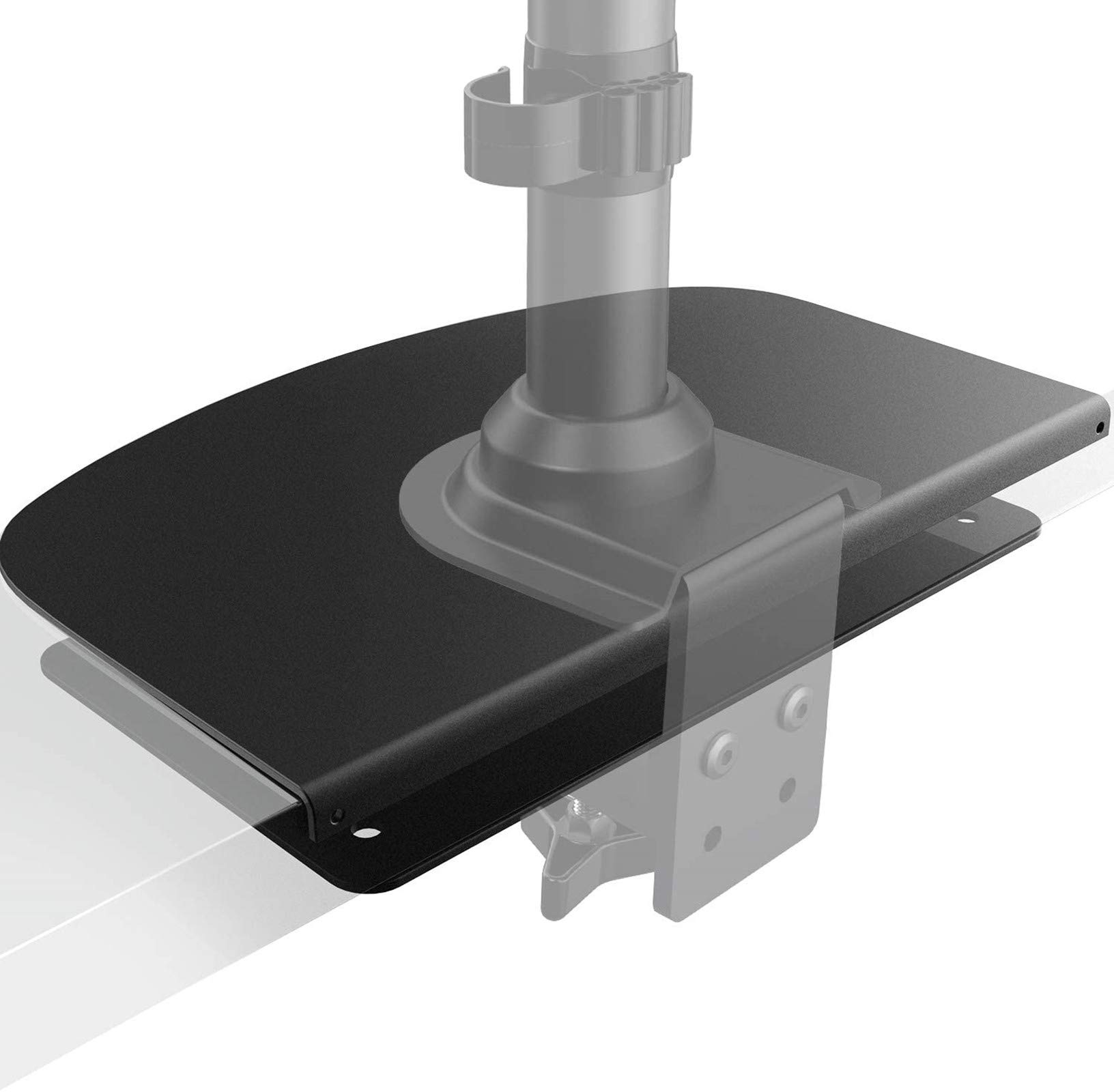
Clamp-mounted monitor arms and stands solve a lot of desk problems, but they introduce one of their own: the clamp needs a surface that can take concentrated pressure. A glass desk, a thin hollow-core tabletop, or a lightweight laminate surface can crack, bow, or dent under the load of a single monitor arm. The HUANUO Steel Reinforcement Plate is a simple answer to that problem — a flat steel plate that sits between the clamp and the underside of the desk to spread the load over a wider area. It is a low-cost accessory rather than a piece of equipment, and it should be judged on that basis.
The plate is designed for C-clamp installations, which covers most monitor arms, single monitor stands, and many microphone or accessory clamps. In practice, you slide the plate under the desk where the clamp’s upper jaw would otherwise press directly into the surface, then tighten the clamp against the plate instead. The steel distributes force across the plate’s footprint rather than concentrating it at the clamp’s contact point. For anyone who has watched a clamp slowly sink into a soft desk surface, or who owns a glass-topped desk and has been warned against clamping anything to it, this is the intended use case.
Functionally, the plate is straightforward. It is made of steel, which gives it the rigidity needed to resist bending under clamp pressure, and it is sized to fit most standard C-clamp bases. There is no adjustment mechanism, no padding, and no mounting hardware beyond the plate itself — it relies on the clamp’s existing tension to stay in place. That simplicity is a strength in one sense: there is very little to fail. It is also a limitation, because the plate does nothing to protect the top surface of the desk beyond what the clamp’s own pad already does, and it does not add any grip or cushioning.
One trade-off worth noting is thickness. Adding a steel plate between the clamp and the desk changes the effective clamping range, and on clamps that are already near their maximum opening, the plate can make it harder to get a secure grip on a thick desktop. On thin desktops — the exact scenario the plate is meant for — this is rarely an issue, but it is worth checking the clamp’s jaw capacity before buying. The plate also adds a hard, unpadded layer against the underside of the desk, which is fine for solid surfaces but does nothing to soften contact on a finished wood underside.
Compared with alternatives, the reinforcement plate sits in a narrow niche. A custom-cut piece of plywood or a hardwood block can serve the same load-spreading purpose for less money if you have scrap material and a saw, and some users simply use a small cutting board. What the HUANUO plate offers over those DIY options is a consistent shape, a finished steel surface, and no need to measure or cut anything. Compared with purpose-built desk risers or clamp-compatible desk pads, it is far more targeted — those products address ergonomics or surface protection broadly, while this plate addresses only the clamp pressure point. If your concern is desk height or cable management, this is not the product for you.
Realistic expectations matter here. The plate reduces the risk of point-load damage; it does not make a glass desk invulnerable. Tempered glass can still fail if the clamp is overtightened or if the glass has existing flaws, and no steel plate changes that. Similarly, on a thin hollow-core door repurposed as a desk, the plate spreads load but does not add structural strength to the desktop itself. It is a mitigation, not a guarantee, and users should still follow the monitor arm manufacturer’s guidance on desk thickness and material.
Who is this for? It makes sense for people with glass desktops, thin laminate tops, or lightweight folding tables who want to use a clamp-mounted monitor arm and are willing to accept the residual risk. It is also reasonable for anyone who has already seen minor denting or compression marks under a clamp and wants to stop it getting worse. Who is it not for? Owners of solid hardwood or thick engineered-wood desks probably do not need it — those surfaces handle clamp pressure well on their own. Nor is it a substitute for a proper desk if the underlying surface is genuinely too weak for the load; in that case, a freestanding monitor stand with a broad base is the safer choice.
Build quality is consistent with the price point. The steel is rigid enough for the job, the edges are finished adequately, and there is nothing electronic or moving to wear out. The main criticism is that the product is almost too minimal — a thin rubber or foam layer on the desk-facing side would improve grip and reduce the chance of the plate shifting during installation, and it would cost very little to add. As it stands, users may want to place a thin pad between the plate and the desk themselves.
Overall, the HUANUO reinforcement plate is a sensible, unglamorous accessory that solves a specific problem for a specific group of desk owners. It is not a universal upgrade, and it will not rescue a desk that is fundamentally unsuitable for clamping. But for the glass-and-thin-top crowd, it is a cheap way to add a margin of safety and peace of mind — provided expectations stay realistic.