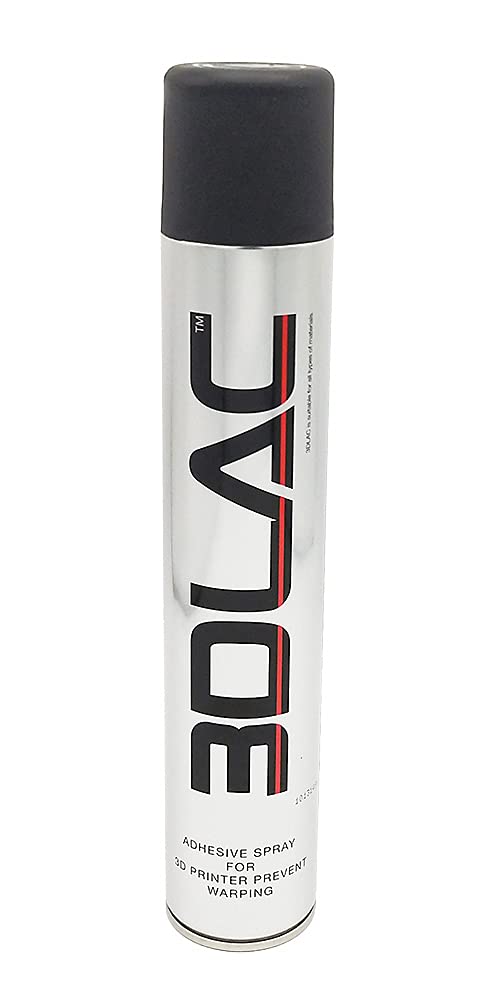
Bed adhesion is one of those problems that rarely announces itself until a print is already failing. A first layer that lifts at a corner, a tall part that detaches halfway through, or a thin brim that curls upward are all familiar symptoms. 3DLAC is one of the better-known answers to that problem in Europe, sold as a 400 ml aerosol spray intended for heated print beds. It is not a glue stick and it is not a surface sheet; it is a spray-on adhesion aid, and understanding what that means in practice matters more than the label.
The product is applied to a clean, usually heated bed before printing, forming a thin tacky film that helps the first layer bond. The can delivers a fine mist rather than a thick coating, which is the main reason it behaves differently from glue stick methods. A light pass is typically enough for a normal-sized print area, and the film can be refreshed between prints. Because it is an aerosol, coverage is fast and even, and there is no smearing or streaking the way there can be with a glue stick applied to a warm bed. The 400 ml can is a reasonable size for regular use, though aerosol products are consumed faster than their volume suggests once overspray is factored in.
Where 3DLAC earns its reputation is with materials that are prone to warping or lifting: PLA on glass, PETG on smooth surfaces, and similar combinations where a little extra grip prevents corner curl. It is also useful on beds that have lost some of their original texture or coating. The spray works with heated beds, which is the intended use case, and it is generally applied at typical printing temperatures rather than on a cold surface. Users typically spray a light coat, let it settle briefly, and then start the print. The film is water-soluble, so cleaning the bed afterward with warm water is usually sufficient, which is one of the practical advantages over permanent adhesion solutions.
That water solubility cuts both ways. The coating is not especially durable, and large or long prints, or repeated printing in the same spot, may require reapplication. On the other hand, parts release more easily than with some stronger adhesives, and the bed can be returned to a clean state without scraping. It is worth being realistic about how much a spray can do: it improves margin for error, but it does not compensate for an unlevel bed, a badly calibrated first layer, or a drafty enclosure. Users who expect it to fix fundamental setup problems will be disappointed.
There are also trade-offs worth naming. Aerosol application means overspray, and spraying near a printer in an enclosed room raises the usual ventilation questions; some users prefer to spray away from the machine or outdoors. The film can build up over time if the bed is not cleaned periodically, leaving a slightly tacky residue that affects surface finish. And while it helps with adhesion, it is not a release agent for every material; with some filaments, particularly those that already bond aggressively to certain surfaces, the extra grip can make part removal harder rather than easier. That is a nuance the packaging does not emphasize.
Compared with glue stick, the main alternative most users consider, 3DLAC offers more even coverage and less mess on the bed, at a higher per-use cost and with aerosol handling considerations. Compared with specialized adhesion sheets or PEI-coated surfaces, it is a consumable rather than a durable solution, but it is also cheaper to try and works across a range of bed types. Compared with hairspray, a common improvised option, it is formulated for the purpose and generally leaves less residue, though hairspray remains the cheaper route for casual users.
In terms of suitability, this is a sensible pick for people running PLA or PETG on glass or smooth beds who occasionally fight corner lift and want a quick, cleanable adhesion aid. It suits users who print regularly enough to justify a consumable and who are comfortable with aerosol application. It is less suitable for those printing in small, poorly ventilated rooms, for users who want a one-time durable surface solution, or for anyone whose adhesion issues stem from mechanical problems that a spray cannot solve. It is also not ideal for very large flat prints where reapplication mid-job is impractical. Treated as a modest, practical helper rather than a cure-all, 3DLAC does its job without much fuss.