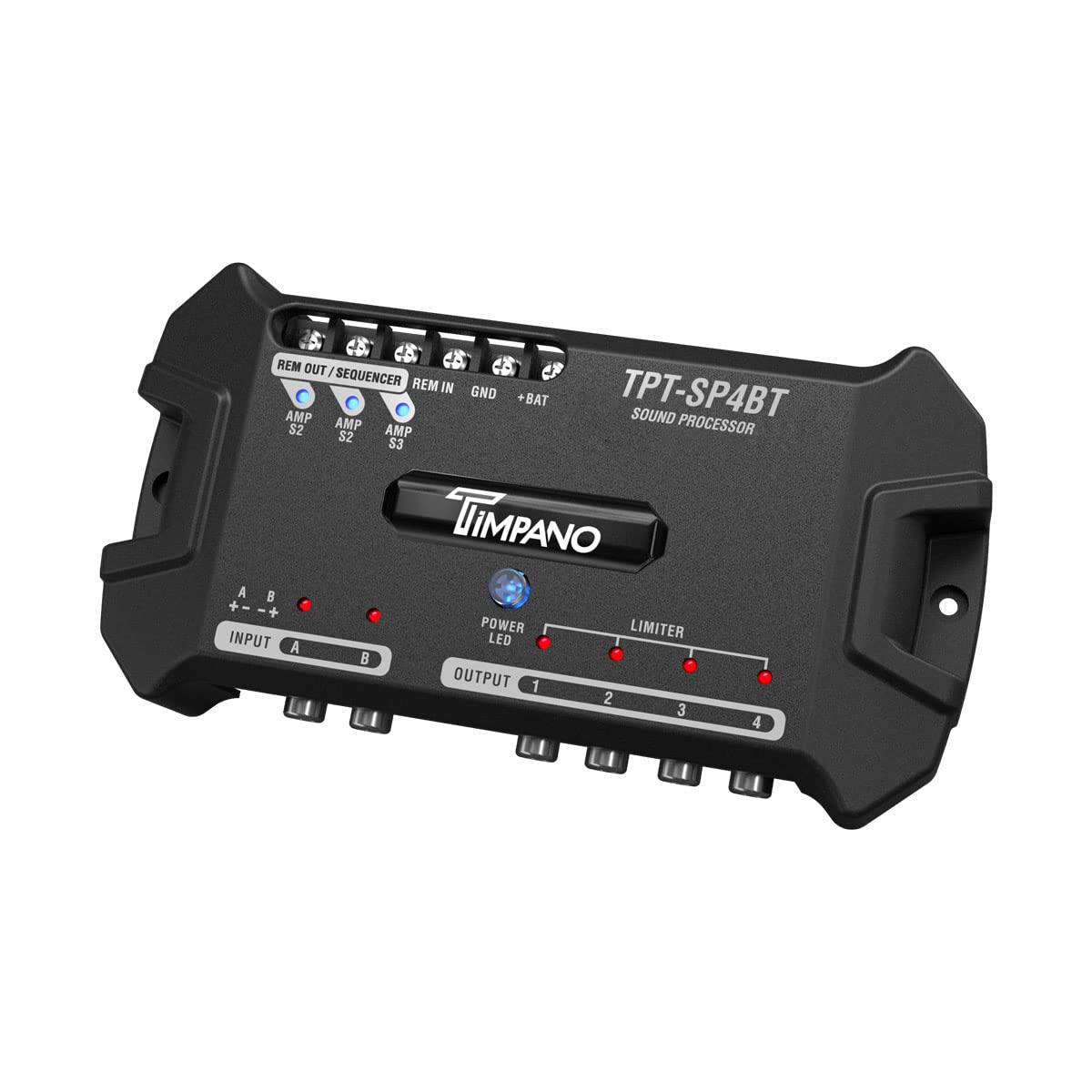
The TPT-SP4BT is one of those components that sits in the background of a car audio system and quietly determines how good everything else sounds. Timpano’s entry into the digital signal processing market targets a specific buyer: someone who wants real DSP control over a four-channel setup without spending flagship money. Whether it delivers on that promise depends heavily on what you expect going in.
In practical terms, this is a processor you install between your source unit and your amplifiers. It takes a signal, lets you shape it digitally, and sends it back out across four output channels. The Bluetooth input is the headline convenience here, since it lets a phone or tablet feed audio directly into the processor without a separate head unit. The built-in voltmeter and remote relay are the kind of small extras that make installation and daily use a bit easier, though they are secondary to the core DSP function.
Where the TPT-SP4BT earns its place is in the feature set relative to price. The digital signal processing covers the essentials you would expect from a modern processor: adjustable crossovers, time alignment, and equalization across the output channels. These are the tools that actually matter when you are trying to get a driver’s seat listening position to sound correct rather than just loud. The Bluetooth connection is genuinely useful for tuning from a phone, and it also serves as a practical input for casual listening. The voltmeter is a nice touch for monitoring electrical health during heavy draw, and the remote relay gives you a way to trigger external equipment without extra wiring headaches.
- Four output channels with digital signal processing for crossover, time alignment, and EQ adjustment
- Bluetooth audio input for phone or tablet playback and tuning
- Built-in voltmeter for monitoring system voltage
- Remote relay output for triggering auxiliary components
The honest trade-off with processors at this price point is the tuning interface and the resolution of the adjustments. Budget DSP units tend to have less polished software than the established names, and the Timpano is no exception to that general pattern. Expect a learning curve, and expect the app or software to feel functional rather than refined. The four-channel output count is also a real constraint. If you are running a three-way front stage plus a subwoofer, four outputs will not cover it, and you will be looking at a larger processor. This unit fits a two-way front plus sub, or a simpler four-speaker arrangement, and that is the ceiling.
Bluetooth as a primary input is convenient but comes with the usual caveats. Wireless streaming is susceptible to interference in a vehicle environment, and the audio quality ceiling is lower than a wired digital connection. Treat Bluetooth as a tuning and convenience feature rather than the reference-quality path for critical listening. The voltmeter, similarly, is a useful convenience but not a substitute for proper electrical monitoring when you are pushing a high-current system.
Compared to a conventional line output converter or a basic equalizer, the TPT-SP4BT offers far more control over how the system behaves. A line output converter just adapts signal levels; this processor lets you actively correct for driver placement, crossover points, and frequency response. Compared to higher-end DSP platforms from established manufacturers, it gives up interface polish, channel count, and likely some processing headroom. The comparison is really about whether you need the extra channels and refinement or just the core tuning tools at a lower cost.
This processor suits the DIY installer building a modest but thoughtfully tuned system, especially someone who wants to experiment with time alignment and crossovers without committing to a premium DSP. It also fits well in a vehicle where the factory head unit is being retained and a clean signal path is needed. It is not the right choice for someone running a complex multi-way active front stage, anyone who expects plug-and-play tuning with no learning curve, or a listener who wants the absolute cleanest possible signal path. For those buyers, a higher-channel, wired-input processor is the more sensible route. For everyone else, the TPT-SP4BT is a reasonable entry point into real DSP tuning, provided you go in with realistic expectations about the software and the four-channel limit.