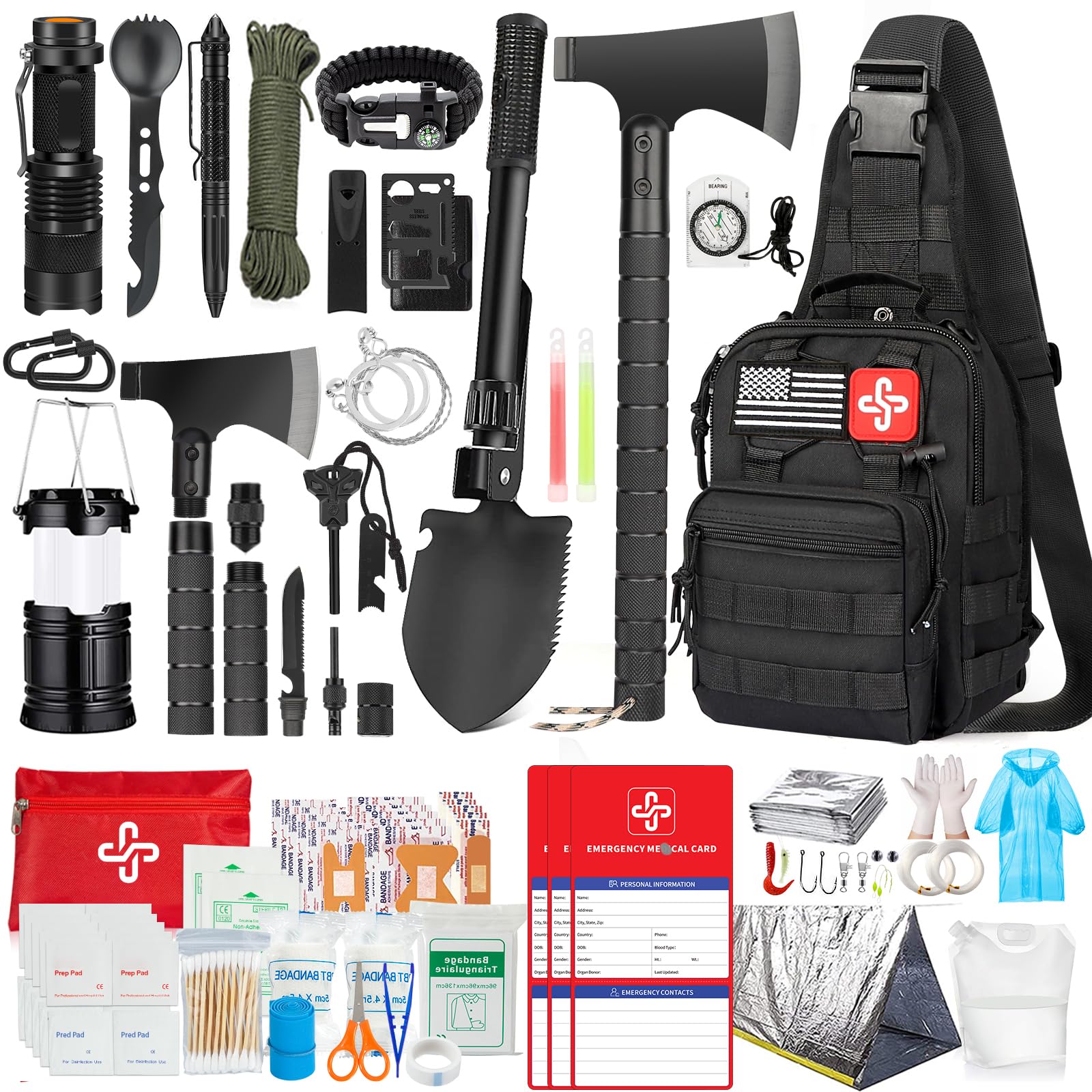
Large pre-assembled survival kits tend to fall into two camps: cheap assortments that pad a piece count with bandages and fishing line, or focused kits that cost considerably more. This 262-piece kit sits somewhere in the middle, bundling a first aid pouch, a crossbody bag, a small tent, a camping axe/hammer, and a folding shovel with pick into one package aimed at car campers, weekend hikers, and people who want a single box to grab in an emergency.
The headline number deserves context. A 262-piece count sounds substantial, but many of those pieces are small consumables: adhesive bandages, gauze pads, safety pins, fishing hooks, and similar items. That is normal for this category, and it is not a knock on the kit so much as a reminder that piece count is a poor proxy for capability. What matters more is whether the larger tools hold up, and on that front the kit is reasonable for occasional use rather than sustained abuse.
What you actually get and how it gets used
The kit is organized around a few core tools. The folding shovel with pick is the most substantial item. It works for light digging, clearing a small fire pit, or moving loose soil and snow, and the pick side helps with packed ground. It is not a replacement for a full-size entrenching tool; the handle is short, and heavy digging will remind you of that quickly. The camping axe and hammer combo is similarly sized for camp tasks: driving tent stakes, splitting small kindling, and light chopping. It is a compact tool, not a felling axe, and the edge will need sharpening out of the box if you plan to use it seriously.
The included tent is the item most buyers will scrutinize. It is a small, lightweight shelter, best described as a backup or emergency option rather than a primary camping tent. It will keep rain and wind off for a night or two in mild conditions, but it is not built for sustained weather or regular family trips. Treat it as insurance, not accommodation.
The first aid pouch is a separate, clearly labeled bag, which is a sensible design choice because it can be pulled out and carried independently. Contents cover basic cuts, scrapes, and blister care. It is a starter kit; anyone with known medical needs or remote travel plans should supplement it. The crossbody bag serves as the carry system for the smaller items, and it is comfortable enough for a day hike, though the fabric and stitching reflect the kit’s price bracket.
Where it falls short
The main trade-off is breadth versus depth. Spreading 262 pieces across tools, first aid, and miscellaneous survival items means nothing is premium. The multitool, flashlight, and similar accessories are functional but basic, and batteries or bulbs may need replacing. The kit also leans heavily on the small-item count for its appeal, so buyers expecting 262 substantial tools will be disappointed. Storage is another consideration: repacking everything neatly takes some effort, and the included bags are sized for the original contents, leaving little room for additions.
How it compares
Against a purpose-built bug-out bag from a specialty brand, this kit offers more variety for less money but less durability per item. Against a DIY kit assembled from individual purchases, it saves time and research but gives you less control over quality. It is closest in spirit to a starter emergency kit for a vehicle or hall closet, where the goal is having something rather than nothing.
Who it suits, and who it does not
This kit makes sense for drivers who want a compact emergency stash, casual campers testing whether they enjoy the hobby before investing in gear, and gift-givers looking for a practical present for someone newly interested in the outdoors. It is a reasonable first kit for a teenager heading to college or a first apartment.
It is not the right choice for serious backcountry travelers, frequent campers, or anyone relying on gear in extreme conditions. Those users are better served by buying individual tools from established brands. Similarly, experienced preppers will likely find the components redundant or below their standards.
Overall, this is a serviceable entry-level kit whose value depends on expectations. Approach it as a convenient starting point and it delivers; approach it as a complete survival solution and the gaps become obvious.