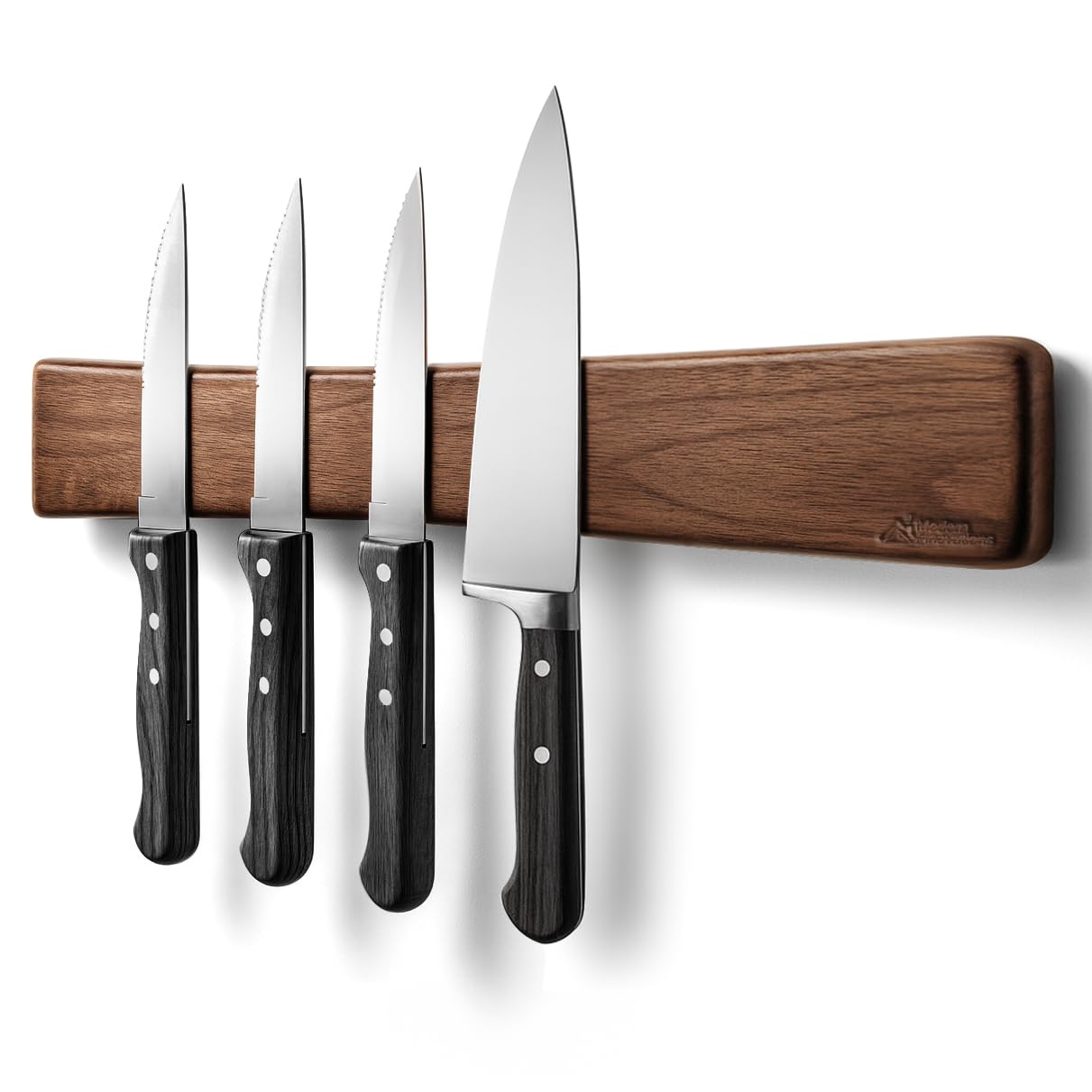
Magnetic knife strips have been a kitchen fixture for decades, but most of the ones you’ll find at big-box stores are stainless steel bars with a brushed finish. The 16-inch acacia wood version here takes the same basic idea and wraps it in a warmer material, which changes both how it looks on the wall and how it interacts with the tools you hang on it. Whether that trade-off is worth it depends on what you plan to stick to it.
The core function is straightforward: a strong magnet runs the length of the wooden bar, and you mount it to the wall with the included hardware. Knives are held in place by their blades or spines, freeing up drawer and counter space. At 16 inches, it’s on the shorter end of the category. A typical chef’s knife plus a paring knife and a pair of kitchen shears will fill it up quickly, so it’s better suited to a focused set of daily-use tools than a full block’s worth of cutlery.
What it actually holds
The listing pitches it as multipurpose, and that’s fair in a limited sense. In a kitchen, it handles knives, metal spatulas, tongs, and measuring spoons without much fuss. The wood surface is gentler than steel against blade edges, which is one of the genuine arguments for this style over a metal strip. Outside the kitchen, people do use these in garages for screwdrivers and pliers, in craft rooms for scissors and tweezers, and in workshops for small hand tools. The magnet strength is adequate for items in the range of a few ounces to a couple of pounds, but it is not a heavy-duty tool rack. A claw hammer or a large wrench will likely slide or drop.
- Mounting: Wall-mounted with screws; the wood body hides the magnet channel, which gives a cleaner look than exposed steel.
- Surface: Acacia is a dense, hard wood with a pronounced grain pattern. Each piece will vary in color and figure, so don’t expect a uniform match to other acacia items in your kitchen.
- Length: 16 inches of usable holding area, minus a small margin at each end near the mounting points.
- Maintenance: Wood needs occasional oiling and should not be soaked or run through a dishwasher. Wipe with a damp cloth and dry promptly.
Where it falls short
The most common complaint with wooden magnetic strips is magnet strength relative to expectations. This one is serviceable but not exceptional. Thin paring knives and lightweight utensils can shift or rotate slightly when the strip is bumped, and a heavy cleaver may need to be positioned carefully to stay put. If you own a lot of large, heavy blades, a stronger metal strip or a traditional knife block is the safer choice.
Wood also introduces a maintenance variable that steel does not. In a humid kitchen, near a sink or stove, an unoiled acacia strip can dry out, dull, or develop minor surface cracks over time. It’s not fragile, but it asks for more attention than a stainless bar that you can simply wipe down and forget. The mounting hardware is also worth checking on arrival; some units ship with screws that are short for drywall without a stud, so anchoring into a stud or using proper wall anchors is advisable.
How it compares
Against a stainless steel magnetic strip, the acacia version wins on aesthetics and blade-friendliness and loses on maximum holding power and ease of cleaning. Against a countertop knife block, it saves space and keeps blades visible and ventilated, but it exposes knives to kitchen air and grease, which means more frequent wiping. Against an in-drawer knife organizer, it’s more accessible but requires wall space and drilling, which rules it out for renters who can’t put holes in the wall.
Who it suits
This is a reasonable pick for someone with a small, curated set of knives, a wall area near the prep zone, and a preference for natural materials over industrial steel. It also works well for secondary uses like a craft or tool strip where the loads are light. It is not the right choice for anyone with a large collection of heavy knives, for renters who can’t mount hardware, for households that want zero-maintenance surfaces, or for anyone who expects a magnetic strip to hold a full set of pots and pans. Treated as a modest, good-looking organizer rather than a heavy-duty rack, it does its job without much drama.