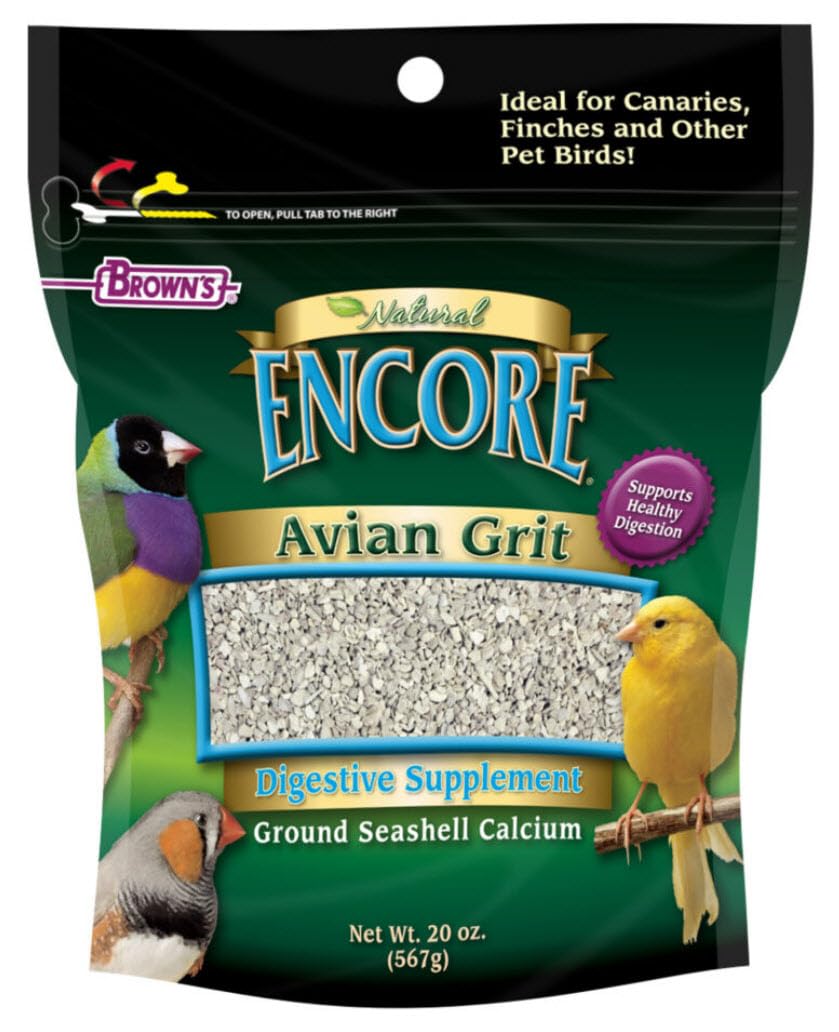
For bird owners, digestive health is a foundational concern, and grit is often part of that conversation. F.M. Brown’s Avian Grit Digestive Supplement, part of their Encore Natural line, is a product designed to support digestion in certain bird species. This review takes a closer look at what it offers, how it’s used, and where it might or might not fit into your bird’s care routine.
First, a quick primer: grit is composed of small, insoluble stones that birds swallow to help grind food in their gizzard, especially when their diet includes hard seeds. Not all birds need grit—parrots and other hookbills typically hull their seeds and don’t require it—but for species like pigeons, doves, and some finches, it can be beneficial. F.M. Brown’s Encore Natural Avian Grit is marketed for these birds, and the label suggests it’s a natural digestive supplement.
In terms of composition, the product is made from natural minerals, including calcium and other trace elements. The grit is sized appropriately for small to medium birds, and the packaging indicates it can be offered free-choice in a separate dish. Real-world usage typically involves placing a small amount in a treat cup or mixing it with food, though the latter can lead to overconsumption if the bird isn’t careful. Most owners who use grit provide it alongside a balanced diet, not as a replacement for proper nutrition.
One of the strengths of this product is its simplicity: it’s just grit, with no added colors, flavors, or preservatives. That aligns with the Encore Natural branding, which emphasizes minimal processing. For owners who prefer to avoid unnecessary additives, this is a point in its favor. The grit itself appears uniform and clean, with little dust, which is a practical detail—dusty grit can irritate a bird’s respiratory system.
However, there’s a significant caveat: grit is not without risk. Overconsumption can lead to impaction, a serious condition where the digestive tract becomes blocked. This is particularly a concern for birds that are not used to grit or for those with underlying health issues. The product doesn’t come with a dosage guide beyond “feed free-choice,” which puts the onus on the owner to monitor intake. In our view, this lack of specific guidance is a limitation, especially for novice bird keepers who might not realize that more is not better.
Compared to other grit products on the market, F.M. Brown’s Encore Natural is fairly standard. There are soluble grits (like oyster shell) that also provide calcium, and insoluble grits (like granite) that are purely for grinding. This product appears to be insoluble, so it’s not a calcium supplement per se, though it may contain some calcium-bearing minerals. If you’re looking for a calcium boost, a dedicated calcium source might be more appropriate. That said, for birds that need grinding aid, this grit does the job without frills.
Who is this for? It’s suitable for owners of seed-eating birds that require grit, such as pigeons, doves, and certain finches, who want a no-nonsense product with natural ingredients. It’s also for those who appreciate the Encore Natural line’s approach to simplicity. Who is it not for? Parrot owners, for one—parrots generally don’t need grit and may be harmed by it. Also, birds with a history of digestive issues should only be given grit under veterinary supervision, if at all. And if you’re looking for a product with detailed feeding instructions, this one might leave you wanting.
In terms of performance, expectations should be realistic: grit is a supportive measure, not a cure-all. It won’t fix a poor diet or underlying health problems. Observing your bird’s droppings and behavior after introducing grit is wise; any changes should prompt a vet visit. We’d also note that the packaging is fairly basic—a resealable bag—which is fine for storage but not particularly convenient for dispensing.
Overall, F.M. Brown’s Avian Grit Digestive Supplement is a straightforward product that meets a specific need for certain bird species. It’s not a standout in terms of innovation, but it doesn’t need to be. The key is using it correctly and knowing when it’s unnecessary. For the right owner and the right bird, it’s a reasonable choice; for others, it may be superfluous or even risky. As with any supplement, informed use is essential.