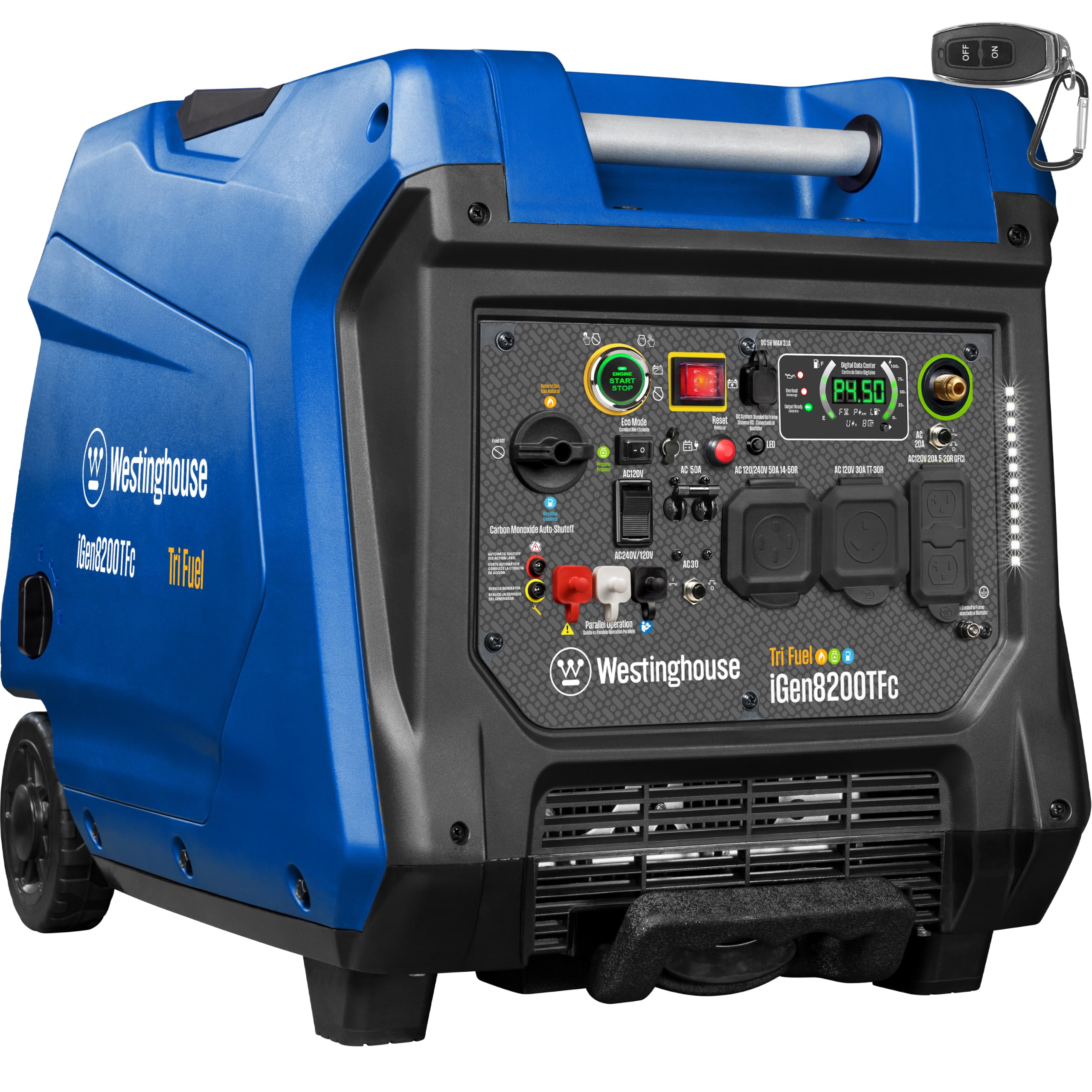
The Westinghouse 8200 peak watt tri-fuel inverter generator sits in an interesting spot in the portable power market. It is aimed at homeowners who want backup power for essentials during outages, and at people who need a capable generator for job sites or remote properties. What separates it from most competitors is the tri-fuel capability: it runs on gasoline, propane, or natural gas. That flexibility sounds appealing on paper, but it comes with trade-offs worth understanding before you commit.
In real-world use, this generator is most often connected to a transfer switch for home backup, or run outdoors during extended outages to keep a refrigerator, furnace blower, lights, and a few electronics running. The inverter design produces low total harmonic distortion, which means sensitive devices like laptops, televisions, and medical equipment are less likely to misbehave. The CO sensor shuts the unit down when carbon monoxide levels rise, a feature that matters given that generators are frequently run in garages or near windows despite the obvious risks.
The remote electric start is genuinely useful in cold weather or when the unit is tucked behind a house. A key fob starts and stops the generator without walking out in the rain. The unit is also parallel capable, so a second compatible inverter generator can be connected to increase output. That is a practical path for someone who wants to start with one unit and expand later rather than buy a larger, heavier machine up front.
Fuel flexibility is the headline feature, but the output ratings deserve a closer look. The 8200 peak watt figure applies to gasoline, and running watts are lower. Propane and natural gas reduce output further, which is normal for tri-fuel generators but often glossed over in product listings. On natural gas, expect meaningfully less capacity than on gasoline. If your backup plan depends on running a well pump or a central air conditioner, you need to check the running wattage on your chosen fuel, not the peak number on the box.
Runtime is another area where expectations should be realistic. Gasoline delivers the longest runtime per tank, propane somewhat less, and natural gas is unlimited only in the sense that it draws from your home’s supply line. Natural gas also requires a properly sized connection and, in many cases, a plumber or gas fitter to install a quick-disconnect. That is an added cost and hassle that buyers sometimes discover after the fact.
Noise is typical for this class of inverter generator. It is quieter than a conventional open-frame generator, but it is not something you would want running outside a bedroom window at night. The inverter design helps, and the unit can idle down under light loads, but under heavy load it is clearly audible. Neighbors will know it is running.
Portability is a mixed bag. The unit has wheels and a handle, but it is heavy enough that lifting it into a truck bed is a two-person job for many owners. The wheel kit helps on flat ground but struggles on gravel or soft soil. This is a generator you move occasionally, not one you toss in the trunk for a camping weekend.
Compared with a conventional standby generator, this unit is far cheaper and does not require professional installation or a permanent fuel hookup. Compared with a smaller dual-fuel inverter generator, it offers more output and the natural gas option, but at the cost of weight and price. Someone who only needs to run a fridge and a few lights during occasional outages may find a smaller, lighter unit easier to live with. Someone who wants whole-home coverage should be looking at a standby system instead.
Who is this for? It suits homeowners in areas with unreliable grid power who want a flexible backup that can run on whatever fuel is available. It also fits contractors or landowners who need a capable inverter generator that can run sensitive tools and electronics. Who is it not for? Apartment dwellers, campers, and anyone who needs something light enough to carry regularly should look elsewhere. Buyers who expect full rated output on natural gas, or who want quiet operation, should adjust their expectations or consider a different category.
The Westinghouse tri-fuel inverter generator is a practical, versatile machine with real limitations. Its fuel flexibility is a genuine advantage, but the reduced output on propane and natural gas, the weight, and the installation requirements for natural gas are things to weigh honestly before buying.