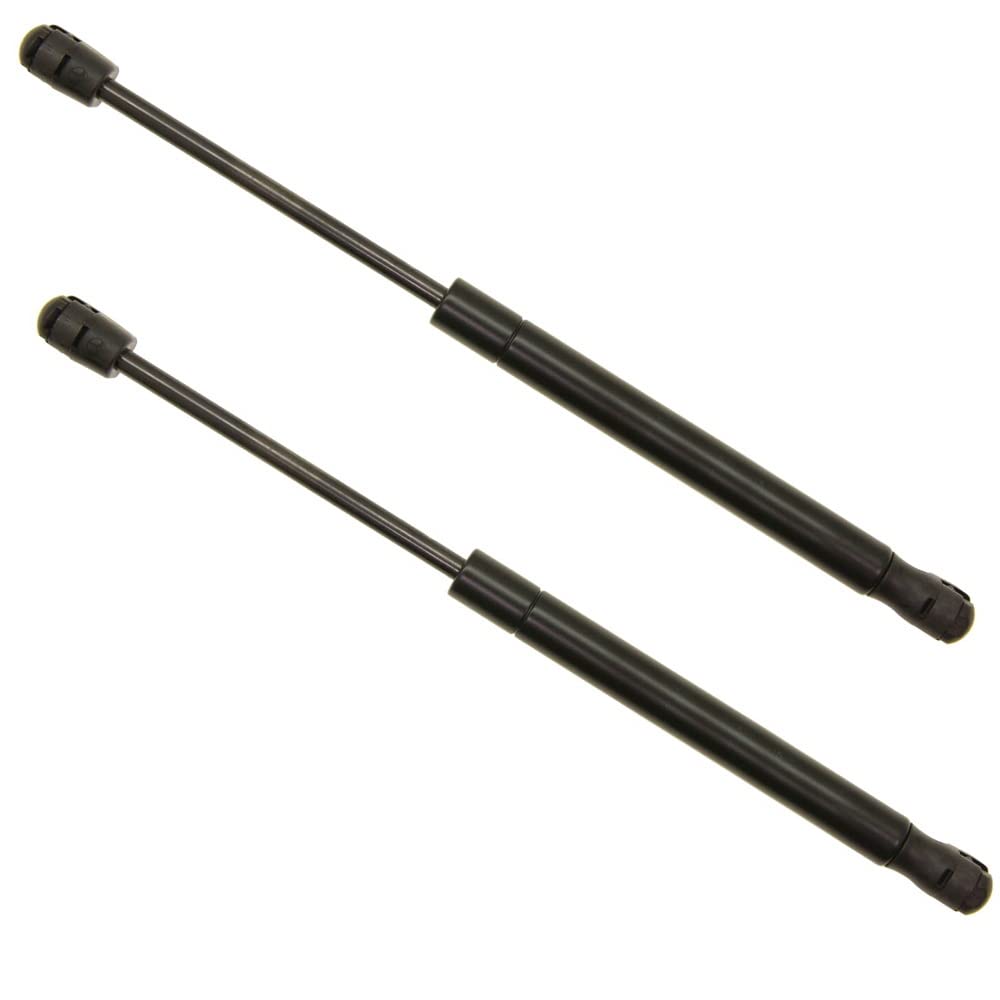
Replacing a worn liftgate strut on a Nissan Quest is one of those jobs that seems trivial until you are standing in a parking lot holding a hatch open with your shoulder while loading groceries. This particular strut is sold as a direct-fit rear liftgate support for the Quest, and it belongs to the broad category of gas-charged lift supports that use pressurized nitrogen to counterbalance the weight of the hatch. Understanding what it does, and what it does not do, is more useful than any spec sheet.
The core function is straightforward: a gas strut is a cylinder and piston assembly pre-charged to a specific force rating. When you lift the hatch, the strut extends and holds it at the open position; when you close it, the strut compresses and dampens the motion. On a minivan like the Quest, the hatch is large and relatively heavy, so the strut force rating matters. A strut that is under-rated will let the hatch sag or drop; one that is over-rated can make closing feel stiff and can stress the mounting points over time. This unit is marketed as matching the OEM fitment for the Quest, which in practice means the ball-socket ends and overall extended and compressed lengths should align with the factory mounting hardware.
Installation is the main reason people buy this part. Most Quest owners will be doing this in a driveway with basic hand tools. The typical procedure involves supporting the hatch, prying off the retaining clips at each end, and popping the old strut off the ball studs. The new strut presses onto the same ball studs and the clips secure it. No special tools are usually required, and the job takes minutes per side. That said, the strut is sold as a single unit in many listings, and the Quest uses two struts. Replacing only one when both are the same age is a common mistake; the older strut will still be weak, and the hatch will behave inconsistently. Buyers should confirm quantity before ordering.
Real-world use is where expectations should be calibrated. A new strut will hold the hatch open on level ground and in mild temperatures. Gas struts are sensitive to cold; in sub-freezing weather, the internal pressure drops and even a healthy strut may not hold a hatch fully open, especially if the hatch has aftermarket weight such as a bike rack or a loaded cargo carrier. This is a physical characteristic of the design, not a defect, but it is worth knowing before assuming the part has failed. Similarly, if the mounting ball studs are worn or corroded, a new strut can feel loose or pop off; inspecting and cleaning the studs is part of a proper install.
Compared with alternatives, this sits in the middle of the market. OEM struts from a dealer typically cost more but carry a known force rating and finish. Generic no-name struts are cheaper but vary widely in charge pressure and seal quality. This unit positions itself as a fitment-specific replacement, which is a reasonable middle ground for an older minivan where the owner wants a functional repair without dealer pricing. It is not a performance upgrade, and it will not increase the hatch’s load capacity or change how the hatch opens beyond restoring factory behavior.
Durability is the open question with any aftermarket gas strut. Seals can weep over time, and charge pressure fades gradually, so the first sign of wear is usually a hatch that no longer stays up on cold mornings. There is no serviceable part inside; the strut is replaced as a unit. Buyers should expect a service life measured in years under normal use, not a lifetime part, and should keep the receipt. A one-year or similar warranty is common in this category, and it is worth checking the listing terms.
Who is this for? It suits a Nissan Quest owner with a sagging or failed hatch strut who wants a direct-fit replacement and is comfortable with a simple bolt-on job. It also works for someone restoring a used van to safe, usable condition before resale. Who is it not for? Owners expecting a heavy-duty upgrade for a hatch with added accessories, or those who want dealer-original parts and documentation, should look elsewhere. And anyone with a single failed strut on a high-mileage van should budget for a pair rather than one.
- Fitment: Marketed as direct-fit for Nissan Quest rear liftgate; verify model year and side before ordering.
- Installation: Ball-socket ends with retaining clips; basic hand tools, minutes per strut.
- Limitations: Cold-weather pressure drop, no load upgrade, sold as single unit in many listings.
- Alternatives: OEM for exact match and finish; budget generics for lower cost with more variability.
Overall, this is a utilitarian repair part that does one job. It is not exciting, and it should not be reviewed as though it were. The sensible approach is to confirm fitment, replace both struts if they are the same age, inspect the ball studs, and expect factory-level performance rather than an upgrade. Treated that way, it is a reasonable and cost-effective way to get a Quest hatch working properly again.