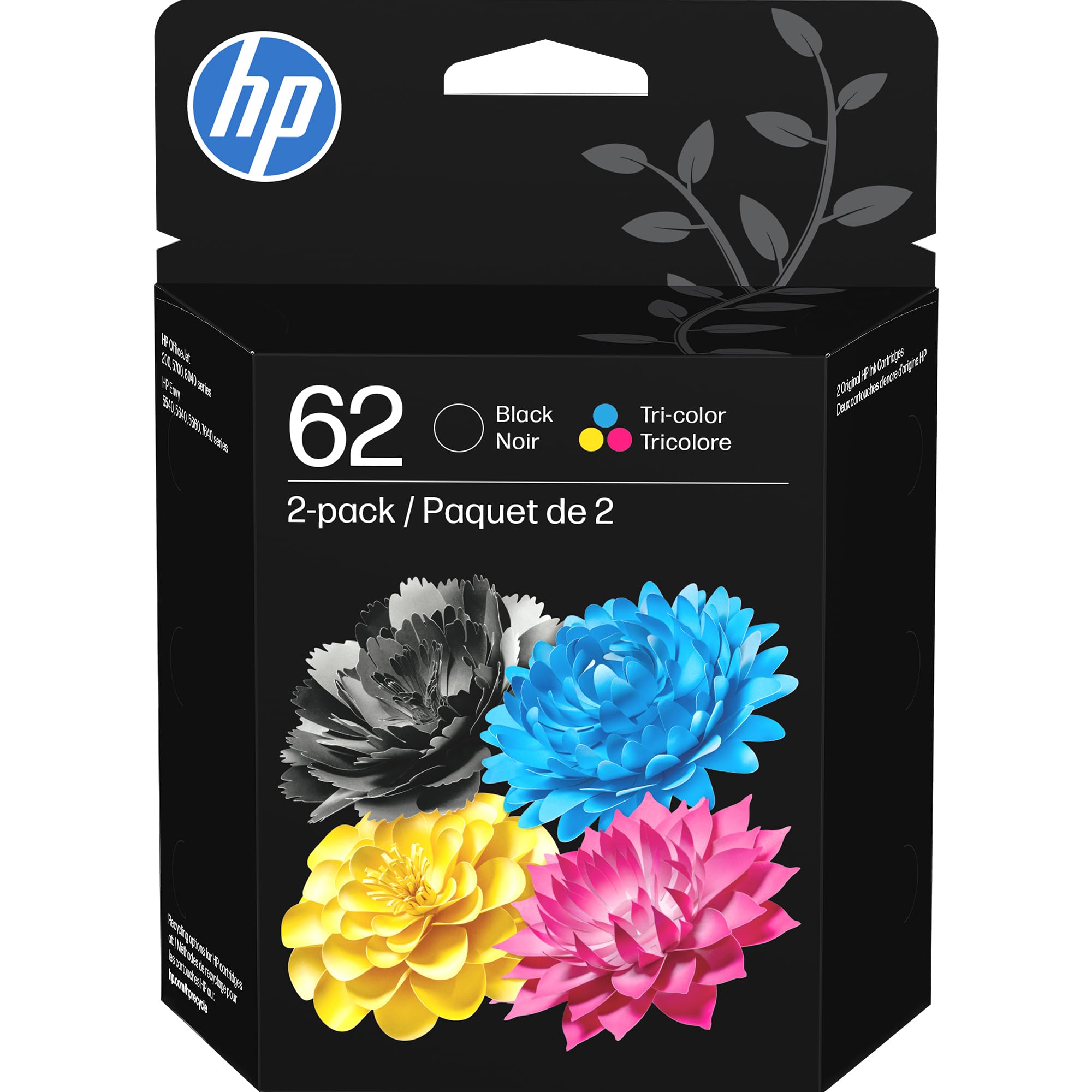
The HP 62 two-pack is one of those consumables you buy out of necessity rather than enthusiasm. It bundles a standard black cartridge with a tri-color cartridge, and it fits a fairly wide spread of HP’s consumer printers — the Envy 5540, 5640, 5660, and 7640, the OfficeJet 5740 and 8040, and the Mobile 200 and 250. If you own one of those machines and print a moderate amount at home, this is the path of least resistance. Whether it’s the smartest buy depends on how much you print and what you print.
In ordinary household use, the black cartridge handles the bulk of everyday text — school forms, shipping labels, invoices, the occasional letter — while the tri-color cartridge covers anything with color, from a child’s homework project to a photo print or a color chart for work. The pairing makes sense because most printers will refuse to print at all if a single cartridge is empty, so keeping both on hand avoids the familiar mid-job stall. Having a spare set in a drawer is a reasonable hedge against that.
Functionally, these are standard-capacity cartridges, not the XL versions. That matters more than any spec sheet detail. HP rates them for a few hundred pages of black text and somewhat fewer color pages under its own testing conditions, which assume moderate coverage on plain paper. Real output will vary with how much ink your documents actually lay down. A page of dense color graphics drains the tri-color cartridge far faster than a page of black text, and photo printing will empty it quickly. Buyers who print photos regularly should expect to replace the color cartridge well before the black one, which undercuts some of the savings of buying them together.
The installation itself is straightforward. The cartridges snap into place, and most compatible printers will recognize them immediately, though the usual warnings about non-genuine or refilled cartridges don’t apply here since these are OEM. One quirk worth knowing: HP sells this two-pack under the code N9H64FN, and packaging can vary between retail blister packs and plain boxes depending on the seller. The cartridges inside are the same. That said, buying ink online carries a real risk of receiving older stock, so it’s worth checking the expiration date on arrival if you don’t plan to use them right away.
Where this product runs into trouble is economics. Per-page cost is the perennial complaint with OEM ink, and the standard-capacity 62 is no exception. Compared with third-party compatible cartridges or a refill kit, the genuine HP set costs noticeably more, and the yield is modest. The counterargument is reliability: compatible cartridges can trigger firmware warnings, produce inconsistent color, or clog printheads, and HP has grown more aggressive about blocking non-OEM supplies in recent firmware updates. For a printer you depend on for occasional important documents, the predictability of OEM ink has real value. For someone printing hundreds of pages a month, the math starts to favor a tank-style printer or a laser unit instead.
It’s also worth comparing this against the XL variants of the same cartridges. The 62XL black and tri-color cartridges cost more upfront but deliver substantially more pages per milliliter of ink, and for anyone printing regularly the XL versions usually win on cost per page. The standard two-pack makes the most sense for light users who want a lower immediate outlay and don’t mind replacing cartridges more often. If you print only a handful of pages a week, the standard capacity is arguably the better fit — ink that sits in a cartridge for a year is ink you may never use before it dries or the expiration date passes.
Who is this for? Primarily home users with one of the listed Envy, OfficeJet, or Mobile printers who print intermittently — school paperwork, coupons, the odd color document — and who value genuine supplies over the cheapest possible per-page cost. It’s also a sensible purchase for someone setting up a new printer who wants a spare set on hand from day one. Who should look elsewhere? High-volume printers, small offices churning out color documents daily, and anyone printing photos regularly will find the standard-capacity cartridges expensive to keep fed. Those users are better served by XL cartridges, a bulk-ink printer, or a color laser for documents.
The short version: this is competent, unremarkable OEM ink that does exactly what it’s supposed to, at a price that reflects the brand premium. It’s a convenience purchase more than a value purchase, and that’s fine as long as you go in knowing it.