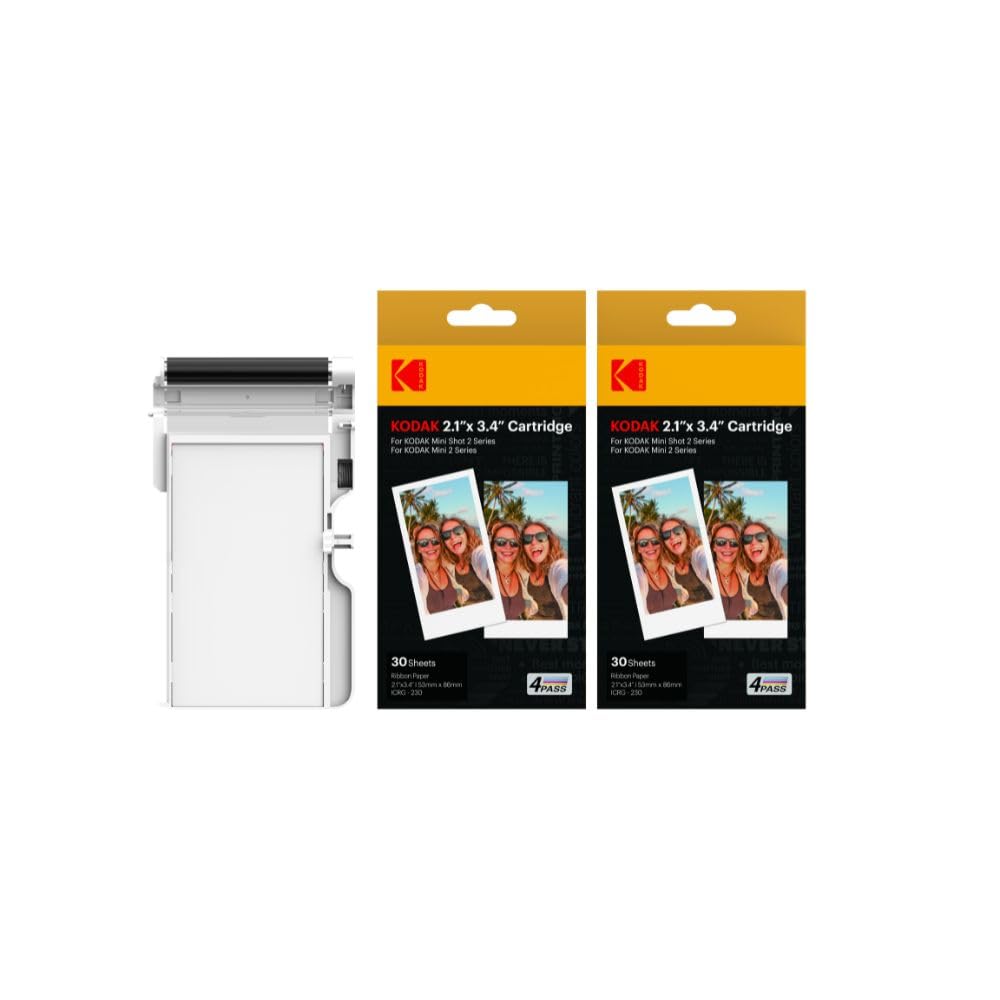
The Kodak 4PASS 2×3 cartridge refill is one of those consumables that only becomes interesting once you already own the hardware. It is a 60-sheet pack of dye-sub cartridges and paper designed for the Kodak Mini 2 and Mini Shot 2 instant photo printers, and its job is simple: keep those printers fed with the 2×3-inch prints they were built to produce. Judged on its own, it is not a glamorous product. Judged as the thing standing between a working printer and a dead one, it matters more than the printer’s spec sheet suggests.
The 4PASS name refers to the printing process rather than a count of anything in the box. Each sheet passes through the printer four times: yellow, magenta, cyan, and then a protective laminate layer. That final pass is the reason these prints feel different from the wet-chemistry instant film most people associate with pocket printers. The surface is dry and reasonably durable, and it resists smudging from fingers in a way that the glossy output of a Zink printer does not.
In practice, this refill is bought by people doing fairly specific things. It shows up in scrapbooks and bullet journals, where a 2×3 print is about the size of a large sticker and fits neatly into a margin. It is used for party favors and wedding table placeholders, where guests print a photo on the spot. Parents use it for school projects and travel journals, and a certain number of buyers simply want a physical photo of a pet or a child without committing to a full print run at a lab. The 60-sheet count is the practical unit here: it is enough for a weekend event or a few months of casual journaling, but not so much that an occasional user ends up with a drawer full of expired cartridges.
Functionally, the cartridge and paper are a matched set, and that matters. Dye-sub printing is calibrated to a specific paper and ribbon combination, so third-party refills are a gamble in ways that inkjet cartridges are not. Kodak’s own refill keeps the color profile consistent with the printer’s expectations, and the laminate pass is applied correctly. The output is a borderless 2×3 print with decent color saturation and contrast for the format. It will not match a 4×6 lab print viewed side by side, and shadows can block up in high-contrast scenes, but for a photo the size of a business card, the quality is appropriate.
The trade-offs are worth being honest about. First, the cost per print is not trivial. Dye-sub consumables are more expensive per sheet than a bulk inkjet print, and the 60-sheet pack is priced accordingly. Anyone printing in volume will feel this. Second, the refill is locked to the Mini 2 and Mini Shot 2 line; it will not fit the larger Kodak Mini 3 or the Retro models, so buyers need to check their exact model before ordering. Third, the 4PASS process is slower than Zink, which prints in a single pass. A 60-sheet pack means 60 prints that each take a noticeable amount of time, which is fine for a journaling session but tedious if you are trying to print favors for a hundred guests.
Compared with the Zink ecosystem, which uses zinc paper that requires no ink or ribbon, the Kodak 4PASS approach trades convenience and cost for print quality and durability. Zink prints are cheaper per sheet and the paper is simpler to store, but they tend to look slightly washed out and are more vulnerable to scratches and heat. Dye-sub prints from this refill look more like real photographs and hold up better in a wallet or scrapbook. The comparison is not close on image quality; it is closer on price and speed, and Zink wins those.
This refill is suitable for people who already own a compatible Kodak printer and use it for small-format, keepsake-style printing: journaling, gifts, event favors, and casual photo sharing. It is not suitable for anyone printing in high volume, anyone who needs archival-grade output, or anyone who has not confirmed their printer model. It is also not a good fit for buyers who want the cheapest possible per-print cost, since that is not what dye-sub delivers.
The packaging is straightforward, and the cartridges store flat without much fuss, though they should be kept away from heat and direct sun. There is no dramatic story here. It is a consumable that does its job, fits the printers it claims to fit, and produces prints that look better than the format has any right to. The main reasons to hesitate are cost and speed, not quality. For the intended use, that is a reasonable trade.