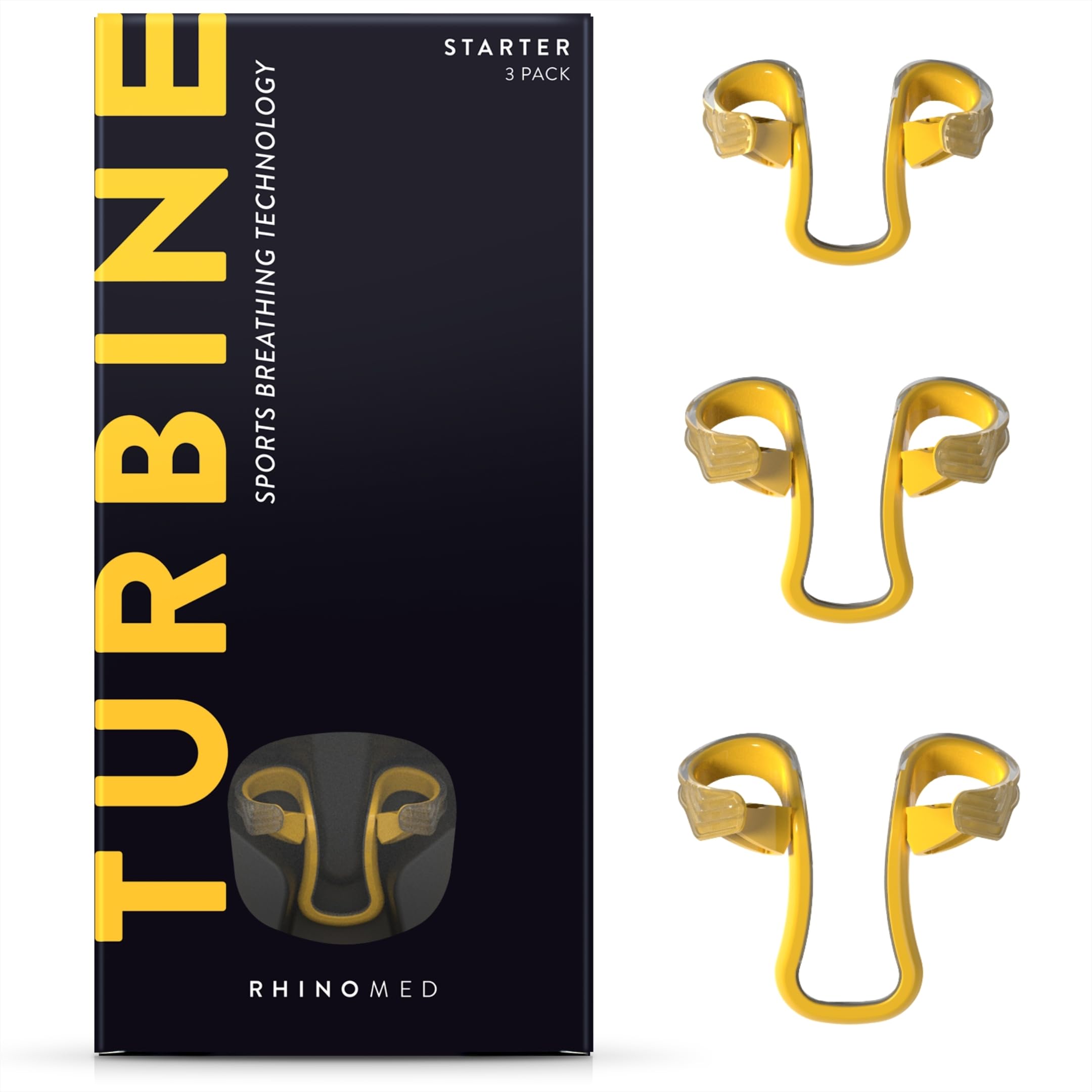
Nasal dilators occupy an odd corner of the fitness gear market. They promise better airflow through the nose during exercise, but the category covers everything from adhesive strips to small plastic inserts that sit inside the nostrils. The Rhinomed Turbine Sport falls into the latter camp. It is a reusable device with two soft, flexible prongs connected by a bridge, and the starter pack includes three sizes so users can find a fit before committing to a single-size purchase.
The premise is straightforward: by gently holding the nasal valves open, the device is meant to reduce the resistance that makes nose-breathing feel labored during hard efforts. Rhinomed claims up to 38% more air, a figure that comes from company testing and should be read as a best-case scenario rather than a guaranteed result for every user. Real-world experience with nasal dilators generally shows modest improvements in airflow sensation, with the actual measured benefit varying considerably by individual anatomy.
How it is actually used
The Turbine Sport is inserted into the nostrils before a run, ride, or gym session and worn for the duration of the activity. Unlike adhesive nasal strips that sit on the outside of the nose, this device is largely internal, with a small bridge resting under the nose. The prongs are soft enough that insertion is not painful, though first-timers will notice the foreign-object sensation immediately. Most users report adapting within a few minutes. Removal is quick, and the device can be rinsed and reused, which makes it more economical over time than disposable strips.
The three-size starter pack is the sensible way to buy. Sizing is not intuitive from a photo, and getting it wrong affects both comfort and effectiveness. A device that is too small will not open the airway meaningfully; one that is too large will feel tight and may cause irritation during longer sessions. Having small, medium, and large on hand lets users trial each during short workouts before settling on one for race day.
What it does and does not do
Functionally, the device addresses nasal valve collapse, a common issue where the sides of the nose draw inward during vigorous inhalation. By physically supporting those structures, it can make nasal breathing feel less restricted. That matters for athletes who deliberately train nasal breathing, and for people who find mouth-breathing uncomfortable in cold or dry air.
- Reusable and rinsable, unlike disposable adhesive strips
- Three sizes included to accommodate different nostril shapes
- Low profile enough to wear under most conditions without obstructing vision
- Soft medical-grade materials that are generally well tolerated
- Can be worn during both training and competition
What it does not do is deliver a dramatic, universal boost. The 38% figure is a useful reference point but not a promise. Some users notice a clear difference in breathing ease; others find the effect marginal or indistinguishable from an adhesive strip. Anyone expecting a performance breakthrough should temper expectations. This is a comfort and breathing-mechanics tool, not a shortcut to faster times.
Trade-offs worth knowing
The most common complaint with internal dilators is irritation. The Turbine Sport is softer than some rigid alternatives, but prolonged wear can still produce dryness or a slight soreness around the nostrils, particularly in the first week. There is also a learning curve: the device can shift or feel loose during heavy sweating, and it requires a deliberate insertion routine that some athletes will find fussy compared with peeling off a strip. Cleaning after every session is non-negotiable, which adds a small maintenance step that disposable products avoid entirely.
How it compares
The obvious comparison is the adhesive nasal strip, which is cheaper per use, requires no cleaning, and sits externally so there is nothing inside the nose. Strips tend to appeal to people who dislike internal devices or who want something they can apply and forget. The Turbine Sport counters with reusability, a more secure internal fit for some users, and the ability to fine-tune size. For heavy sweaters or people exercising in wet conditions, the internal design can hold up better than adhesive, which may peel. Neither category is clearly superior; the choice comes down to tolerance for an internal device versus a disposable external one.
Who it suits and who it does not
This starter pack is a reasonable fit for runners, cyclists, and gym-goers who have trouble breathing through the nose during exercise, or for anyone curious about nasal dilators who wants to test sizes without buying three separate products. It is also worth considering for people who have tried strips and found them insufficient or prone to falling off.
It is less suitable for anyone sensitive to having objects inside the nostrils, people with active nasal irritation or recent nasal surgery, and those who want a zero-maintenance solution. Athletes expecting measurable performance gains should approach it skeptically. As with any breathing device, it is worth consulting a clinician if nasal obstruction is persistent or severe, since a dilator addresses a mechanical issue and not an underlying medical one.