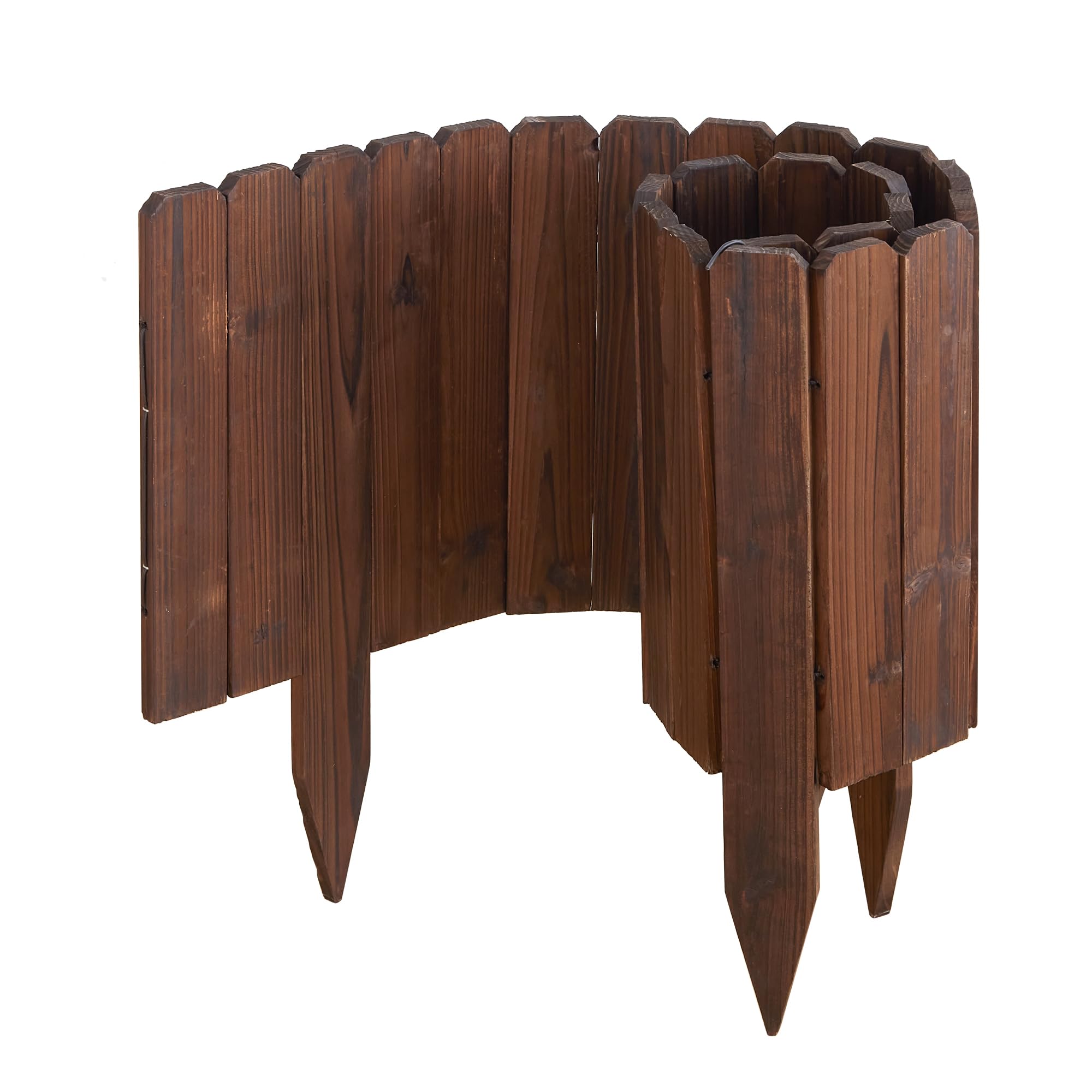
The GHWIE Wooden Garden Fence set offers a straightforward way to define garden borders, with three panels totaling 12 feet in length. Each panel measures 11.8 inches high and 48 inches long, making it suitable for edging flower beds, vegetable patches, or pathways. The wood has a natural, unfinished appearance, which can be painted or stained to match existing garden decor.
In real-world use, these fences are fairly easy to install. The panels come with pointed stakes at the ends, which you push into the soil. For most garden beds with loose or moderately compacted dirt, this works well. However, if your soil is particularly hard or rocky, you may need to pre-dig holes or use a mallet, which can risk splitting the wood if you’re too forceful. The wood itself is lightweight but feels sturdy enough for light-duty edging—it won’t stand up to heavy impact from lawnmowers or aggressive weed whackers.
Key functional features include the three-panel pack, which provides a continuous 12-foot border when arranged end-to-end. The height is moderate, offering a clear visual boundary without blocking views of low-growing plants. The wood is untreated, so it will weather naturally over time, developing a gray patina. This can be a pro or con depending on your aesthetic preference. The panels are also slightly flexible, allowing gentle curves for rounded garden beds, though sharp corners are not possible without cutting the wood.
A notable limitation is the durability of the stakes. They are integrated into the panels and are relatively thin. After a season of rain and soil movement, some stakes may loosen or break if the fence is frequently bumped. Additionally, the untreated wood is susceptible to rot if placed in consistently damp soil. Applying a sealant before installation can extend its life, but this adds extra effort and cost. For a more permanent solution, consider metal or plastic edging, though those lack the natural look of wood.
Compared to similar products, like plastic landscape edging or stone borders, the GHWIE fence offers a more traditional, rustic charm. Plastic edging is cheaper and more durable but can look artificial. Stone borders are heavier and more permanent but require significant labor and expense. This wooden fence sits in the middle—affordable and easy to install but less long-lasting than alternatives. It’s a good choice for renters or gardeners who like to change layouts frequently.
Who it is for: DIY gardeners who want a quick, low-cost way to tidy up flower beds or define vegetable garden rows. It works well for small to medium-sized gardens where the fence won’t be subjected to heavy wear. It’s also suitable for temporary or seasonal use, such as around annual flower beds.
Who it is not for: Those seeking permanent, low-maintenance edging. If you have heavy clay soil, frequent foot traffic near the border, or live in a very wet climate, the wood may deteriorate within a couple of years. Also, it’s not ideal for formal gardens requiring precise, straight lines—the panels can warp slightly over time.
Overall, the GHWIE Wooden Garden Fence is a functional, no-fuss product that does its job for light-duty edging. It’s not a premium solution, but it offers good value for the price if you’re willing to accept its limitations. Pair it with a sealant and careful installation to get the most out of it.