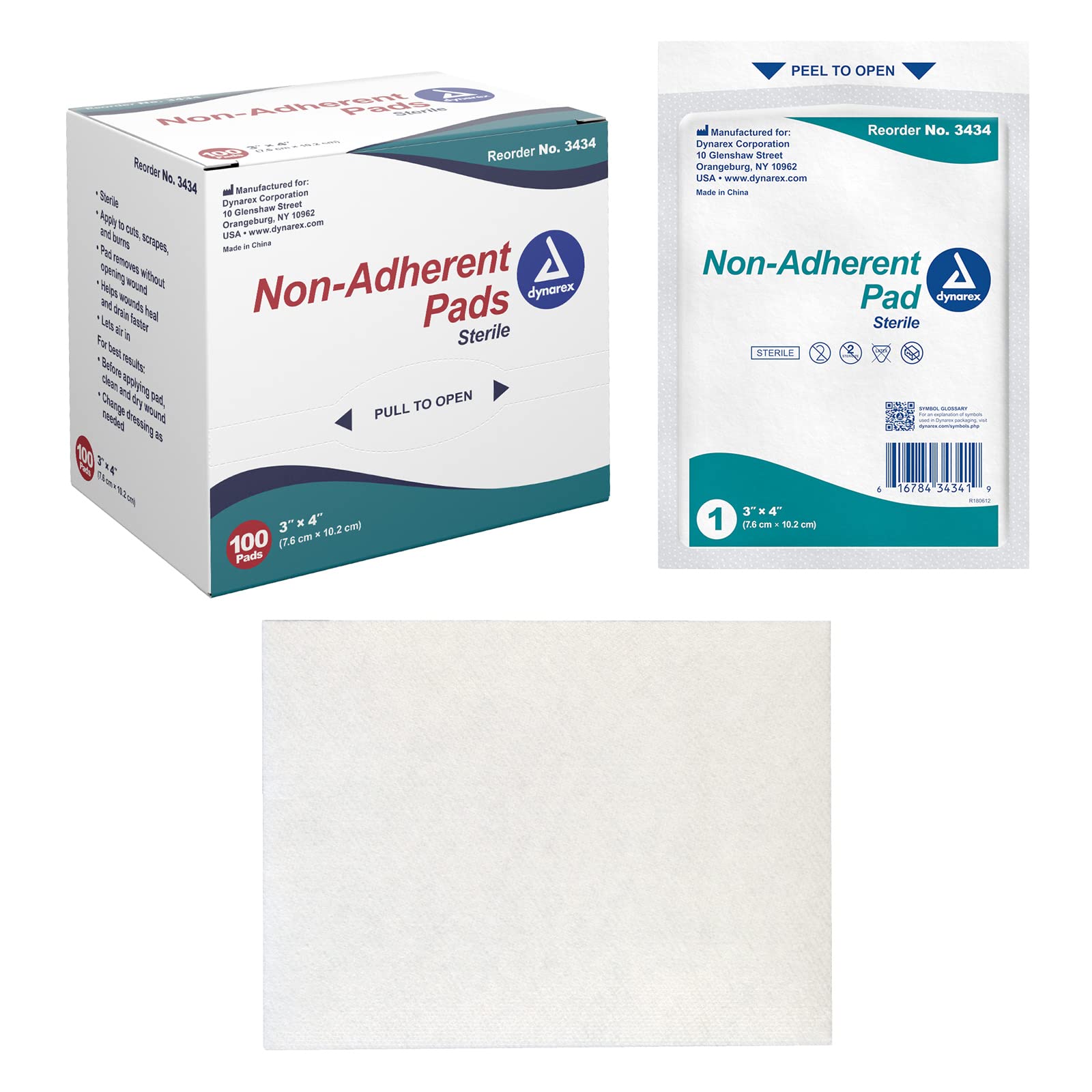
When dealing with minor cuts, burns, or post-surgical wounds, the dressing you choose can make a noticeable difference in both healing and comfort. The Dynarex Non-Adherent Pads come in a bulk box of 100 individually wrapped sterile pads, each measuring 3 inches by 4 inches. I’ve used these pads in a home first aid context for scrapes and light burns, and they perform about as expected for a non-adherent dressing—nothing flashy, but functional for basic wound coverage.
The key feature here is the non-stick surface, which is designed to prevent the pad from adhering to the wound bed. In practice, this works reasonably well for shallow abrasions or burns where the wound is not heavily exuding. The pad’s absorbent core soaks up light to moderate drainage without becoming overly saturated quickly, though for heavily weeping wounds, you’d likely need a more absorbent product or a secondary dressing. The pad itself is soft and pliable, which helps it conform to areas like the forearm or shin without feeling rigid.
One limitation worth noting is that the adhesive backing is minimal—these pads are not self-adhesive, so you’ll need medical tape or a wrap to keep them in place. This is common for non-adherent pads, but if you’re looking for an all-in-one solution, something like a hydrocolloid or foam dressing with integrated adhesive might be more convenient. Additionally, the 3×4 size is a bit small for larger wounds; for a bigger scrape, you’d likely need two pads or a larger alternative.
Compared to standard gauze sponges, these pads are clearly less likely to stick, which is a genuine advantage for painful wounds like burns. However, gauze is often cheaper and more versatile for cleaning or packing. For cost-conscious users, a roll of non-stick gauze might offer more flexibility per dollar, but the individually wrapped sterile pads here are handy for keeping a clean, ready-to-use supply in a first aid kit or glove compartment.
- Real-world usage: Suitable for minor burns, scrapes, and post-surgical incisions with low to moderate drainage. They require a secondary securing method like tape or a bandage wrap.
- Key functional features: Sterile, individually packaged, non-adherent surface, absorbent core, soft material, 3×4 inch size.
- Limitation: Not self-adhesive; may shift if not taped down. The absorbency is adequate for light exudate but not for heavy drainage. The size may be too small for larger wounds.
- Comparison to alternatives: Less sticky than standard gauze, but gauze is more versatile for cleaning. Foam or hydrocolloid dressings offer better moisture management and may be self-adhesive, but they cost more per pad.
Who is this for? It’s a solid choice for someone who wants a bulk supply of sterile, non-stick pads for everyday first aid—think families with active kids, hikers, or anyone maintaining a home medical kit. It’s also suitable for post-surgical care where the wound is dry or lightly draining. Who might want to skip it? If you need a dressing that stays put without extra tape, or if you’re dealing with heavily exuding wounds that require a more absorbent or hydrocolloid option, you’d be better off looking at other products. For the price per pad, you’re getting a decent value, but don’t expect them to outperform more specialized dressings in demanding situations.