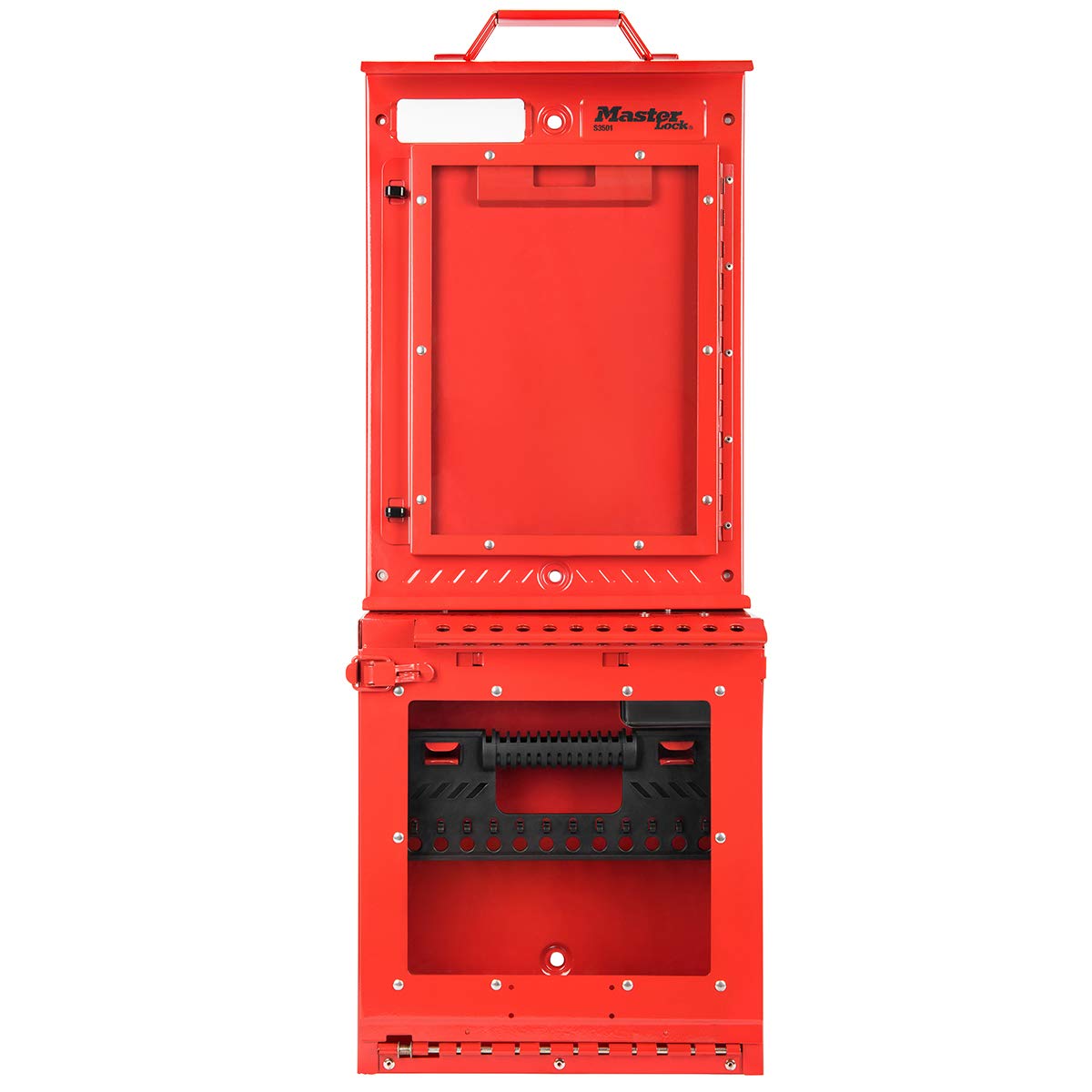
The Biss Master Lock Permit Control Station is a specialized piece of equipment designed for industrial environments where lockout/tagout procedures are critical. It provides a centralized location for storing padlocks, hasps, and permit documents, helping to organize the process of isolating energy sources during maintenance or repair work. In practice, this station is mounted near electrical panels, machinery, or entry points to controlled areas, allowing authorized personnel to secure their personal locks and document the status of equipment. It is commonly seen in factories, power plants, and large commercial facilities where safety protocols must be followed strictly.
One of the key functional features is the clear, labeled slots for padlocks, which can hold multiple locks simultaneously. This allows each worker on a team to apply their own lock to the same isolation point, ensuring that no one can accidentally re-energize equipment until all locks are removed. The station includes a built-in document holder for permits or checklists, which helps keep paperwork organized and visible. The construction is durable, typically made from heavy-duty plastic or metal, and the design often includes a hasp or bracket for mounting. The lock slots are sized to accommodate standard Master Lock padlocks, but they also work with many other brands, which is a practical consideration for mixed-tool environments.
However, there are limitations and trade-offs worth noting. The station is relatively large and requires a dedicated mounting space, which can be problematic in cramped areas or on equipment with limited wall space. The plastic versions can become brittle over time if exposed to extreme temperatures or UV light, though metal options are available at a higher cost. Additionally, the permit holder is not waterproof, so documents can get damaged in wet or dusty conditions unless they are laminated or placed in a separate sleeve. For very large teams, the number of lock slots may be insufficient, requiring multiple stations or a different system entirely.
Compared to a generic lockout tagout kit, which is typically a portable bag or box, the Permit Control Station is more about fixed organization and visibility. A portable kit offers flexibility for roving maintenance crews, but it lacks the permanent, visual reminder that the station provides. For facilities with a single, frequently serviced piece of equipment, the station is a better fit because it reduces the chance of misplaced locks or forgotten permits. However, for mobile work teams that move between different machines, a portable kit is often more practical.
This product is suitable for industrial plants, manufacturing floors, and any setting where lockout/tagout procedures are mandated by safety regulations. It works well for teams of 4 to 8 people who need to coordinate on a single isolation point, and it is especially useful in environments where safety audits are common because the organized layout makes compliance easy to verify. It is not suitable for small workshops with only one or two workers, as the size and cost may be overkill. It is also not ideal for outdoor or extremely harsh environments unless the metal, weather-resistant version is chosen. For home use or light commercial settings, a simple lockout hasp and a notebook would serve the same purpose more cheaply.
In terms of realistic performance, the station does exactly what it is supposed to: it keeps locks and permits organized and accessible. It will not improve safety culture on its own, but it can support a well-run lockout program. The installation is straightforward, but mounting hardware is not always included, so you may need to purchase bolts or screws separately. The price is moderate, generally falling between $50 and $150 depending on the material and features, which is reasonable for industrial safety equipment. Overall, it is a solid, no-nonsense tool for those who need a dedicated lockout station, but it is not a universal solution for every workplace.