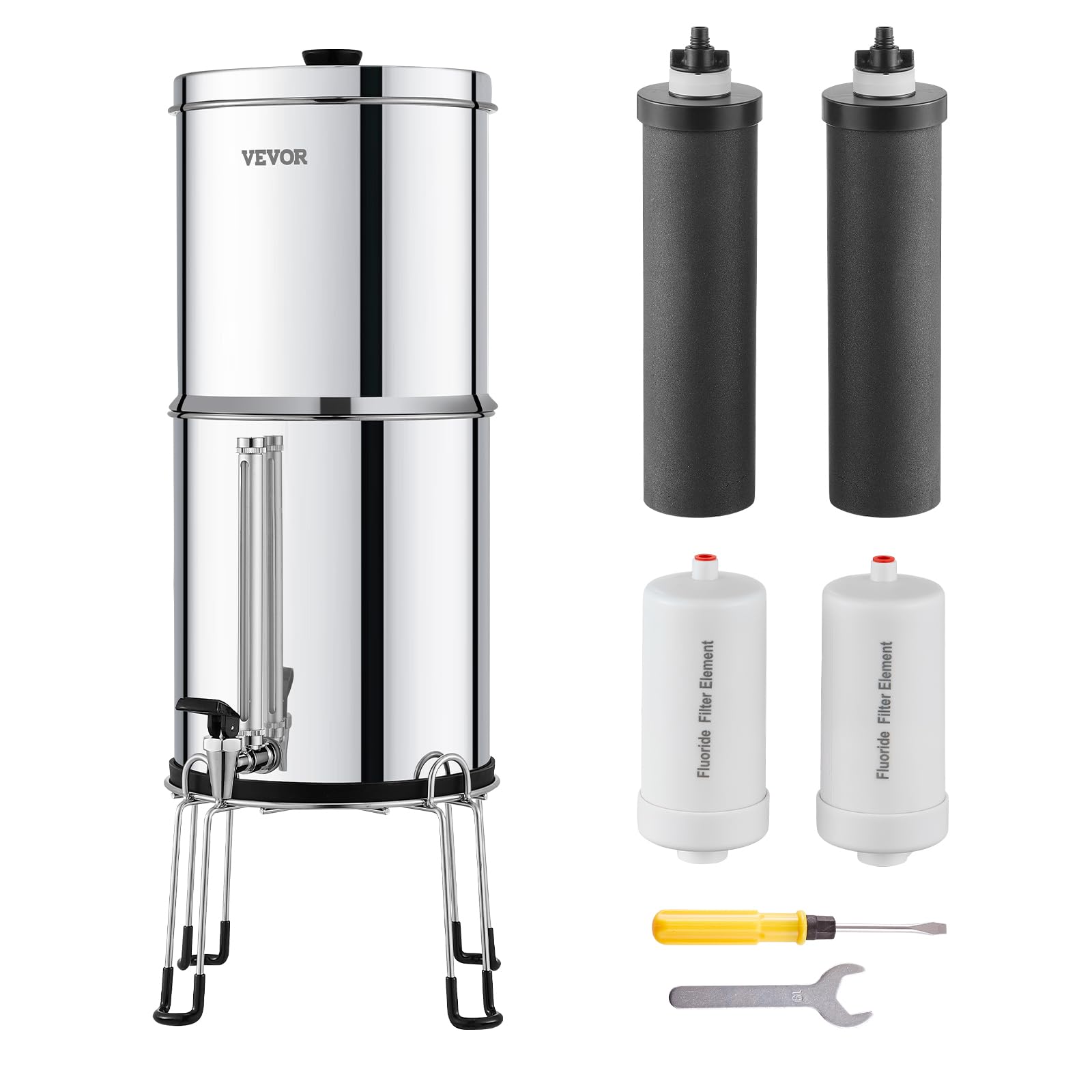
The VEVOR Gravity-Fed Water Filter System is a countertop water filtration unit that uses gravity to push water through a multi-stage filter setup. It holds 2.25 gallons and is made of 304 stainless steel. The system comes with two activated carbon filters and two defluorination filters, plus a spigot for dispensing. It’s designed to reduce lead and up to 99% of chlorine, according to the manufacturer. In this review, we look at how it works in practice, its strengths and weaknesses, and who might benefit from it.
Gravity-fed filters like this are typically used in kitchens where counter space is available and plumbing modifications aren’t desired. You fill the top chamber with tap water, and gravity pulls it through the filters into the lower chamber, ready to dispense via the spigot. This means no electricity or permanent installation is required, making it a plug-and-play solution for renters or those who prefer not to alter their plumbing. The stainless steel body is more durable than plastic alternatives and doesn’t impart any taste, which is a plus for those concerned about plastic aftertaste.
The filtration system combines activated carbon and defluorination stages. Activated carbon is effective at reducing chlorine, volatile organic compounds (VOCs), and improving taste and odor. The defluorination filters are designed to reduce fluoride levels, which is a concern for some users. The system claims to reduce lead and up to 99% of chlorine, but independent verification is lacking, so actual performance may vary. The included filters are rated for a certain number of gallons, but we couldn’t find specific lifespan data in the product information. Users should expect to replace filters periodically, which adds to the long-term cost.
One of the main advantages of this system is its capacity: 2.25 gallons is enough for a small household’s drinking and cooking needs for a day or two, depending on usage. The spigot is a convenient feature, allowing easy filling of glasses or bottles. The stainless steel construction is sturdy and should hold up well over time, though it may show fingerprints and water spots. The unit is relatively compact for a countertop model, but it still takes up a fair amount of space, so measure your counter before committing.
As for limitations, the gravity-fed design means filtration is slow. You can’t get a fast flow of water; it’s a trickle. This is typical of gravity filters, but if you’re used to the flow rate of a faucet-mounted or under-sink filter, it will feel sluggish. Also, the system doesn’t reduce dissolved solids or all contaminants; it’s primarily focused on chlorine, lead, and fluoride. If you have concerns about nitrates, arsenic, or other contaminants, you’ll need a different type of filter. The lack of certification (like NSF) is another point to consider; while the materials are food-grade stainless steel, the filtration performance isn’t independently certified, so you’re relying on the manufacturer’s claims.
Compared to pitcher filters like Brita or ZeroWater, this VEVOR system has a larger capacity and a more durable body, but it’s also more expensive upfront and takes up more space. Pitcher filters are convenient but require frequent refilling and have lower capacity. Under-sink filters are out of sight and offer faster flow, but they require installation and are not renter-friendly. The VEVOR strikes a middle ground for those who want a countertop solution with a larger capacity and stainless steel construction.
Who is this for? It’s suitable for individuals or small families who want a countertop water filter with a decent capacity, prefer stainless steel over plastic, and are specifically interested in reducing chlorine, lead, and fluoride. It’s also a good option for renters or those who can’t install an under-sink system. However, it’s not for those who need fast filtration, have high water demands (larger households), or require certification for contaminant reduction. Also, if you’re looking for a filter that removes a wide range of contaminants beyond chlorine and lead, this may not be sufficient.
In terms of maintenance, the system requires regular cleaning of the stainless steel chambers to prevent buildup, and filter replacements are necessary. The filters are proprietary, so you’ll need to purchase replacements from VEVOR, which could be inconvenient if they’re out of stock. The initial setup is straightforward: assemble the spigot, install the filters, and flush according to instructions. The included filters should last a few months, but again, check the manufacturer’s recommendations.
Overall, the VEVOR Gravity-Fed Water Filter System is a solid choice for a specific niche: those wanting a durable, large-capacity countertop filter that targets chlorine, lead, and fluoride without plumbing changes. It has trade-offs in flow rate and certification, but for the right user, it offers a practical solution. We’d recommend it with those caveats in mind.