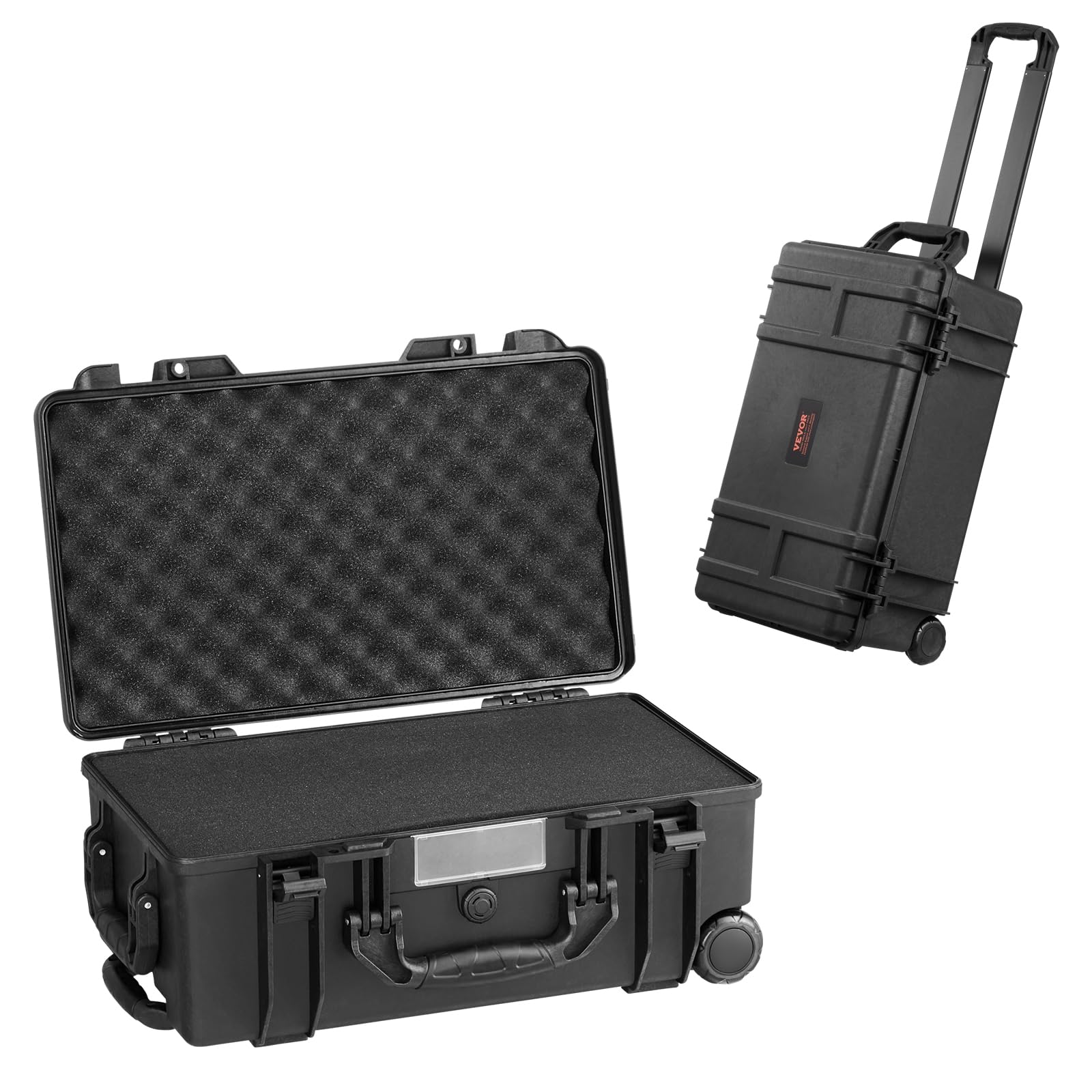
The VEVOR Weatherproof Hard Case sits in a crowded field of rugged protective boxes, and at roughly 21.7 by 13.4 by 9.5 inches, it lands in the awkward middle ground between a carry-on case and a full equipment trunk. That size is deliberate: it is meant to swallow a camera body with a couple of lenses, a drone kit, or a disassembled rifle and still roll through an airport or ride in the back of a pickup. Whether it makes sense for you depends less on the specs than on how often you actually need a sealed, crush-resistant box.
In practice, these cases get used in a few predictable ways. Photographers drop them in the bed of a truck on the way to a shoot, hunters strap them to an ATV, and range shooters use them to keep optics dry in the rain. The VEVOR is built for that kind of treatment: a molded polypropylene shell, a rubber gasket around the lid, and two latches that pull the lid down against the seal. The IP67 rating means it should survive brief submersion and keep out dust, which is the realistic bar for a case like this. It is not a pressure-rated enclosure for diving, and no one should treat it as one.
The pre-cut foam is the feature that divides buyers. VEVOR ships the case with a pick-and-pluck foam insert, so you pull out cubes to shape slots for your gear. That is convenient for odd-shaped items, but the result is rarely as clean as a custom-cut insert, and once you pull a cube you cannot easily put it back. If you reconfigure your kit often, the foam will degrade into a ragged mess over time. A layered foam set with a solid base and a removable top layer, as found on some competing cases, is more forgiving. The wheels and retractable pull handle are genuinely useful at this size, since a loaded case of this footprint gets heavy fast, though the handle feels functional rather than refined and the wheels are small enough that gravel and soft ground will make you carry it instead.
Build quality is where expectations need calibrating. The shell is rigid and the lid closes with a solid thunk, but the plastic and hardware read as budget-tier compared with premium cases from brands like Pelican or Nanuk. The latches work, but they are simple snap latches without the double-throw security of higher-end models, and the hinge is a molded-in design rather than a steel pin. For occasional travel and storage, that is probably fine. For daily professional abuse, the differences will show up in the latches and gasket long before the shell fails. The case also lacks a pressure-equalization valve, which matters if you fly with it and notice the lid getting stiff at altitude.
Compared with a soft-sided gear bag, the VEVOR trades portability and quick access for protection. Compared with a hard rolling tool case or a generic storage tote, it trades capacity and price for a real seal and foam. That is the honest trade-off: you are paying for water and dust resistance plus impact protection, not for premium fit and finish. Buyers who mainly need to organize gear in a closet or car trunk will find a cheaper tote does the job. Buyers who need to keep cameras dry in a boat or keep a rifle free of grit will get real value from the seal.
Who is it for? Casual and semi-serious users who want a sealed, wheeled box for cameras, drones, tools, or hunting gear and who can live with foam that is shaped once and hardware that is adequate rather than excellent. It suits someone who needs protection a few times a month, not every day. Who is it not for? Professionals who fly weekly, dive shops, and anyone who expects Pelican-level latches, a purge valve, or a warranty that covers hard use. Those buyers should budget for a premium case. For everyone else, the VEVOR is a reasonable middle option, provided you accept that the foam is a one-time commitment and the wheels are for smooth floors, not trails.