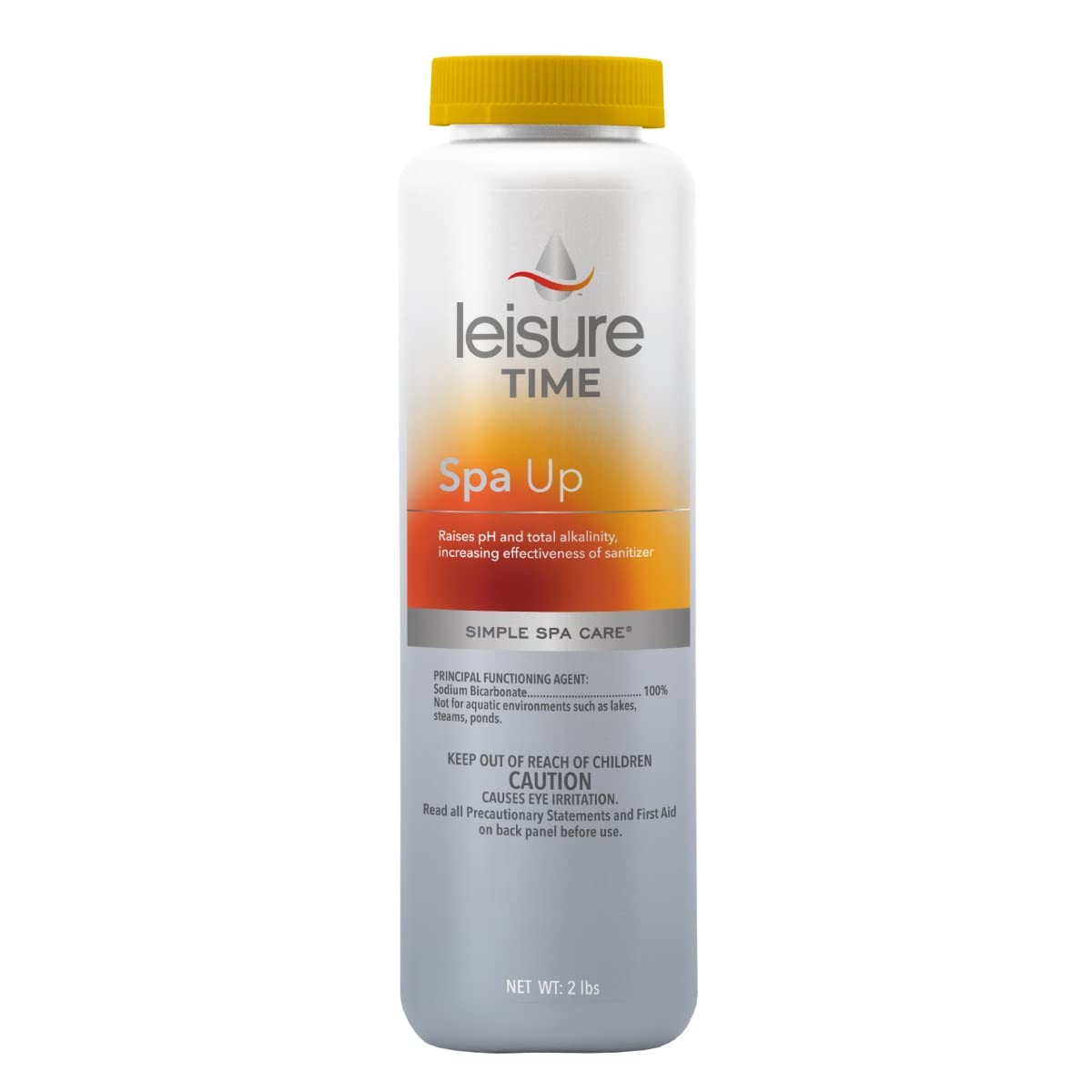
Maintaining the pH level in a hot tub is one of those tasks that often gets overlooked until something goes wrong. The Leisure Time 22339A Spa Up pH Increaser is a product designed to address low pH, which can lead to corrosion of metal components and damage to the spa equipment over time. This 2-pound container is a straightforward chemical additive meant to raise pH without causing a significant increase in total alkalinity, though it does have some impact there.
In real-world use, this product is typically added when test strips or a digital reader show pH below the recommended range of 7.2 to 7.8. Users sprinkle the granular powder directly into the water while the jets are running to help it dissolve. A common scenario is after heavy use or a water change, when pH tends to drop. The instructions on the label suggest adding about 1 tablespoon per 200 gallons to raise pH by 0.2, but this can vary depending on the starting level and water chemistry. Many people find they need to adjust the dosage based on their specific tub size and conditions.
Key functional features include its compatibility with various sanitizers like chlorine, bromine, and biguanide systems. This makes it a flexible choice for different spa maintenance routines. The product works by introducing a carbonate-based compound that neutralizes acidity. It does not contain phosphates, which is a plus for those trying to avoid algae blooms. The 2-pound size is practical for a single hot tub, typically lasting several months with regular use, though heavy users might need to reorder sooner.
A notable limitation is that this pH increaser can temporarily cloud the water if added too quickly or in large amounts. It also requires careful measurement to avoid overshooting the target pH, which can then necessitate adding a pH decreaser. Some users report that the granules do not dissolve completely if the water temperature is low or if the circulation pump is not running. Additionally, while it is effective for small adjustments, it is not ideal for drastically raising pH from very low levels—say, below 6.8—as that would require a large amount and risk scaling.
Compared to using sodium bicarbonate (baking soda) as a pH increaser, which is a common alternative, the Leisure Time product has a more targeted effect on pH with less impact on total alkalinity. Baking soda raises both pH and alkalinity significantly, which can be beneficial if alkalinity is also low, but it can lead to a situation where alkalinity climbs too high while pH remains low. This product is better suited for fine-tuning pH without drastically altering alkalinity, though it still raises alkalinity somewhat. For those who prefer a non-chemical approach, there are aeration methods that naturally increase pH over time, but these are slow and less reliable, especially in colder climates.
This pH increaser is suitable for hot tub owners who use test kits regularly and want a predictable, straightforward way to correct low pH. It works well for those who have a basic understanding of water chemistry and are willing to follow dosage guidelines closely. It is not ideal for beginners who might add too much at once, leading to pH swings, or for those who prefer a liquid product for easier mixing. It also may not be the best choice for very large spas or commercial setups where bulk quantities and faster dissolving are needed.
Overall, the Leisure Time 22339A Spa Up pH Increaser does what it claims: raises pH in hot tub water to prevent corrosion and equipment damage. It is not a revolutionary product, but it is reliable within its intended use. The main trade-offs are the need for careful dosing and the potential for temporary cloudiness. For anyone maintaining a residential hot tub, it is a functional tool in the water chemistry toolkit, but it is not a substitute for regular testing and balanced maintenance.