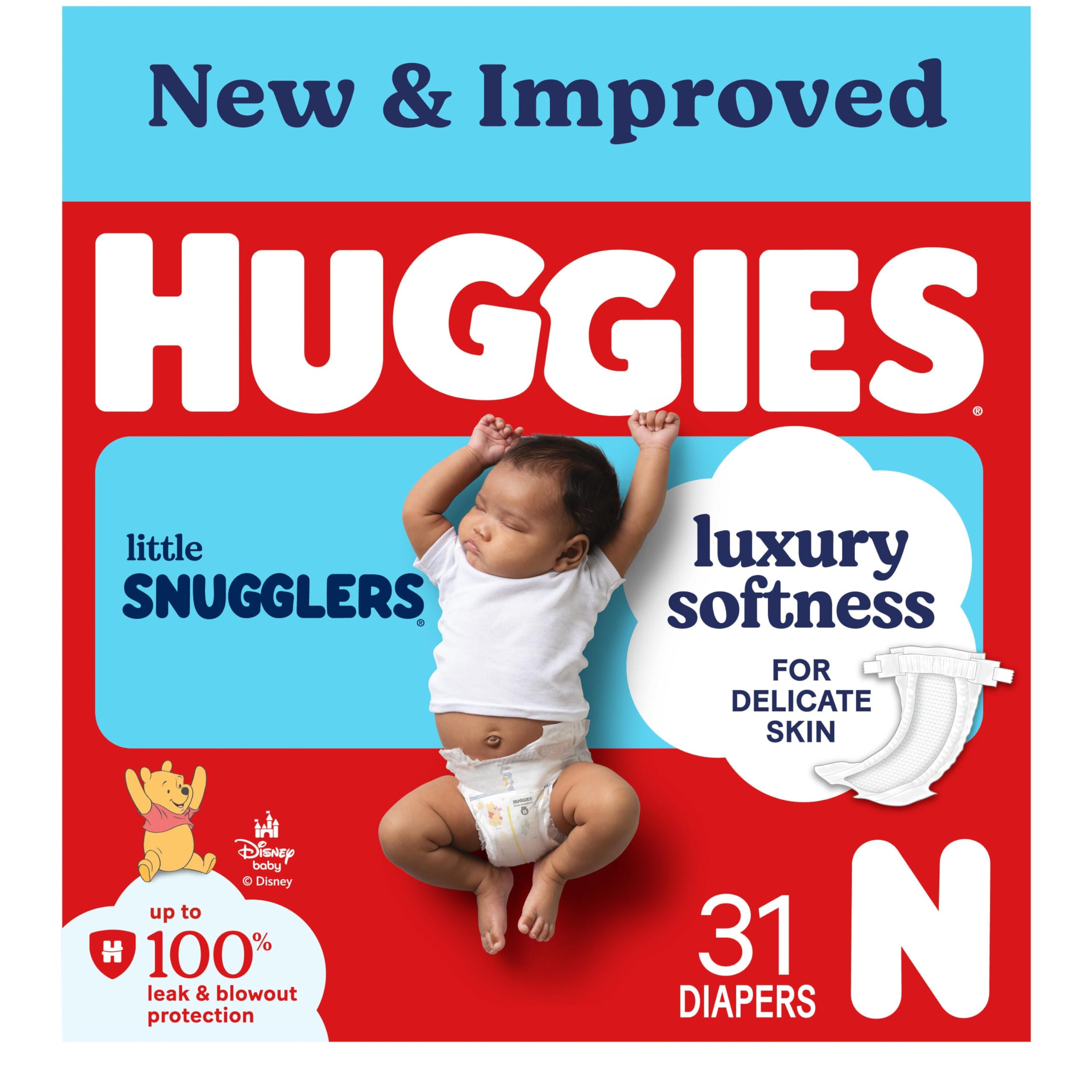
When you bring a newborn home, diapers are one of those essentials you quickly realize you need to get right. The Huggies Little Snugglers in size newborn are designed for babies up to 10 pounds, and they come in a 31-count pack. Packaging may vary, but the contents are consistent. This review looks at how these diapers perform in everyday use, based on real-world experience and observation.
The first thing you notice is the softness. The inner liner is gentle against a newborn’s sensitive skin, which is important because babies at this stage have very delicate skin that can easily become irritated. The diaper also has a wetness indicator strip that changes color from yellow to blue when wet. This is a simple but helpful feature, especially for first-time parents who might not yet be able to tell if a diaper is wet just by feel. It saves you from unnecessary checks or leaving a wet diaper on too long.
In terms of absorbency, these diapers hold up reasonably well for a newborn size. They can handle a moderate amount of urine without leaking, which is typical for this category. The leg cuffs are designed to prevent leaks, and they generally work well as long as the diaper is properly positioned. However, for heavy wetters or overnight use, you may need to change more frequently than with larger sizes designed for older babies. That’s not a flaw specific to Huggies—most newborn diapers have limited capacity due to their small size.
One trade-off to consider is the size. Newborn diapers fit babies up to 10 pounds, but some babies outgrow this size quickly, especially if they are born on the larger side. A 9-pound baby might only fit for a week or two before needing size 1. This means the 31-count pack can be used up fast. You might find yourself buying multiple packs or switching to a larger size sooner than expected. That’s a practical limitation to keep in mind when stocking up.
Compared to generic or store-brand newborn diapers, Huggies Little Snugglers tend to feel softer and have a more secure fit. Generic brands can sometimes be stiffer or less contoured, leading to more leaks or discomfort. That said, they also cost more per diaper. For parents who prioritize softness and a reliable fit, the extra cost may be worth it. But if budget is a primary concern, a generic option could work fine, especially since newborns need frequent changes anyway.
These diapers are best suited for parents who want a gentle, well-fitting diaper for a newborn, particularly in the first few weeks when skin sensitivity is highest. They are also good for those who appreciate the wetness indicator for convenience. However, they are not ideal for babies who are already close to 10 pounds at birth, as you might barely use the pack before moving up a size. Similarly, if you are looking for an ultra-budget option, this isn’t it.