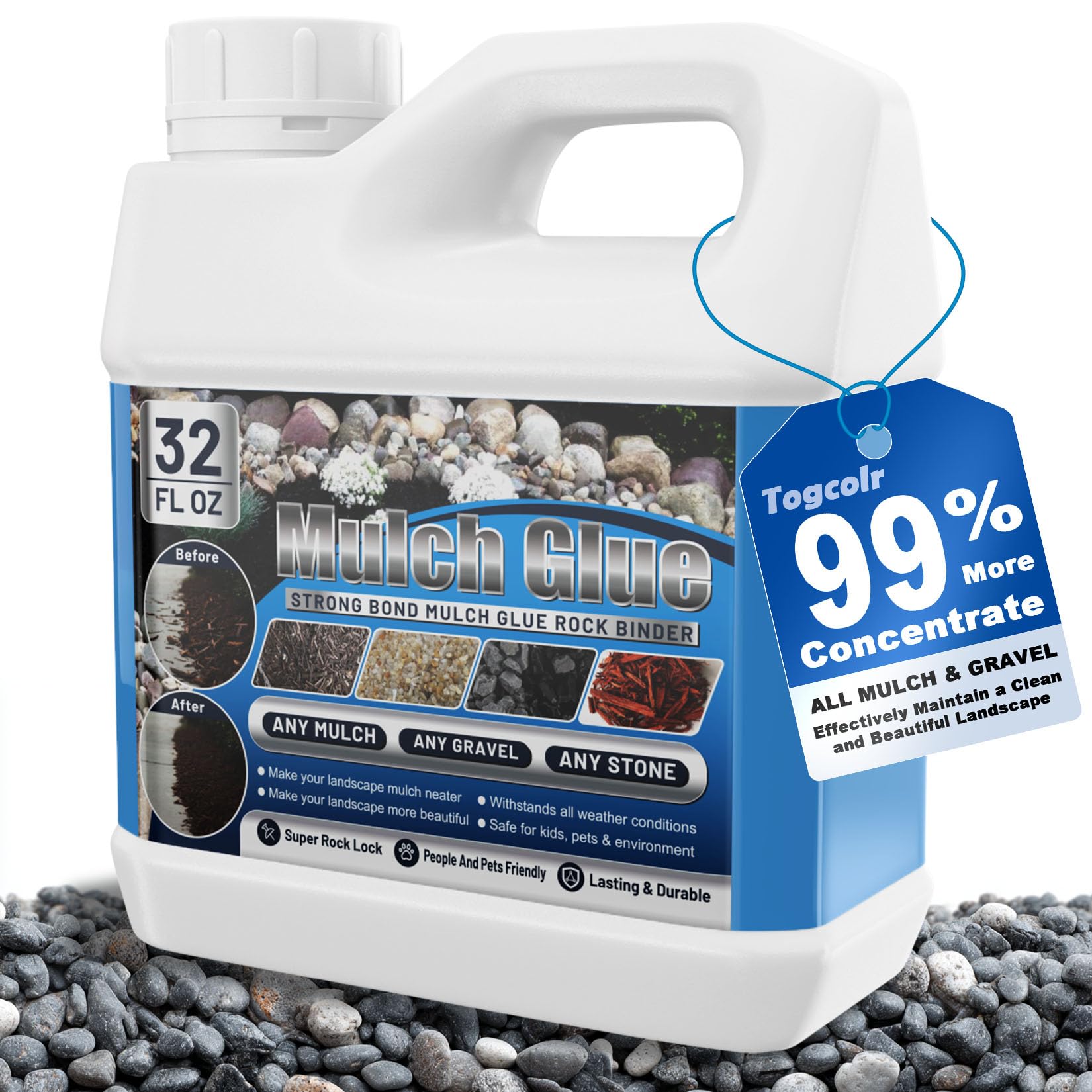
If you’ve ever spent a weekend spreading pea gravel or bark mulch only to watch it scatter after the first rain or a gust of wind, you’ve probably wondered if there’s a better way. That’s where products like this 32oz mulch glue come in. It’s a liquid adhesive designed to lock loose landscaping materials—gravel, pebbles, wood chips, pine straw—into place, creating a stable surface that holds up to weather and foot traffic. I tested a bottle on a small garden path and a border area, and here’s what I found.
The glue comes in a standard squeeze bottle, and the application is straightforward: you shake it, drizzle it over the surface, and let it dry. It bonds particles together without turning them into a solid slab—so the rocks or mulch still look natural, just less prone to shifting. The manufacturer claims it’s non-toxic and weather-resistant, and in my experience, it held up well through a few moderate rainstorms and some sun exposure over two weeks. The dried bond is flexible enough to allow for some movement, but it does firm up noticeably.
A key functional feature is that it works on multiple materials. I tried it on pea gravel and small river pebbles, and it adhered both effectively. For pine straw or bark, the glue soaked in and created a light crust—less rigid than with rocks, but still enough to prevent wind scatter. The 32oz bottle covers roughly 8 to 12 square feet depending on how generously you apply it, which is decent for small projects like a patio border or a pathway.
However, there are limitations. The biggest trade-off is that it’s not a permanent solution. Over time—especially in high-traffic areas or under heavy rain—the bond can weaken, and you’ll need to reapply. I noticed some loosening after a week on a spot where I frequently walk. Also, the glue takes about 24 hours to fully cure, so you can’t use the area immediately. If you’re covering a large driveway or a busy walkway, this isn’t a one-and-done fix.
Compared to alternatives like landscape fabric or plastic edging, this glue is less labor-intensive to install but also less durable. Fabric and edging physically block movement, while glue relies on adhesion that can degrade. For a small, low-traffic area, the glue is convenient; for a large, high-use space, you’d likely get better longevity from a physical barrier. Another generic alternative is polymeric sand for pavers, which hardens into a solid joint—but that’s a different product for a different use case.
Who is this for? It’s ideal for homeowners or gardeners who want a quick, low-cost way to keep decorative gravel or mulch in place on a path, around planters, or in a rock garden. It’s also good for temporary installations—like for an event or seasonal display—where you don’t want permanent changes. Who isn’t it for? If you need a long-term solution for a driveway, a heavily trafficked walkway, or a large slope, you’ll likely be disappointed by the need for reapplication. Also, if you’re in a very wet climate, the glue may not hold as well, since moisture can weaken the bond over time.
In practice, I found the glue easy to use, with a mild odor that dissipates quickly. It’s not a miracle product, but it does what it claims: it keeps loose material in place for a while. Just set realistic expectations about longevity and coverage area. For small-scale landscaping tweaks, it’s a useful tool to have on hand.