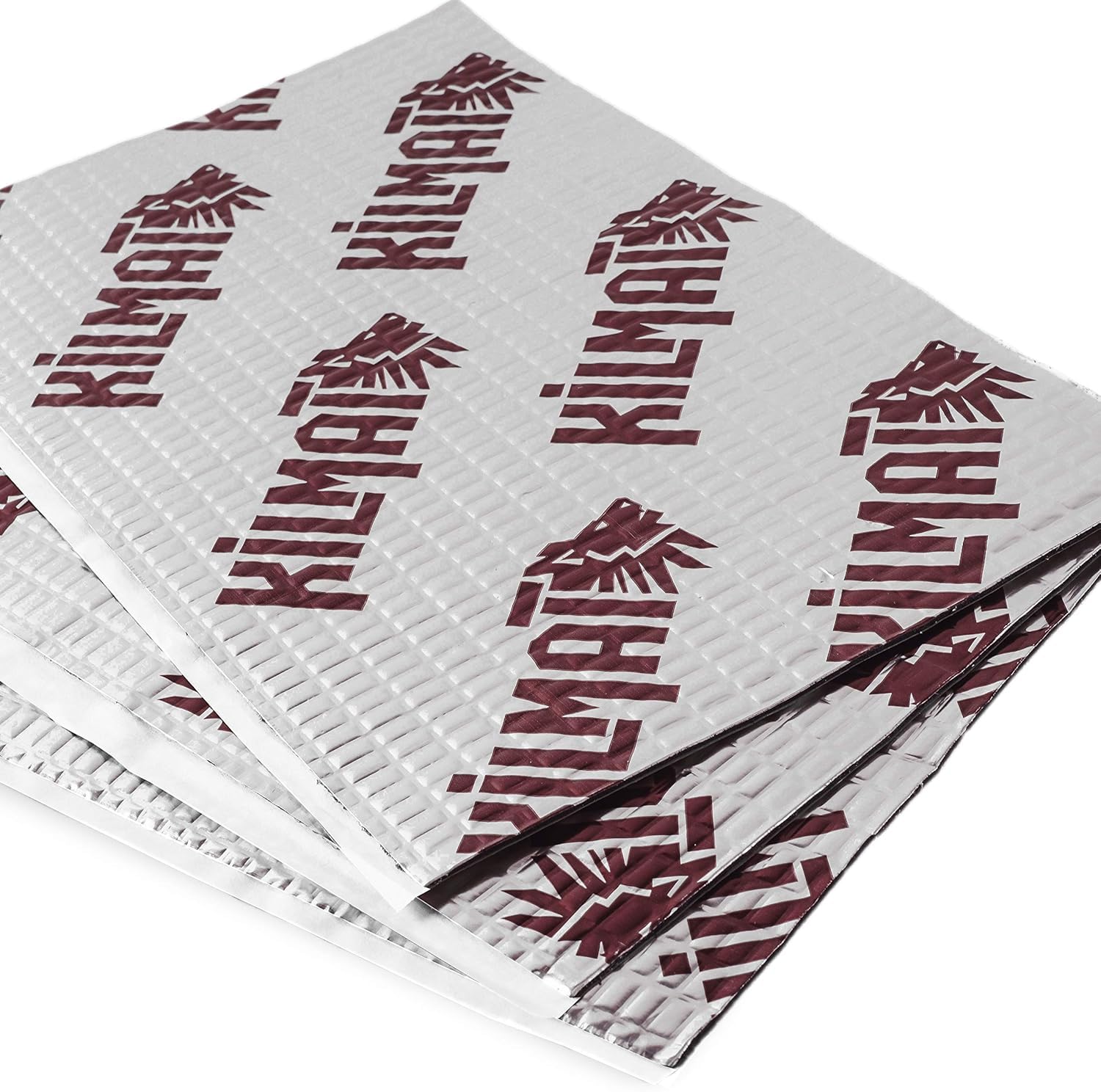
If you’ve been looking into quieting down a noisy vehicle, you’ve likely come across various sound deadening mats. The 80 mil 10 sqft Car Sound Deadening Mat is a butyl-based product aimed at reducing vibrations and road noise in cars, vans, or even home audio setups. This review covers how it performs in real-world use, its key features, and where it falls short.
Butyl-based mats like this one are designed to be applied to large metal panels—doors, floor pans, trunk floors, and wheel wells. The idea is simple: the mass of the mat dampens vibrations that cause resonance, which in turn lowers interior noise levels. At 80 mil thickness, this mat is on the thicker side for consumer-grade deadeners, which can be helpful for larger panels that need more damping mass. The 10 square foot coverage is enough to treat a pair of car doors or a small trunk area, but not a full vehicle.
Installation is straightforward: you cut the mat to size, peel off the backing, and press it onto a clean, dry surface. A roller helps ensure good adhesion. The butyl material is somewhat pliable, which makes it easier to work with in curved areas compared to some asphalt-based alternatives. However, it does get stiff in colder weather, so you may need to warm it up with a heat gun before applying in winter conditions. Once applied, it stays put and doesn’t sag over time, which is a common issue with cheaper mats.
In terms of performance, this mat does reduce road noise, but don’t expect a completely silent cabin. It’s most effective at lowering low-frequency sounds like tire hum and engine drone. Higher-frequency noises—such as wind whistling or tire hiss—are less affected unless you also add a closed-cell foam layer on top. The mat’s primary job is adding mass, not blocking airborne sound. For best results, you’d need to combine it with other materials like mass loaded vinyl or acoustic foam, which is a trade-off to keep in mind.
One limitation is the adhesive strength. While it holds well on clean metal, it struggles on textured or painted surfaces that aren’t perfectly smooth. If you try to apply it over existing sound deadener or rough undercoating, it may not bond as securely. Also, the butyl can be messy to cut—it tends to stick to scissors and requires wiping down tools afterward. The smell is minimal compared to asphalt mats, but there is a faint rubbery odor initially that fades after a few days.
Compared to asphalt-based sound deadeners, this butyl mat is generally more flexible and less prone to cracking in cold temperatures. Asphalt mats can also off-gas in hot weather, which is less of an issue here. However, butyl is typically more expensive per square foot, so if you’re on a tight budget, an asphalt alternative might be worth considering for less critical areas. For a full car treatment, you’d likely need multiple packs, which adds up.
Who is this product suitable for? It’s a good fit for DIYers who want to reduce road noise in a specific area—like a single door or trunk—without spending a lot. It’s also useful for car audio enthusiasts who need to reduce panel vibrations for better speaker performance. However, it’s not ideal for someone looking for a complete noise reduction solution on a budget, as you’ll need additional materials for airborne sound control. It’s also not great for large vehicles like vans or SUVs where you’d need many packs to cover all panels.
Overall, the 80 mil 10 sqft Car Sound Deadening Mat is a functional butyl option that delivers reasonable vibration damping for the price. It’s not a miracle product, but it does what it claims when applied correctly. Just be realistic about what it can achieve on its own, and plan to supplement it if you want significant noise reduction across the entire vehicle.